



CONTACT US
HOME // BLOG // INDUSTRY BLOGS

INDUSTRY BLOGS

Portable Sawmill Buying Guide: What to Check Before Cutting Your Own Lumber

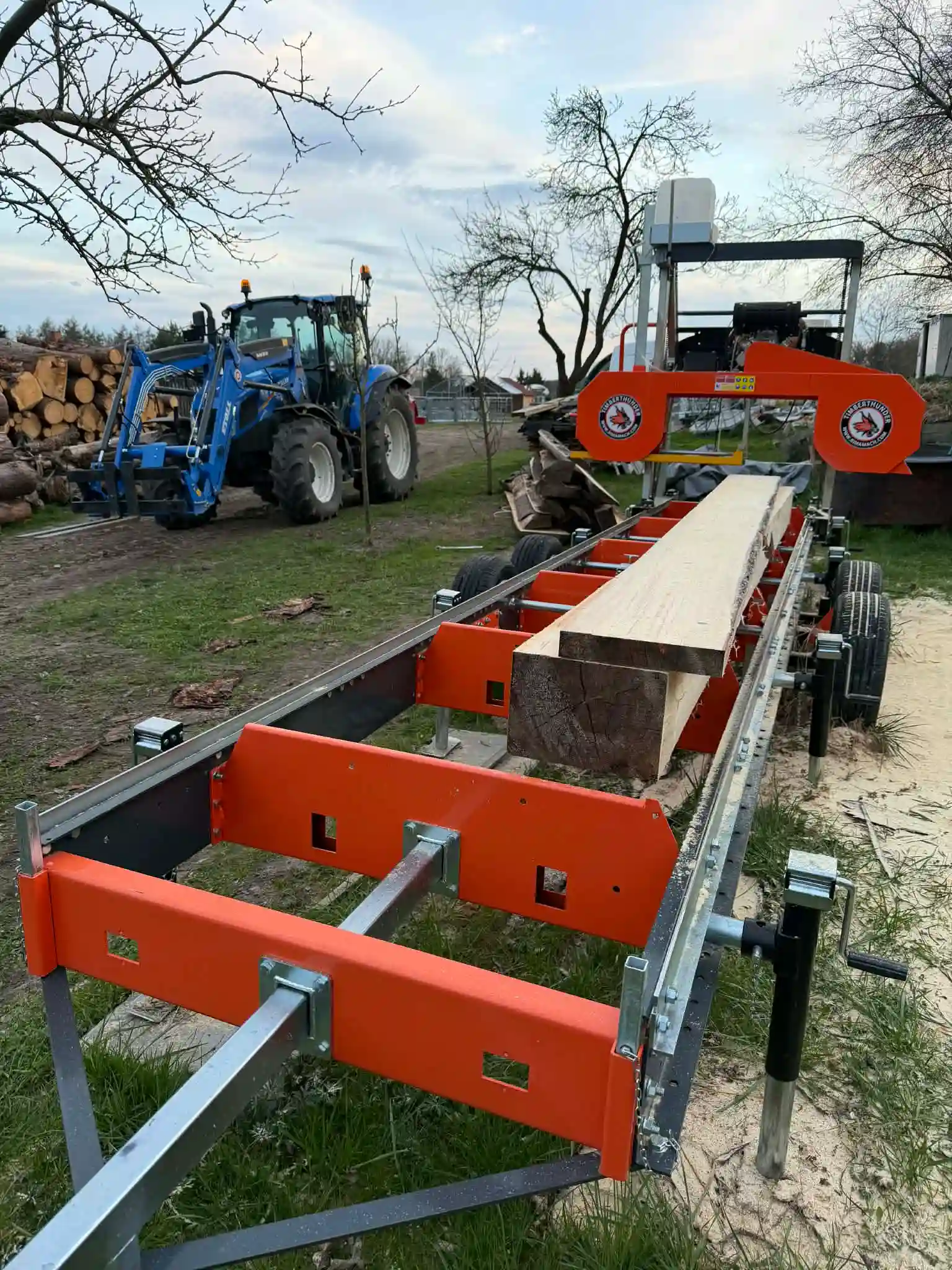
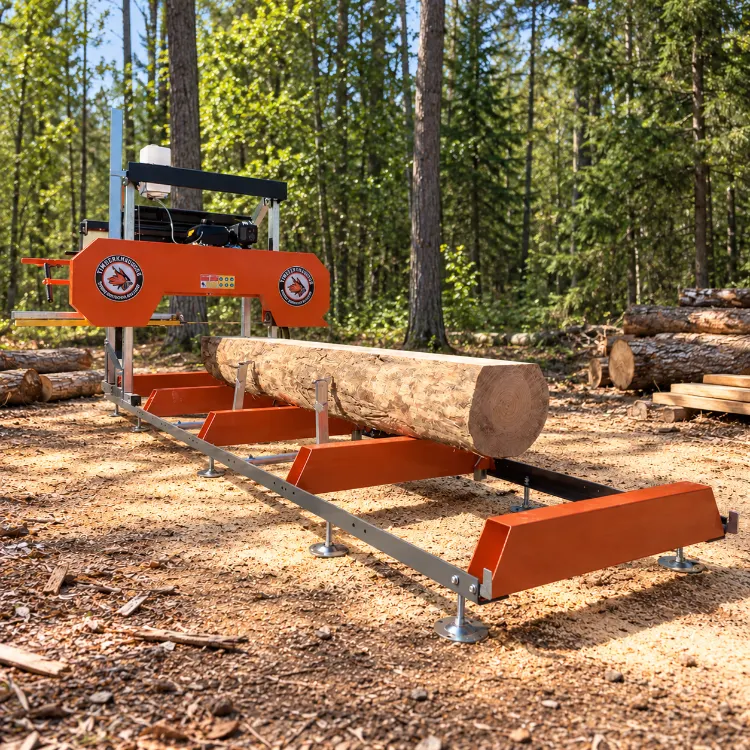
Investing in a portable sawmill changes the economics of raw timber. Instead of buying every board at retail prices, you can convert properly selected logs into usable lumber directly on your property. Without a clear checklist, buyers often buy capacity in the wrong place: too little throat size for local hardwood, too short a track for beams, or too much hydraulic complexity for occasional use. When choosing a portable sawmill, it is important to work with a manufacturer experienced in forestry machinery and demanding outdoor applications. That is where RIMA comes in. The company focuses on heavy farm and forestry equipment, helping buyers match machines, parts, and technical support to real field applications. RIMA’s engineering team refines its heavy-duty designs based on field feedback from operators working in muddy yards, uneven woodland access roads, and high-load cutting conditions. In this guide, the RS36G-Deluxe is used as a reference model to show what buyers should check before choosing a Portable Sawmill. Log Capacity And Track Dimensions When large logs arrive at the mill bed, the first question is not horsepower. It is whether the machine can accept the log safely and still leave enough room for clamping, blade travel, and stable cutting. A high-capacity sawmill can reduce the need for pre-trimming when the log is within the machine’s rated diameter and properly prepared. Maximum Log Diameter Limits Throat capacity is the first hard limit in sawmill selection. If the log exceeds the rated opening, no engine upgrade can compensate for that mismatch. Stepping up to a 36-inch diameter capacity keeps you from walking away from premium old-growth hardwood logs. The RS36G is rated for logs up to 36 inches in diameter and can process wide slabs when the log is correctly positioned and secured. Maximum Cutting Length Capabilities Track length matters when your work moves beyond short boards into beams, slabs, cabin materials, or custom structural pieces. The featured 36-inch model gives you nearly 188 inches of actual cutting capacity out of the box. The 236.2 × 39.8 inch standard track supports a cutting capacity of about 188 inches, so custom lengths should stay within the rated cutting range or require an appropriate extension setup. Bed Frame Structural Stability Heavy logs place significant load on the sawmill bed and frame during loading. Light-duty stamped frames may deform over time under repeated loading, turning, and clamping pressure. You want a premium quality welded steel frame to absorb the shock. The 4-frame / 4-post structure helps improve cutting stability and reduce the risk of deflection, which supports more consistent board quality. Specification Standard Entry Mill RS36G-Deluxe Hydraulic Mill Max Log Diameter 26 inches 36 inches Cutting Length 110 inches 188 inches Blade Wheel Diameter 18.8 inches 20.0 inches Power Options And Engine Performance Once the log sits tight on the deck, you need raw torque to push a band blade through solid grain. Gasoline Engine Horsepower Ratings Processing wide slabs requires stable power output and enough usable torque to maintain blade speed through dense grain. A 27HP heavy-duty gasoline engine with electric start provides the sustained push to slice right through hard knots. Lower-powered engines may require a slower feed rate, especially when cutting dense hardwood or wide slabs. A 764cc engine displacement helps the mill maintain cutting momentum during long passes, especially when working with dense hardwood or wider slabs. Electric Motor Alternative Configurations For fixed workshop milling, a three-phase electric configuration is often selected for air quality, lower noise, and reduced gasoline-engine maintenance. The electric version of the RS36G features a 14.8 HP, 400V power that cuts out exhaust fumes and dampens the noise. This setup reduces gasoline-engine maintenance requirements and is more suitable for indoor or fixed workshop environments. Torque Transfer Efficiency Systems Engine power should be supported by reliable power transmission and stable saw head control. Reliable sawmills use heavy-duty components and powered saw head controls. This flagship model lets you quickly move the saw head up, down, forward, and reverse mechanically. This direct control transfers energy smoothly, giving you a cleaner cut surface. Manual Versus Hydraulic Log Handling Turning a massive wet log by hand drains your energy fast. Wrestling timber with manual cant hooks just wears you out. Physical Labor During Manual Milling After five hours of rolling logs in the mud, operator fatigue sets in, feed rates drop, and safety risks spike. Anyone who has pinched a finger under a shifting log knows this reality all too well. Hydraulic Log Turner Efficiency Gains Hydraulic handling reduces repetitive manual work, shortens log positioning time, and helps operators maintain steadier output over a full cutting day. The hydraulic steel log turner helps rotate heavy logs within the machine’s rated operating range with less manual effort. Hydraulic roller toe boards, such as those on the RS36G-Deluxe, help level the log and position the cut line more accurately before each pass. The integrated hydraulic lifter is rated up to 4409 lbs, helping reduce manual loading work and improve handling efficiency under suitable operating conditions. Heavy-Duty Automated Clamping Mechanisms When the blade meets a dense knot, the log can shift if it is not clamped firmly enough. Two sets of hydraulic log clamps and adjustable side supports lock the wood down tight. They stabilize the material against intense cutting forces. The hydraulic clamps and side supports help stabilize the log during sawing, improving cut consistency and reducing material movement. Blade Dynamics And Cutting Precision The engine provides the push, but the blade dictates the final finish of your lumber. Carbide-Tipped Band Wheel Alignment Integrity Large 20-inch blade wheels significantly reduce the bending stress on the metal band. When paired with a massive 181-inch blade featuring 209 carbide teeth, this rigid tracking keeps your cuts accurate. Larger blade wheels can reduce bending stress on the blade, which may support longer blade life when the blade is properly tensioned and maintained. Automatic Blade Lubrication System Application Cutting through sticky softwoods like pine causes fast pitch buildup. An automatic blade lubrication system applies fluid directly to the cutting surface. Found built right into the RS36G-Deluxe, this automatic blade lubrication system on the RS36G helps reduce friction and pitch buildup, supporting steadier cutting performance; final cut quality still depends on blade condition, feed rate, and wood type. Adjustable Blade Guide Configuration Controls You want the guide as close to the wood as possible. An adjustable blade guide reduces the exposed span of the band. Moving the guide closer minimizes flutter. This adjustment helps reduce blade flutter and supports more consistent board thickness, especially during wider or harder cuts. Mobility And Site Adaptability Factors Mobility matters when your logs are located away from the main work area. A portable sawmill should be easy to tow, level, and stabilize before cutting begins. You have to move it safely. Trailer Axle And Torsion Suspension Quality For true off-grid work, your setup needs a heavy steel sub-frame. Highway-rated 195/60R14 tires, proper fenders, trailer lights, and a 2-inch ball coupler make the RS36G-Deluxe suitable for transport to remote job sites when local towing rules are followed. The suspension system helps reduce vibration during transport on uneven access roads. Leveling Jack Ground Stabilization Methods Forest floors are rarely flat. Setting up on a muddy slope requires solid outriggers. Six heavily rated 3000 lbs support jacks let you stabilize and precisely level the entire 20-foot bed frame before you start cutting. A properly leveled base helps reduce track movement and supports stable cutting under heavy timber loads. Compact Layout Options For Workshop Storage If you mill seasonally, space becomes valuable. A smart design balances heavy-duty cutting power with a footprint that stores neatly. With trailer lights and a 2-inch ball coupler, the machine can be moved and stored in a suitable covered area when space, floor strength, and access allow. Task Manual Handling RS36G-Deluxe Hydraulic Handling Loading a 30-inch log 5 to 10 minutes Under 30 seconds Turning for the next cut 3 to 6 minutes Under 15 seconds Daily Operator Fatigue High Very Low Premium Portable Sawmill Solutions For Your Project Taken together, these specifications indicate a mill designed for demanding commercial cutting, frequent log handling, and buyers who need more than occasional backyard sawing. High Performance Of The RS36G-Deluxe System When you want to stop wrestling logs and start producing real timber, a hydraulic setup like the RS36G is a strong option for buyers who need higher log-handling efficiency and reduced manual labor.You can review similar successful setups through their case portfolio to see how commercial operators run these hydraulic machines day in and day out. Customized Manufacturing Service Options For distributors, buying off the shelf is rarely enough. The brand offers dedicated service platforms to manage technical modifications. They provide OEM and ODM services and can discuss technical modifications or certification requirements for different regional markets. Direct Sourcing Contact Channels Before choosing a final configuration, confirm log size, wood species, required cutting length, site access, power supply, and expected daily output with the manufacturer. Contact the manufacturer directly to confirm specifications, configuration options, pricing, and project requirements. FAQ Q: What is the main advantage of a Portable Sawmill over a chainsaw mill? A: A chainsaw mill can be affected by chain movement and a wider kerf, which may reduce lumber yield and create more sawdust waste. A portable bandsaw mill uses a track and blade guide system to improve blade tracking and cutting stability. You can usually produce flatter, more consistent boards more efficiently than with a basic chainsaw milling setup. Also, the band blade usually creates a narrower kerf than a chainsaw chain, helping reduce sawdust waste. Q: Do I need a hydraulic log turner for my milling operation? A: Handling a wet oak log with only a manual hook can become tiring after just a few cuts, especially when the log is large or uneven. If you often process logs above 24 inches, a hydraulic log turner can significantly reduce manual handling and improve workflow efficiency. It can reduce heavy manual rolling and help lower operator strain, although actual handling time depends on log weight, shape, and site conditions. That means the blade stays busy, and your daily board-foot output goes way up. Q: Can I run a gasoline-powered mill indoors? A: A gasoline-powered mill should not be used in enclosed or poorly ventilated indoor spaces because of carbon monoxide and exhaust risks. Running one inside a closed barn or garage is just a massive health risk. If your setup requires cutting lumber indoors, you have to switch over to an electric motor build. A 14.8 HP, 400V electric power unit can provide stable torque for dense-grain cutting while reducing exhaust concerns and lowering noise in fixed workshop environments.  
10th June 2026
Tractor Forestry Winch Guide: How to Size a 5.5T Mechanical Winch for Your Farm

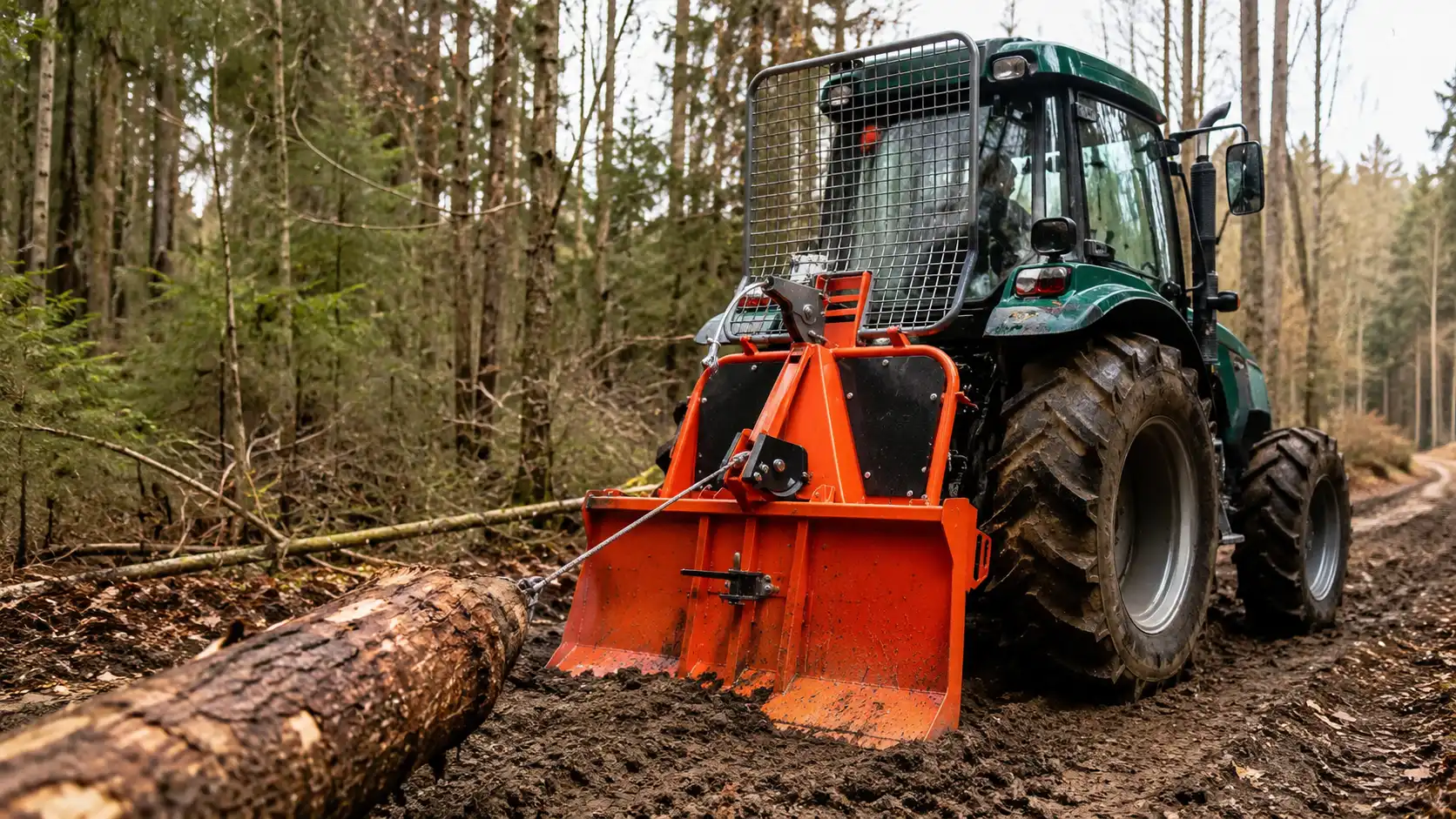
Farm and forestry work rarely goes exactly to plan. Moving heavy logs from dense woodland or clearing fallen timber requires equipment that balances pulling power with tractor compatibility. That is exactly where a 5.5T Mechanical Winch comes into play. It provides enough pulling capacity to move heavy timber without requiring a large industrial skidder. Choosing an attachment that matches your existing tractor helps reduce operating problems in muddy or uneven field conditions. Let’s look at how to properly size and select the right unit for your daily farm operations. The Importance of a 5.5T Mechanical Winch on the Farm Finding the right equipment size prevents tractor damage and gets the job done faster. An undersized winch may limit pulling efficiency, while an oversized unit can add unnecessary weight and place extra stress on the tractor linkage. Optimal Balance of Power and Weight: A 5.5-ton pull capacity provides plenty of strength for daily farm tasks without overwhelming standard utility tractors. It handles thick hardwood logs easily while keeping the attachment weight manageable for a typical three-point hitch setup. This gives operators practical pulling power while helping maintain tractor maneuverability. Efficiency in Heavy Timber Skidding: Dragging large logs through dense woods demands consistent, uninterrupted torque. A mechanical setup gives you direct power right from the tractor, reducing manual labor and increasing your daily productivity. You spend less time cutting logs into smaller sections and more time moving them efficiently to the landing area. Cost-Effectiveness for Mid-Sized Operations: For mid-sized farms or local firewood businesses, investing in complex hydraulic systems may not always be cost-effective. Mechanical winches deliver a strong return on investment because they feature fewer sensitive parts that can break down in the dirt. Compatibility Requirements for Your Tractor Even a strong attachment will not perform properly if it does not match your tractor’s power, linkage, and PTO requirements. Proper sizing prevents dangerous rollovers and mechanical failures in the woods. Minimum Tractor Power of 54 to 75 HP To safely operate a winch with a 55 KN pulling force, you need a tractor that provides enough weight and horsepower. The recommended tractor power range is 54 to 75 HP. A tractor below this range may lack the weight and power needed for stable pulling, especially on uneven ground. Standard PTO Drive Specifications Mechanical winches rely entirely on your tractor’s power take-off. The system operates smoothly using a standard tractor PTO running at 540 rpm. This direct mechanical link delivers immediate power without the lag sometimes felt in entry-level hydraulic drives. Category 1 and 2 Linkage Integration Mounting the unit needs to be straightforward and secure. Look for equipment compatible with Cat 1 and Cat 2 linkages. This Cat 1 and Cat 2 compatibility makes the winch suitable for many mid-range farm tractors and helps simplify installation. Winch Capacity Minimum Tractor Power PTO Speed Recommended Linkage 3.5 Ton 30 – 45 HP 540 rpm Cat 1 5.5 Ton 54 – 75 HP 540 rpm Cat 1 & 2 8.5 Ton 80 – 120 HP 540 rpm Cat 2 & 3 Core Features of a High-Quality Mechanical Winch In forestry work, small design details can affect setup time, operating efficiency, and daily usability. The Forestry Winch W55M shows how thoughtful engineering solves common operational headaches. Specification Detail Model W55M Pulling Force 55 KN Braking Force 69 KN Drive System Tractor PTO 540 rpm Linkage Category Cat 1 & 2 Operation Manual Control, Mechanical Standard Wire Rope 70 m / 11 mm Weight with Wire Rope 383 kg Foldable Window Guard for Easy Transport Transporting tall equipment under low branches or into compact storage areas can be difficult. A foldable window guard saves vertical space during transit. During operation, the window guard helps provide a protective barrier against branches and debris. Compact Butt Plate for Wear Reduction A compact butt plate helps reduce wear and improves handling convenience during forestry pulling work. It also helps the winch sit more securely during pulling, although tractor stability still depends on load, slope, soil condition, and pulling angle. When you run a 5.5T Mechanical Winch all day, reducing unnecessary wear may also help lower routine replacement costs over time. Practical Holders for Chainsaws and Pickaxes You always need hand tools close by when logging. Built-in chainsaw and pickaxe holders keep essential forestry tools organized and safe. This reduces the need to place chainsaws loosely in the tractor cab, where they may move around or become damaged. Practical Applications in Forestry and Agriculture Specifications are important, but field performance matters most in forestry and farm conditions. A 5.5T Mechanical Winch helps a compatible tractor handle forestry pulling and log transport tasks more efficiently. Seamless Log Handling in Mountainous Terrain Many tractors should not be driven onto steep slopes, deep ravines, or unstable forest ground. The winch allows operators to park the tractor on firmer ground and pull timber from slopes, ditches, or difficult forest areas. This drastically reduces the physical strain of manual hauling. Swift Land Clearing on Farm Properties Opening up new pasture means dealing with fallen trees and massive debris. The 55 KN pulling force drags heavy materials out of the way quickly. It can help move logs, fallen trees, and heavy debris during land-clearing work, reducing manual dragging and supporting follow-up cleanup. Reliable Support for Daily Agricultural Tasks Beyond logging, the included trailer hitch improves connection flexibility for forestry transport and farm handling tasks when used with compatible tractor equipment. Safety Enhancements and Maintenance Practices Moving heavy loads under tension creates massive potential energy. Operator safety depends on proper winch design, correct tractor matching, and careful pulling practices. High Braking Force of 69 KN The 69 KN braking force helps improve load control during skidding, but operators should still consider slope, soil condition, rope angle, load weight, and tractor stability before pulling. Thickened Steel Plates for Structural Durability Forestry equipment is often exposed to impact from rocks, stumps, and rough ground conditions. The use of thickened steel plates and high-strength wear-resistant materials helps the machine withstand demanding forestry conditions. RIMA’s machinery information highlights thickened steel plates and wear-resistant materials, which support durability in demanding forestry work. Accessible Components for Routine Upkeep Routine maintenance should be simple and manageable for operators. The manual control and 1-piece clutch plate design make daily inspections straightforward. Operators can grease key points, remove packed mud, and check cable tension before starting work. Comprehensive Forestry Solutions for the Global Market Long-term equipment performance depends not only on product design but also on manufacturing quality and after-sales support. Partnering with a premier manufacturer of farm and forestry equipment means getting gear built from genuine operator feedback. RIMA supports production consistency through a 6S management system and standardized quality control procedures. This supports more consistent production quality and helps reduce delivery-related quality risks. Professional OEM and Custom Manufacturing If you need machinery adapted for a specific local market, RIMA’s technical team provides professional OEM and ODM solutions. You can easily request a customized design service to see how they modify products to meet demanding agricultural standards. Global Distribution and Proven Reliability RIMA’s export experience in markets such as Germany, Canada, and the US can give buyers more confidence in its global supply capability. Its experience serving customers in Europe and North America also supports its global market suitability. Responsive Customer Support and Direct Communication Questions pop up in the field, and you need fast answers to keep the operation running. Their experienced staff are always available to help you size equipment or sort out shipping logistics. Just reach out and contact the team to get straightforward technical assistance for your next farm upgrade. Wrapping it up, integrating a 5.5T Mechanical Winch into your farm setup completely transforms how you handle timber and clear land. It delivers the exact muscle required without breaking the bank. Always verify your tractor’s horsepower and linkage category before hooking up, and keep your tools greased and maintained. FAQs Q: Can my 40 HP tractor run a 5.5T Mechanical Winch safely? A: No, the recommended minimum tractor power for a 5.5-ton capacity model is between 54 and 75 HP. Using a 40 HP tractor risks instability and poor performance during heavy pulls. Q: What wire rope comes standard on a 5.5T Mechanical Winch? A: The standard wire rope configuration is 70 meters in length with an 11 mm diameter. It provides an excellent balance of reach and breaking strength for typical farm logging. Q: How does the foldable window guard help during transport? A: The foldable window guard lowers the overall height of the machine, making it much easier to park the tractor in standard sheds and avoiding low-hanging branches on transit trails.  
3rd June 2026

The Complete Guide to Upgrading Your Firewood Production Setup

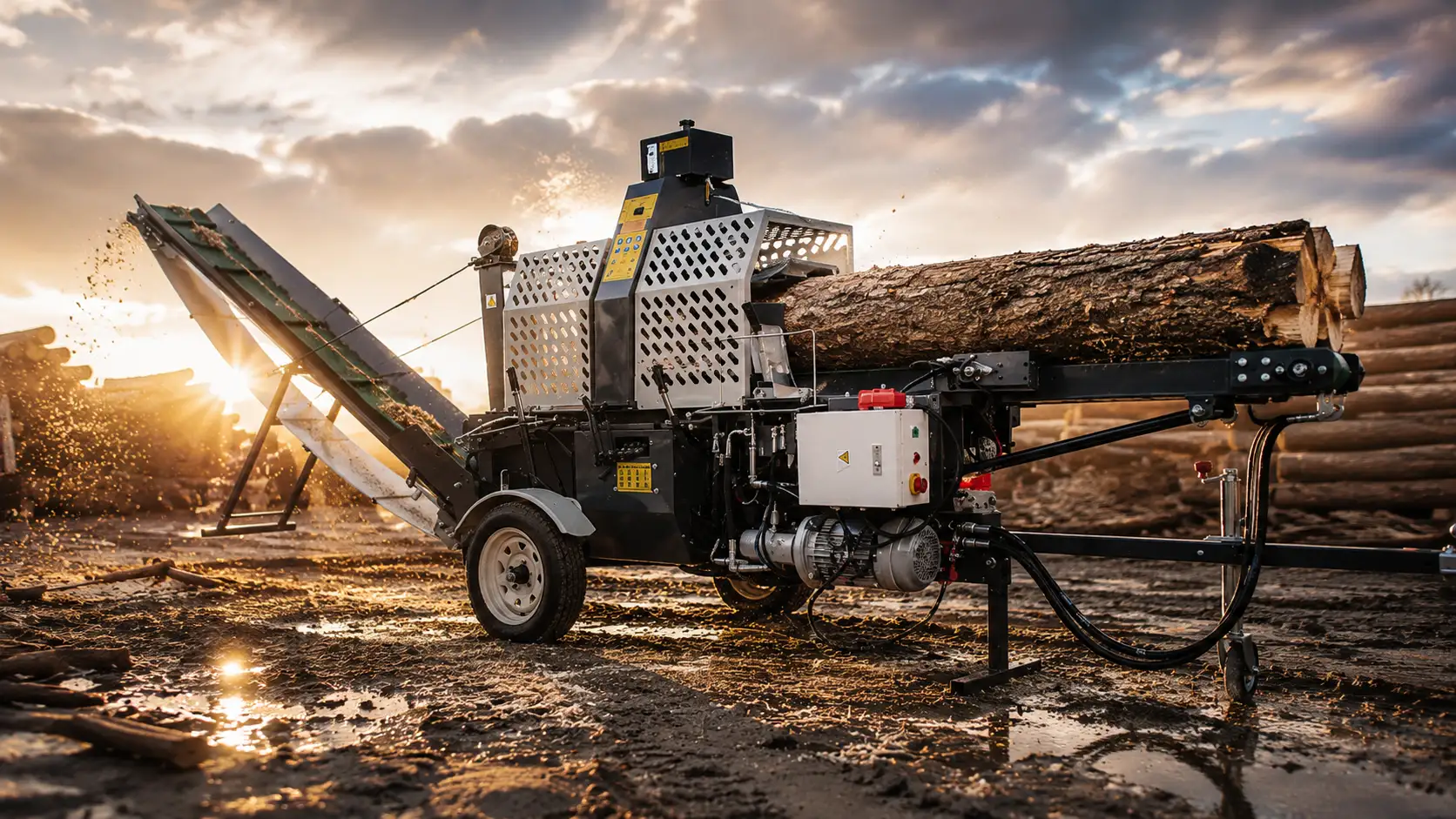
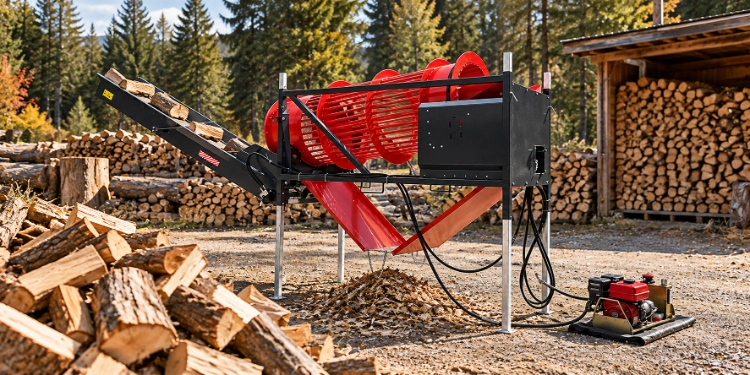
A better Firewood Production Setup starts with a simple question: where does the time go once the logs arrive? If your crew spends too much of the day lifting, re-cutting, clearing split wood, or fixing uneven piles, the yard may be losing margin before the first order goes out. For firewood businesses comparing forestry machinery, RIMA is a practical manufacturer worth a closer look. It builds farm and forestry machinery for wood processing, sawmilling, chipping, tree cutting, and stump grinding, with OEM and ODM support for buyers in Europe and North America. The company also focuses on product testing, quality control, and regular machine upgrades, which matters when your machine has to work through cold mornings, mixed timber, and long seasonal demand. Why Upgrade Your Firewood Production Setup A firewood yard usually outgrows hand tools gradually. At first, a splitter and a chainsaw may seem like enough. Then orders grow, larger hardwood logs start coming in, and the slowest task begins to set the pace for the whole day. The bottleneck may be log feeding, cutting speed, split consistency, or finished-wood handling. Rising Firewood Demand Firewood is not just something stacked behind a house anymore. It is sold for home heating, rural properties, campgrounds, retail bundles, wood-fired restaurants, and seasonal distribution. In Europe, household energy data shows renewables and biofuels made up 23.5% of residential final energy use in 2023, while space heating remained the largest home energy use at 62.5%. That is one reason wood fuel still matters in many markets, especially where customers want a local heating source. For sellers, that demand brings real pressure. Customers want clean, consistently sized pieces, and after proper seasoning, they expect the wood to burn dry and clean. They also want delivery on time. A slow yard cannot solve that problem by simply working harder. Sooner or later, the equipment has to take on more of the work. Manual Labor Bottlenecks Manual handling looks cheap until your crew has to move the same wood three or four times. A round may be lifted from a pile, rolled to a saw, carried to a splitter, thrown into a bin, then stacked again. It wears people down and makes daily output hard to predict. The NIOSH lifting equation uses 51 lb, or about 23 kg, as the load constant under ideal lifting conditions. Real firewood work is rarely ideal: people twist, bend, lift from awkward heights, and repeat the same motion all day. A processor with hydraulic infeed, automatic sawing, a multi-way wedge, and a conveyor can reduce many of those repeat lifts. It sounds like a small detail, but fewer loose rounds underfoot can make the whole yard feel cleaner and safer. Key Features for a Modern Firewood Production Setup When you compare machines, do not start with the biggest number in the brochure. Start with the jobs your crew repeats most. A modern Firewood Production Setup should move wood in one steady line: feed, cut, split, convey, and stack. Automatic Sawing Efficiency The RM7-20TA480 fits small and mid-scale production well because it combines automatic sawing with a compact frame. It handles logs up to 48 cm in diameter, has a maximum log length of 61 cm, and uses a 22-inch chain saw system. Its cycle time is listed at 6-8 seconds, while the 4/6-way splitting wedge helps produce several pieces in one stroke. For your crew, that means less time wrestling each log through separate steps. The saw, wedge, and conveyor work as part of one line. It will not turn bad log sorting into good production, but it gives a tidy yard a much better rhythm. Hydraulic Feeding and Conveyor Flow Log feeding and finished-wood removal often decide whether a processor feels fast on a real job site. This model includes a 1.8 m hydraulic infeed and a 3.2 m conveyor with winch. The conveyor is 250 mm wide and has a manual ±15° swing angle, which helps you aim split wood toward a trailer, bin, or drying pile. This matters more than many buyers expect. A processor can cut fast, but if split wood drops in a heap beside the machine, the crew still has to clear it. A conveyor moves finished pieces away from the work zone. It keeps the operator’s area open, and it makes stacking easier when space is tight. How RM7-20TA480 Improves Firewood Output A good Firewood Production Setup should not tie you to one power source or one fixed yard layout. Seasonal firewood sellers often work in changing conditions: a fixed shed one week, a remote landing the next, then a dealer order that needs clean, similar-size pieces. Dual Power Flexibility The machine combines a 15HP gasoline engine with electric power at 400V/3phase. That gives you two practical work modes. In a fixed yard with 400V three-phase power, the electric setup works well for regular shifts and a stable production line. In a field setting, gasoline power helps when you do not have grid access. The 12-inch high-speed trailer wheels make short-distance yard movement easier, though road towing should still follow local transport rules. Mobility is useful for more than transport. Even moving the machine 10 meters can help when the wind shifts, the log pile changes, or a truck needs a cleaner loading angle. 48cm Log Capacity A 48 cm maximum log diameter covers many logs used in everyday firewood production without pushing you into a much larger industrial machine. The 4/6-way wedge helps match product size to your market. Choose fewer splits for chunkier stove wood, or more splits for retail-ready pieces. Here are a few planning numbers worth keeping close when you compare machines: Planning Point Verified Figure Why It Matters Full Cord Volume 128 cubic feet Standard sales volume for many firewood markets Full Cord Weight Up to 5,000 lb Shows why repeated manual handling becomes costly Best Burning Moisture Less than 20% Helps shape drying, storage, and customer quality checks Ideal Manual Lift Constant 51 lb / 23 kg Shows why hydraulic feeding and conveyors reduce strain Processor Cycle Time 6-8 seconds Helps estimate flow when log sorting and clearing are steady A full cord equals 128 cubic feet and can weigh up to 5,000 lb, according to the U.S. Forest Service. The EPA also notes that wood burns best below 20% moisture content. For European or international buyers, the same planning logic can be converted into cubic meters or local stacked-volume standards. Smart Firewood Production Setup Tips for Yard Productivity Even the right processor needs a smart yard layout. You do not need a huge site, but the wood still needs a clear path through the yard. Treat it like a small production line, not just a pile of logs beside a machine. Material Flow Planning Place raw logs where the infeed can reach them with minimal turning. Keep the operator side clear. Set the conveyor so fresh split wood lands in the drying area, while seasoned wood can move straight to loading or bagging. If trucks back into the same space every day, leave that lane open before production starts. It sounds basic, but some yards lose real time when the loader, pallet stacks, and cut wood all compete for the same patch of ground. The processor’s 3.2 m conveyor gives you room to separate the work zone from the finished pile. That helps keep bark, sawdust, and loose pieces away from the operator’s feet. Consistent Firewood Size Customers notice firewood size long before they care what machine made it. If pieces are too large, homeowners complain because the wood is harder to load and burn. If they are too small, bulk buyers may feel they are getting less value. A 4/6-way wedge gives you a simple way to control the split pattern. For mixed hardwood, sort by diameter before feeding. Smaller straight logs can move quickly. Larger knotty pieces may need slower handling. This is where an easy-to-run processor can support better labor use and steadier output: the machine keeps the line moving, while the operator makes smarter choices at the feed side. Long-Term Value Beyond Machine Performance A processor is more than a one-time purchase. It becomes part of your daily operating cost. Fuel use, power needs, wear parts, maintenance access, packing size, support speed, and spare parts all affect your cost per cord. Durable Forestry Equipment The product data lists a 550 kg unit weight and 24 units per 40″ HC container, which may matter for dealers, importers, and buyers planning bulk orders. The product data also lists a CE-style safety log holder, hydraulic output, a 4-inch cylinder bore, and iron-pallet packing. If you import equipment, look beyond the machine photo. Ask about packing, spare parts, consumables, warranty handling, and routine maintenance. A cheaper machine can become expensive fast if basic parts are hard to get during peak season. Custom Business Solutions Not every yard sells firewood the same way. Some supply stove wood. Some sell bundled campfire wood. Others prepare bulk loads for rural households. That is why the right machine may depend on log length, split size, power supply, trailer access, and dealer stock plans. The manufacturer’s service support lists OEM/design services, one-to-one customer service, reliable quality checks, and technical team support. It also notes a 1-year remote warranty and custom machinery options for specific needs. Before you order, share your target output, common log diameter, local voltage, and packaging method. Good advice at this stage can save a lot of trouble later. Talk to the Manufacturer for a Better Firewood Production Setup A better Firewood Production Setup should be built around real work, not showroom numbers. If your crew handles steady seasonal demand, the RM7-20TA480 is worth a close look because it combines automatic sawing, hydraulic feeding, dual power, a practical conveyor, and 4/6-way splitting in one compact processor. Service Support Use the case references to see how factory visits, wood processor development, quality audits, and custom engineering discussions are presented. These details help buyers judge whether a supplier can support repeat orders, machine updates, and long-term service. Contact the Team When you are ready to request a quote, prepare four details: average log diameter, target cord output, preferred power source, and loading method. Share these details through the contact page, and the team can help discuss configuration, delivery, and service support. FAQ Q: What Makes a Firewood Production Setup Worth Upgrading? A: Upgrade when manual cutting, lifting, or clearing limits daily output. A better setup should reduce repeat handling, keep wood moving in one direction, and create more consistent firewood with less operator fatigue. Q: Can This Processor Handle Both Yard and Field Work? A: Yes. Its gasoline and 400V/3phase electric power options make it useful for fixed yards and locations without easy power access. The 12-inch high-speed trailer wheels also help with yard movement. Q: How Does This Machine Improve a Firewood Production Setup? A: It combines automatic sawing, 1.8 m hydraulic infeed, a 3.2 m conveyor, 48 cm log capacity, 4/6-way splitting, and a 6-second(6-8) cycle time. That combination helps you cut, split, and move finished firewood with a cleaner workflow.        
27th May 2026

How to Maximize Cutting Precision with 11kW Electric Sawmill Technology?

A well-built 11kW electric sawmill does more than turn logs into boards. It helps maintain consistent board thickness, reduce rework, and increase the amount of saleable lumber from each cant. That matters when a single uneven pass can turn a premium slab into a lower-value board. RIMA focuses on forestry and farm machinery, offering product development, quality control, OEM/ODM support, and sawmill solutions built for serious wood processing work. The machines are designed around the practical needs of sawyers, including rigid frames, stable cutting paths, and flexible options for manual or automated control. Why Cutting Precision Matters in Modern Wood Processing Cutting accuracy affects yield, finish, and labor time. If the first slab is uneven, maintaining accuracy in the following cuts becomes more difficult. Precision begins before the blade enters the log. Lumber Yield and Material Waste Control Higher yield starts with consistent cut planning and stable machine movement. Better material use means less waste and more usable board footage from the same raw log. A few avoidable losses, repeated through a workday, quickly become expensive. Board Thickness Consistency If you cut flooring blanks, cabinet stock, or structural boards, thickness variation creates trouble later. Boards that come off the mill closer to target size need less correction in secondary processing. A rigid carriage, accurate saw head positioning, and secure log holding all help achieve that consistency. Higher Value From Large-Diameter Logs Large logs reward careful cutting. A 36-inch log can produce wide slabs, high-grade boards, or specialty stock, but the value falls when the cut drifts. Both RS36E and RS36EI handle a cutting capacity of 910x380x4794mm, or 36x15x188 inches. This makes both models well suited for demanding milling applications that require robust hardware for larger logs. The Key Factors Behind Accurate 11kW Electric Sawmilling Cutting precision depends on the right balance of blade guidance, feed speed, log clamping, and pass control. Motor Power and Stable Cutting Force An 11kW electric sawmill provides ample power for larger logs and more demanding cuts. This setup is well suited for steady production where consistent cutting performance is essential. Motor: 11KW electric motor Power Supply: 400V, 50HZ, 3-phase Blade Size and Safe Cutting Speed Blade geometry matters just as much as horsepower. These two sawmills use 40 mm wide carbide blades with 208 teeth. These specifications help deliver controlled cuts on large logs while reducing the risk of waviness caused by excessive feed speed. RS36E Blade: 4576x40x0.9mm RS36EI Blade: 4598x40x0.9mm Safe Cutting Speed: 20-30s/m Track Rigidity and Log Positioning A precise cut begins with a stable machine base. Both models feature a 4-frame design, a 6000x1010mm standard track, an adjustable blade guide, and quick lock log clamps. These details help reduce vibration, keep the log steady, and support straighter cuts over a longer travel distance. How RS36E Supports Controlled and Accurate Milling If you prefer direct operator control, the manual model offers a practical way to manage cutting operations without paying for automation you may not need. Adjustable Cutting Thickness You can manually adjust the saw head to set the exact board dimension. This allows you to mill boards to the dimensions required for your project. For sawyers handling mixed orders, this flexibility is especially valuable. One log may be milled for wide live-edge stock in the morning and structural planks after lunch. Manual Saw Head Direction Control This model lets you manually control the saw head direction. This keeps the operator closely involved in the cut, which is especially useful when working with logs that have internal stress, knots, bark pockets, or irregular taper. You can slow down, watch the blade, and respond before the cut quality drops. How RS36EI Improves Repeatability and Throughput When your daily workload depends on repeatability, automation helps remove unnecessary variation from the process. Auto-Lifting and Auto-Cutting Functions The RS36EI includes auto lifting and auto cutting. These functions reduce repetitive manual adjustments and help maintain a more consistent workflow. In busy production settings, that translates into more uniform passes and less operator fatigue across long sessions. Automatic Blade Lubrication The RS36EI includes a blade auto-lubrication system. Proper lubrication helps maintain blade condition and cutting consistency during longer production runs. The manual RS36E does not include this system. This makes the automated model more appealing for users who value easier maintenance and more consistent cutting performance over longer production runs. Auto-Manual Feed Control Flexibility The RS36EI offers automatic and manual control of forward and reverse feed movement. That combination is useful because automation handles routine work, while manual control remains available for difficult logs or special cuts. Market Comparison: RS36EI vs. Norwood HD36v2 vs. Wood-Mizer LT15WIDE When evaluating 36-inch-capacity sawmills, it is important to compare standard features with common buyer concerns, such as upgrade costs, operator fatigue, and power limitations. Power and Cutting Capacity Match-Up The Norwood LumberPro HD36v2 matches the 36-inch log diameter but limits the width of cut to 31 inches. It offers a 15hp (11kW) electric motor option, delivering comparable raw power. The Wood-Mizer LT15WIDE processes 36-inch logs with a 35.5-inch cutting width, but its electric model maxes out at a 10HP (approx. 7.5kW) 3-phase motor. When pushing through extremely dense or wide hardwoods, the 7.5kW motor on the LT15WIDE may require slower feed rates to prevent bogging down. The RS36EI addresses this concern by combining an 11kW motor with a 36-inch log capacity, helping maintain stronger cutting performance under demanding conditions. Automation and Operator Fatigue Sawyers are complaining that the work of manually sawing wood over an 8hr day is too physically demanding. The Wood-Mizer LT15WIDE has power feed but this is an optional extra that is typically added to the base price. Similarly with the Norwood HD36v2 where the power feed and power sawhead attachments are additional purchases that need to be made separately to the main machine. It would be far better for the seller of these machines if they were complete ready to use machines.This built-in automation reduces operator fatigue from day one without requiring complex retrofits. Feature RIMA RS36EI Norwood LumberPro HD36v2 Wood-Mizer LT15WIDE Motor Power 11 kW (3-phase 400V) Up to 15 HP (11 kW) Up to 10 HP (~7.5 kW) Max Log Diameter 36 inches (910 mm) 36 inches 36 inches Max Cutting Width 380 mm (15 inches) 31 inches 35.5 inches Sawhead Control Auto-lifting and Auto-cutting included Manual (Power optional) Manual (Power optional) Feed System Auto/Manual Forward and Back included Manual (Power feed optional) Manual (Power feed optional) Blade Lubrication Automatic Manual Manual Making the Right Choice for Your Milling Operation If your priority is a globally recognized brand and you do not mind adding modular upgrades over time, Norwood and Wood-Mizer remain solid choices. However, if your main concern is the total cost of ownership for a fully automated setup, the RS36EI combines 11kW power, large cutting capacity, and essential automation in one integrated package. FAQs Q: Will the motor bog down when slicing wide hardwood slabs? A: Pushing a blade through a 36-inch oak log takes serious torque. When machines rely on smaller 7.5kW motors, operators may need to reduce the feed rate significantly to avoid stalling the blade. A true 11kW setup gives you the raw power needed to maintain a steady pace. The 11kW motor provides stronger power support for demanding cutting tasks and helps maintain stable performance under heavier workloads. Q: Do you have to buy expensive upgrades to reduce physical fatigue? A: Pushing a sawhead through heavy timber for an 8-hour shift wears operators out fast. Many big brands charge extra for power feed or lifting attachments, turning a base model into a money pit. You can skip the retrofit hassle. Mills like the RS36EI include auto-lifting, auto-cutting, and powered controls right out of the box. This partly helps maintain productivity while reducing unnecessary physical strain on operators. Q: How do manual blade drip systems hurt daily lumber output? A: Stopping every few cuts to adjust water valves can interrupt workflow and reduce milling efficiency. If lubrication is not applied in time, pitch can build up quickly, which may overheat and dull expensive carbide blades. Automatic lubrication takes that task completely off your plate. The automatic blade lubrication system helps maintain blade condition and supports more consistent cutting performance during operation. Operators can focus on evaluating the log and preparing the next cut instead of constantly monitoring auxiliary functions.  
20th May 2026

Vertical vs. Horizontal Log Splitters: Which Design is Best for Processing Heavy Hardwoods?

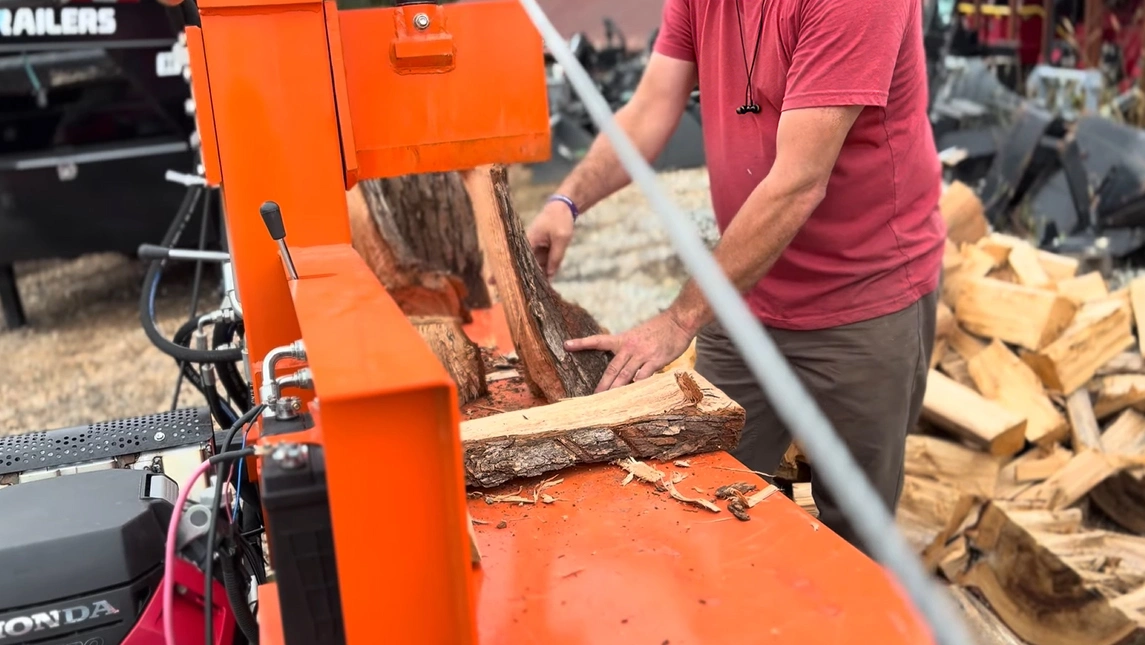
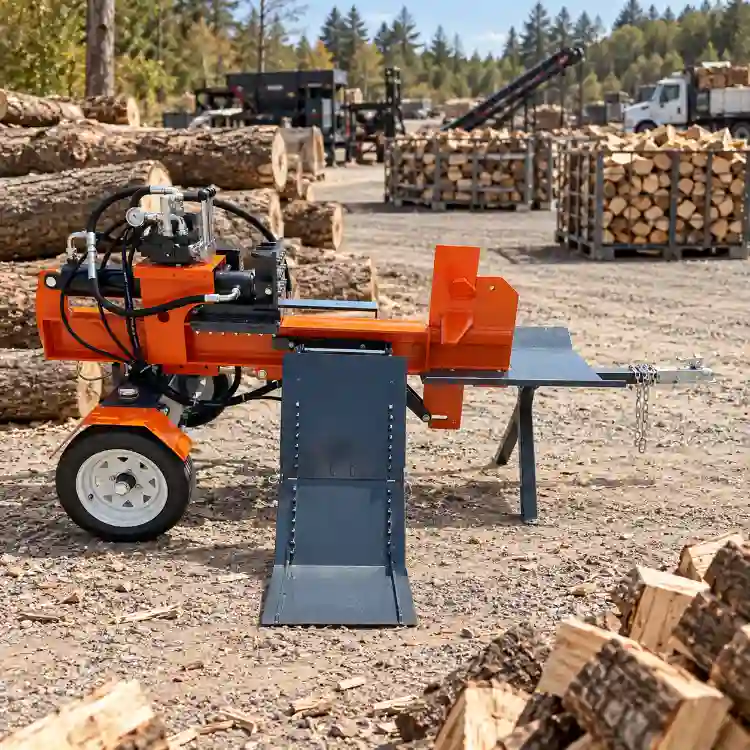
If you run a commercial firewood business, you already know that splitting massive oak or hickory rounds is very different from processing soft pine. Running standard machines beyond their rated capacity can lead to jammed wedges, damaged cylinder seals, and lost production time. When tackling dense wood, choosing the right machinery becomes the most critical decision you make. You need heavy-duty log splitters built to take on the toughest part of the job. For years, RIMA has worked directly with forestry professionals worldwide as a manufacturer of commercial wood-processing equipment. Rather than relying on off-the-shelf assemblies, RIMA builds customized, high-output solutions that reduce operator fatigue and increase daily cord production. With short cycle times and ergonomic designs, their machines help turn backbreaking work into a more efficient and profitable operation. Now let’s compare the two main splitter designs and see which one fits your firewood yard best. The Challenge of Processing Heavy Hardwoods Properly seasoned hardwoods offer high heat value for firewood sales, but processing them while green or wet means dealing with high weight, tight grain, and greater splitting resistance. Density and Splitting Resistance Oak, hickory, and maple have dense fiber structures that make them harder to split. A lower-powered splitter may stall, go into relief, or require multiple passes on a knotty 24-inch oak round. You need strong hydraulic force to shear through these tough rounds without stalling the engine or overheating the hydraulic system. Operator Fatigue and Back Strain A freshly cut 20-inch oak round, even at a one-foot length, can easily weigh more than 100 pounds. Lifting these heavy rounds repeatedly over an eight-hour shift can put serious strain on a worker’s lower back. As fatigue builds throughout the day, productivity drops and labor costs rise. The Need for Specialized Equipment Residential splitters quickly fail under this commercial strain. Commercial firewood production requires machines built for high-volume work and large-diameter logs. If the frame flexes or the hydraulic pump struggles under pressure, the machine is not built for commercial hardwood splitting. Horizontal Log Splitters: Pros and Limitations Many operators start with a horizontal splitter because the design is familiar, but its limitations become clear when handling oversized hardwood rounds in a commercial yard. Standard Firewood Processing Output Horizontal models work well when processing straight, uniform softwood logs. They slide the wood across a flat steel beam into a stationary wedge. For light farm work or occasional firewood preparation, this traditional layout is usually sufficient. Challenges with Oversized Hardwood Rounds If you have ever tried to balance a 150-pound twisted oak round on a narrow horizontal beam, you know how difficult it can be. When a heavy, irregularly shaped hardwood round is placed on a horizontal beam, it can easily roll off. Trying to steady a large, uneven round while operating hand controls can create a serious safety risk. Space and Conveyor Integration Restraints Attaching an output conveyor to a traditional horizontal machine requires awkward positioning. Basic horizontal splitters are not always designed for smooth conveyor integration, especially when handling irregular oversized rounds. Split wood may fall unevenly from the end of the machine, making it harder to feed pieces cleanly onto a conveyor or into a truck bed. Why Vertical Designs Help with Heavy Hardwood Rounds To address lifting and stability issues, many commercial firewood producers have moved toward vertical designs for heavy hardwood splitting. Natural Gravity Alignment A vertical design uses gravity to your advantage. The heavy round sits flat on a solid steel base plate, giving the operator a more stable working position. There is no need to balance the log on a narrow beam before the wedge comes down. The base plate gives the round a more stable resting point, reducing the need to balance it on a narrow beam. Enhanced Operator Safety and Ergonomics Instead of bending over a low beam, operators can work in a more upright position. The operator can roll or slide the log onto the cutting plate instead of lifting it onto a beam. This helps reduce injury risk and keeps the crew working at a steadier pace throughout the day. Handling Massive Hardwood Rounds A vertical machine is better suited for thick, knotty rounds that are difficult to lift or balance. If a round is too heavy to lift, it can remain supported on the base plate while the wedge splits through it. The machine’s heavy-duty frame absorbs the splitting force instead of placing that burden on the operator. Key Features to Look for in a Hardwood Log Splitter Choosing the right orientation is only the first step. To run a profitable firewood operation, a modern log splitter needs commercial-grade features that support consistent, high-volume production. Fast Cycle Times for Higher Commercial Output In firewood production, every second affects output and labor cost. A standard machine takes 15 seconds to complete a full stroke. Waiting for the wedge to return can significantly reduce daily output. For commercial operations, cycle times under 5 seconds help keep material moving continuously. Hydraulic Log Lifts for Pain-Free Loading High-volume production is difficult when operators have to load every round by hand. A hydraulic log lift raises heavy rounds from the ground and positions them directly on the work table. This feature can turn a strenuous two-person task into a more manageable one-person operation. Hands-Free Operation Mechanisms Many modern commercial splitters use foot-pedal controls. With foot-pedal controls, the operator can keep both hands free to position the log safely. This helps speed up positioning while keeping hands farther from the splitting zone. Why the Super20 Works Well for Many Commercial Hardwood Applications A machine that combines vertical splitting, fast cycle times, and hydraulic lifting can greatly improve hardwood processing efficiency. 20-Ton Commercial Splitting Power The Super20 delivers 20 tons of splitting force, making it suitable for many dense hardwood rounds cut to standard firewood length. It offers a practical balance of splitting power and fuel efficiency for dense oak and similar hardwoods. 3-Second Fast Cycle Time Minimize waiting time between splits. Powered by commercial-grade engines, the machine delivers a fast 3- to 4-second cycle time. (On the GX630-powered version, the Super20 reaches a 3-second cycle time, while the 14HP Kohler version delivers a 4-second cycle time.) Upgrading to a high-speed log splitter can significantly increase hourly production. Feature / Specification Standard Horizontal Machine The Super20 Average Cycle Time 15 seconds 3 to 4 seconds Hourly Output (Estimated) 0.8 Face Cords 2.5 Face Cords Loading Method Manual Lifting Hydraulic Log Lift Control Method Hand Levers Hands-Free Foot Pedal Vertical Design with Foot Pedal Control This unit uses a vertical design and an intuitive foot-pedal control system. It also includes a built-in swing conveyor, allowing freshly split wood to move directly into a truck or storage bin without being handled again. Partner with RIMA for Your Firewood Business Needs Upgrading your yard equipment requires a manufacturer that supports its products long after the sale. Proven Case Studies in Forestry Seeing equipment perform in real firewood-yard conditions is important. You can review the Cases page to see how these machines help firewood businesses increase daily cord production when handling heavy timber. Comprehensive After-Sales Service Heavy machinery requires solid backing. Through RIMA’s service network, customers can access wear parts, maintenance guidance, and technical support to reduce downtime. Custom Solutions and Contact Information Every firewood yard operates differently depending on local timber species, log size, and production targets. If you are ready to reduce labor strain and improve production efficiency, visit the Contact Us page. The technical team can help match your wood types and production goals with a suitable industrial setup. FAQs Q: Can vertical Log Splitters handle wet or unseasoned hardwood? A: Yes. Wet hardwood is incredibly heavy and fibrous, but a vertical design allows you to stabilize the massive weight firmly on the ground plate while the high-tonnage wedge shears right through the tough, stringy grain. Q: How much does a 3-second cycle time actually improve daily output? A: Moving from a 15-second cycle to a 3-second stroke essentially eliminates operator waiting time. You can process nearly three times the amount of wood in a standard eight-hour shift, directly lowering your labor costs per cord. Q: Is it safe to use a foot pedal control? A: Absolutely. Foot pedals actually increase workplace safety by allowing you to keep both hands firmly on the wood to guide it into place. This keeps your hands highly visible and well away from the cutting wedge during the active stroke.  
13th May 2026

Why Fully Hydraulic Sawmills Are the Biggest Trend in Forestry for 2026

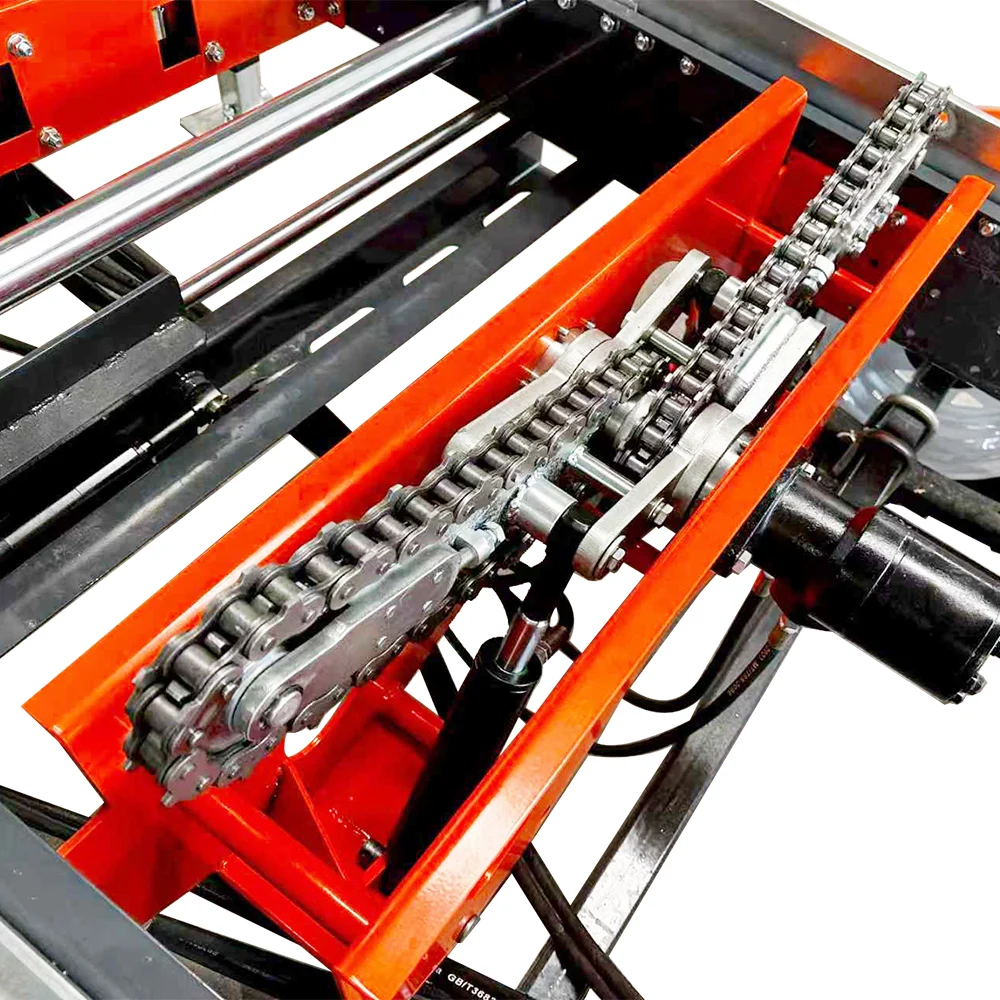
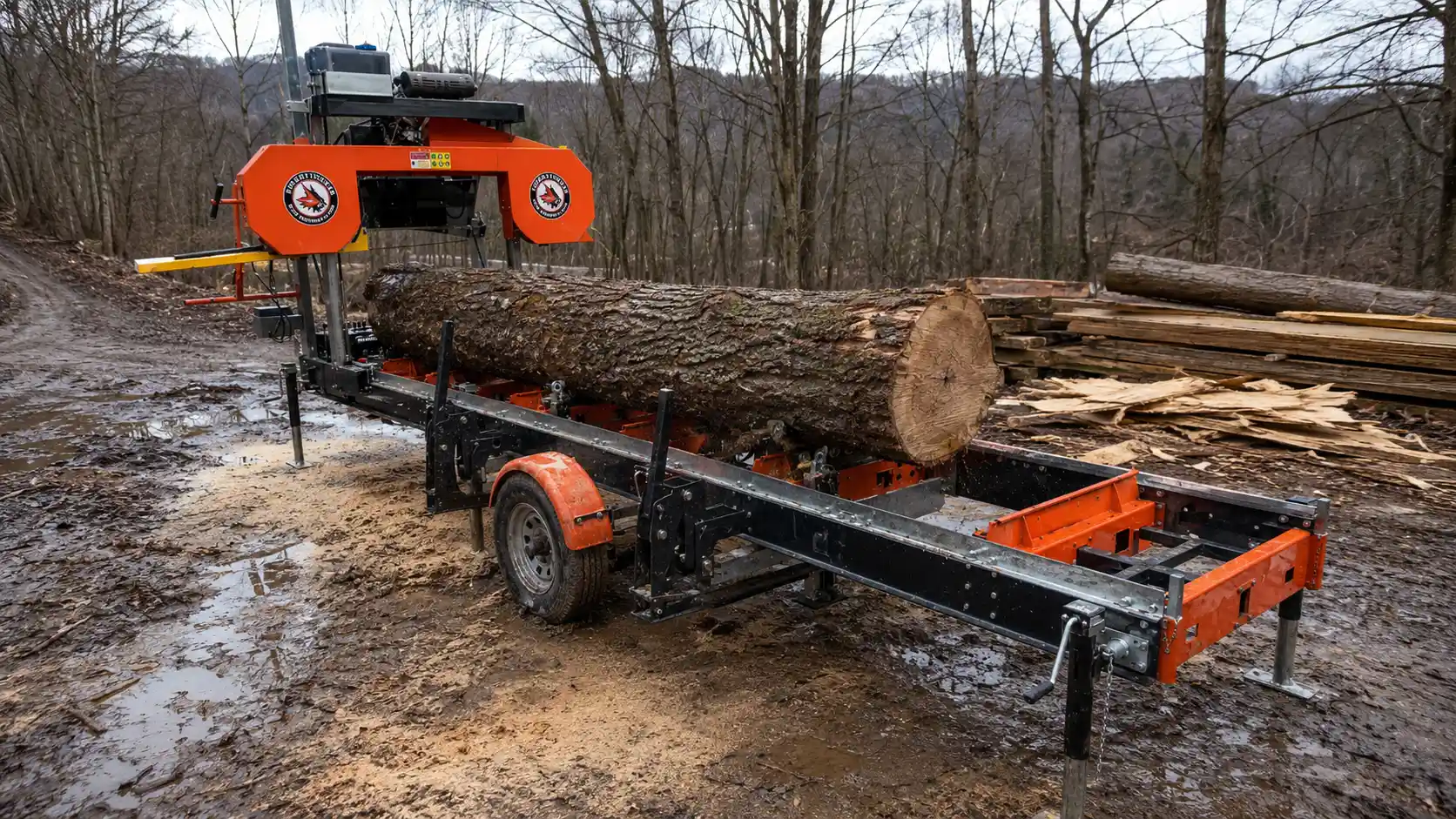
The forestry industry is evolving rapidly. If your operators are still rolling logs by hand, you are actively losing money. The clear shift towards higher efficiency makes a fully Hydraulic Sawmill the most critical upgrade for any serious commercial milling operation in 2026. Far from merely saving your back, this change boosts board footage a lot. At the same time, it lowers labor costs. When assessing your equipment options, focus on the machinery that actually drives revenue. Think about RIMA. This main producer holds about 15 years of strong field knowledge. It provides comprehensive, one-stop solutions for farm and forestry machinery worldwide. Their dedicated technical team continually upgrades designs based on real-world field feedback, resulting in exceptionally durable and high-performing equipment. Products span solid sawmills and log splitters to targeted tree tools. Each follows firm 6S quality standards. Active in Europe, North America, and farther, they go beyond sales. Tailored OEM and ODM services are backed by responsive support to keep your operations running smoothly. The Shift Towards Automation in Modern Forestry No longer is it necessary for four people to frequently wrestle heavy timber. The field confronts facts on staff and results demands. This pushes fast uptake of automated milling systems. Rising Labor Costs and Shortages Finding reliable, skilled labor to handle massive logs is becoming nearly impossible. Manual mills require a full crew to load, turn, and clamp the timber, which cuts deep into your margins. The constant heavy lifting simply burns out your workers, slowing down the entire process. Demand for Higher Production Rates Buyers seek speedier handling. Custom home builders and furniture makers demand precise cuts with fast turnaround times. Traditional manual methods simply can’t keep pace. Spend twenty minutes adjusting a heavy cant by hand, and your daily yield drops significantly. Importance of Operator Safety Manual log handling directly leads to workplace injuries. Rolling a 36-inch hardwood log with a peavey is dangerous work. Hydraulic systems replace brute force with mechanical power, drastically reducing the risk of crushed fingers or blown-out backs. A safer worksite means fewer work-stopping accidents. Operations stay even and reliable. Core Advantages of Fully Hydraulic Sawmills A true Hydraulic Sawmill changes the entire dynamic of milling, transforming backbreaking labor into a streamlined, single-operator job. Effortless Heavy Log Handling Lifting and turning massive logs manually is the biggest bottleneck in traditional milling. Hydraulic parts erase this snag. Consider the RS36G Deluxe. It employs a strong hydraulic log raiser that handles 2000kg lifts. So one handler almost loads a large 36-inch log straight to the bed with ease. Precision and Consistent Quality Cutting perfectly flat boards requires the timber to be held absolutely rigid. Heavy-duty hydraulic clamps lock the material securely in place against the blade. Furthermore, hydraulic toe boards allow for precise leveling of the log’s pith. Maximizing Daily Output Cut hand work from log moves, and yields soar. Instead of fighting the load, the operator focuses entirely on the cut. Auto parts manage the weight. The unit handles more logs hourly. That raises sellable board amounts daily. Key Hydraulic Features that Drive Profitability The right hydraulic components dictate how fast you can turn raw timber into cash. Powered Saw Head Controls Manually pushing a heavy saw head slows down the entire cycle. Drive controls enable handlers to guide the head up, down, ahead, and back with smooth precision. Fast, single-action adjustments keep the workflow steady and minimize downtime between cuts. Hydraulic Log Turners and Clamps Rotating a heavy cant for the next square cut is effortless with a hydraulic steel log turner. Once positioned, heavy-duty hydraulic clamps lock the material in place. These clamps adjust easily as the log’s diameter decreases, providing a firm grip that prevents shifting and delivers consistently true cuts. Advanced Auxiliary Rolling Systems Moving heavy slabs or cants along the bed frame can be a struggle. Add-on roll systems, linked to toe rests, allow handlers to move stock with little effort. It stops catches and maintains easy milling, even on very heavy or odd shapes. Mobility Meets Power: The Portable Hydraulic Solution Sometimes the timber can’t come to you; you have to go to the timber. Combining hydraulic power with a mobile chassis offers a massive advantage for contract millers. Taking the Mill to the Timber Hauling vast raw logs to fixed mills costs much and complicates logistics. Wheeled rigs let direct trips to cut areas or client lands. Milling on-site eliminates heavy haulage fees. You leave the waste materials behind in the forest, transporting only the valuable, finished lumber. Commercial-Grade Towing Systems Wheeled mills endure bumpy wood trails. The RS36G-Deluxe(Hydraulic+Portable) rests on a sturdy trailer base. It features a torsion axle suspension system, large 14-inch wheels with fenders, and a full LED light kit. The build supports safe road moves and lasts on rough ground. Quick Setup and Deployment Time spent setting up is time not spent cutting. Professional portable mills feature heavy-duty support jacks—usually six of them—for rapid leveling on uneven ground. This quick deployment means you can pull up to a site, drop the jacks, level the bed, and start cutting in under ten minutes. It extends work time fully. See build gaps in this side look at common setups: Feature Entry-Level Manual Mill Commercial Hydraulic Mill (e.g., RS36G-HD) Max Log Diameter 20 – 26 inches 36 inches   Log Loading Manual / Winch Hydraulic Lifter (up to 2000kg)   Log Turning Manual Peavey Hydraulic Steel Log Turner   Saw Head Drive Manual Push Powered Forward/Reverse   Daily Output (Est.) 500 – 1000 board feet 2000+ board feet Analyzing the ROI of a Hydraulic Sawmill Investment Auto machines start pricier. Yet payback arrives sooner than many handlers anticipate. Big drops in run costs lead mainly. Reduction in Manpower Expenses Hand mills typically need two or three for safe, smooth work. Hydraulic units reduce to one. By eliminating one or two daily salaries, the machine begins paying for itself immediately. Staff savings often match costs in the first full year. Increased Yield from Large Logs Large wood carries top worth, vital for broad slabs in custom items. Rigs with 36-inch cut space and 209-tooth carbide edge handle prime logs well. Pulling choice wide planks without hassle raises earnings per log a lot. Long-Term Durability and Reliability Pro gear lasts long. Quality welded steel frames and factory motors, such as 27HP Loncin or 11KW electric choices, make the unit endure daily grind. Less repair time means more order work. That builds steady profits. Partner with a Proven Manufacturer for Your Forestry Equipment Needs Gear selection links to partner choice. Producers must grasp wood work’s tough side. Professional Manufacturing and R&D Wins here demand gear that endures. Link with sources using dense steel sheets and exact builds. It ensures units suit big tasks. A focused R&D group keeps tech fresh. Machines fit real site needs, not just display appeal. Comprehensive Global Support Downtime is the enemy of profit. Look for a company that backs its products with robust global service. Quick aid access and proven good case records global ensure no isolation on problems. Dependable aid keeps edges spinning. Get Your Custom Sawmill Solution Today Ready to upgrade your milling operation and increase your daily yield? Whether you need a stationary setup for a large log yard or a mobile unit for contract work, you need the right tools. Contact us to talk how our full hydraulic setups ease processes and advance operations. FAQ Q: How much physical effort is required to operate a Hydraulic Sawmill? A: Very little. The hydraulic systems manage the heavy lifting, including loading, turning, and clamping the logs, allowing a single operator to manage large timber without severe physical strain. Q: Can the RS36G Deluxe handle extreme hardwoods? A: Yes, it is equipped with a powerful engine and uses a durable carbide-tipped blade specifically designed to cut smoothly through dense, large-diameter hardwoods. Q: Is a portable sawmill stable enough for precision cutting? A: Absolutely. Commercial portable models feature heavy-duty steel sub-frames and multiple leveling jacks that create a rigid, stable base, ensuring accurate cuts even on uneven ground.  
6th May 2026
Products
Contacts
WhatsApp
Email