




27th May 2026
The Complete Guide to Upgrading Your Firewood Production Setup
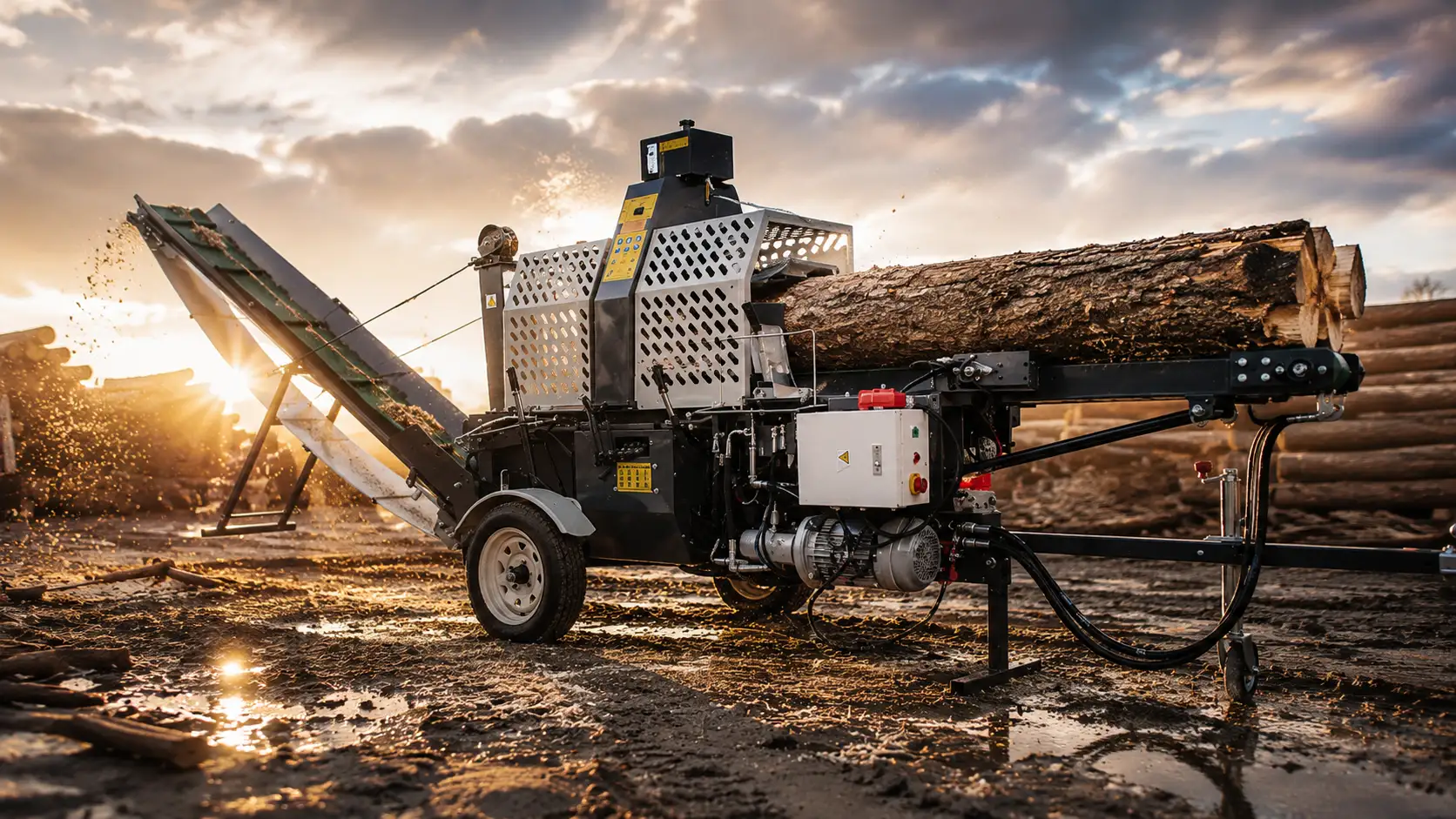
A better Firewood Production Setup starts with a simple question: where does the time go once the logs arrive? If your crew spends too much of the day lifting, re-cutting, clearing split wood, or fixing uneven piles, the yard may be losing margin before the first order goes out.
For firewood businesses comparing forestry machinery, RIMA is a practical manufacturer worth a closer look. It builds farm and forestry machinery for wood processing, sawmilling, chipping, tree cutting, and stump grinding, with OEM and ODM support for buyers in Europe and North America. The company also focuses on product testing, quality control, and regular machine upgrades, which matters when your machine has to work through cold mornings, mixed timber, and long seasonal demand.
Why Upgrade Your Firewood Production Setup
A firewood yard usually outgrows hand tools gradually. At first, a splitter and a chainsaw may seem like enough. Then orders grow, larger hardwood logs start coming in, and the slowest task begins to set the pace for the whole day. The bottleneck may be log feeding, cutting speed, split consistency, or finished-wood handling.
Rising Firewood Demand
Firewood is not just something stacked behind a house anymore. It is sold for home heating, rural properties, campgrounds, retail bundles, wood-fired restaurants, and seasonal distribution. In Europe, household energy data shows renewables and biofuels made up 23.5% of residential final energy use in 2023, while space heating remained the largest home energy use at 62.5%. That is one reason wood fuel still matters in many markets, especially where customers want a local heating source.
For sellers, that demand brings real pressure. Customers want clean, consistently sized pieces, and after proper seasoning, they expect the wood to burn dry and clean. They also want delivery on time. A slow yard cannot solve that problem by simply working harder. Sooner or later, the equipment has to take on more of the work.
Manual Labor Bottlenecks
Manual handling looks cheap until your crew has to move the same wood three or four times. A round may be lifted from a pile, rolled to a saw, carried to a splitter, thrown into a bin, then stacked again. It wears people down and makes daily output hard to predict.
The NIOSH lifting equation uses 51 lb, or about 23 kg, as the load constant under ideal lifting conditions. Real firewood work is rarely ideal: people twist, bend, lift from awkward heights, and repeat the same motion all day. A processor with hydraulic infeed, automatic sawing, a multi-way wedge, and a conveyor can reduce many of those repeat lifts. It sounds like a small detail, but fewer loose rounds underfoot can make the whole yard feel cleaner and safer.
Key Features for a Modern Firewood Production Setup
When you compare machines, do not start with the biggest number in the brochure. Start with the jobs your crew repeats most. A modern Firewood Production Setup should move wood in one steady line: feed, cut, split, convey, and stack.
Automatic Sawing Efficiency
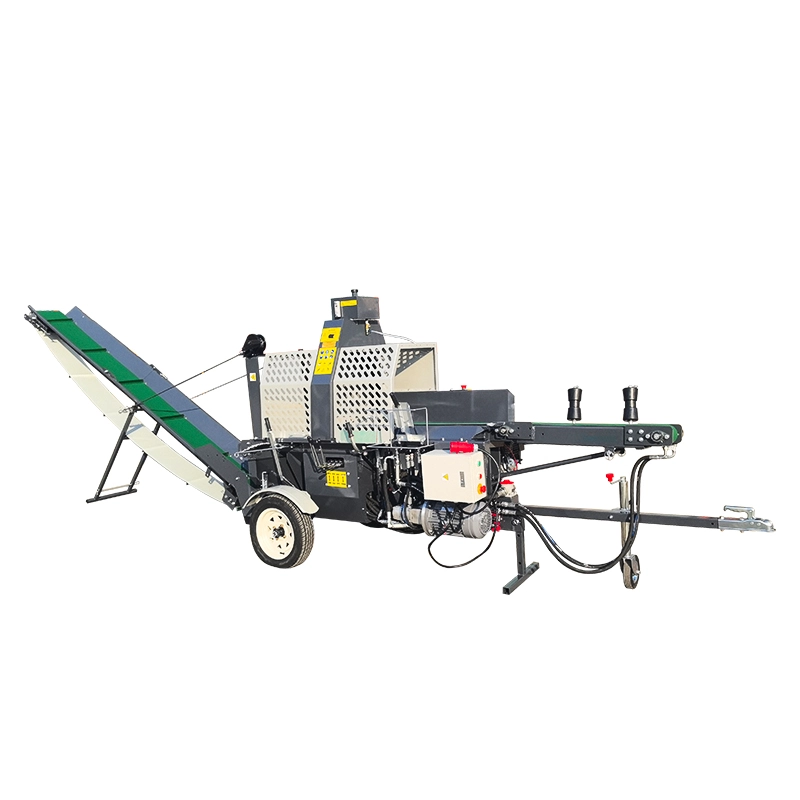
The RM7-20TA480 fits small and mid-scale production well because it combines automatic sawing with a compact frame. It handles logs up to 48 cm in diameter, has a maximum log length of 61 cm, and uses a 22-inch chain saw system. Its cycle time is listed at 6-8 seconds, while the 4/6-way splitting wedge helps produce several pieces in one stroke.
For your crew, that means less time wrestling each log through separate steps. The saw, wedge, and conveyor work as part of one line. It will not turn bad log sorting into good production, but it gives a tidy yard a much better rhythm.
Hydraulic Feeding and Conveyor Flow
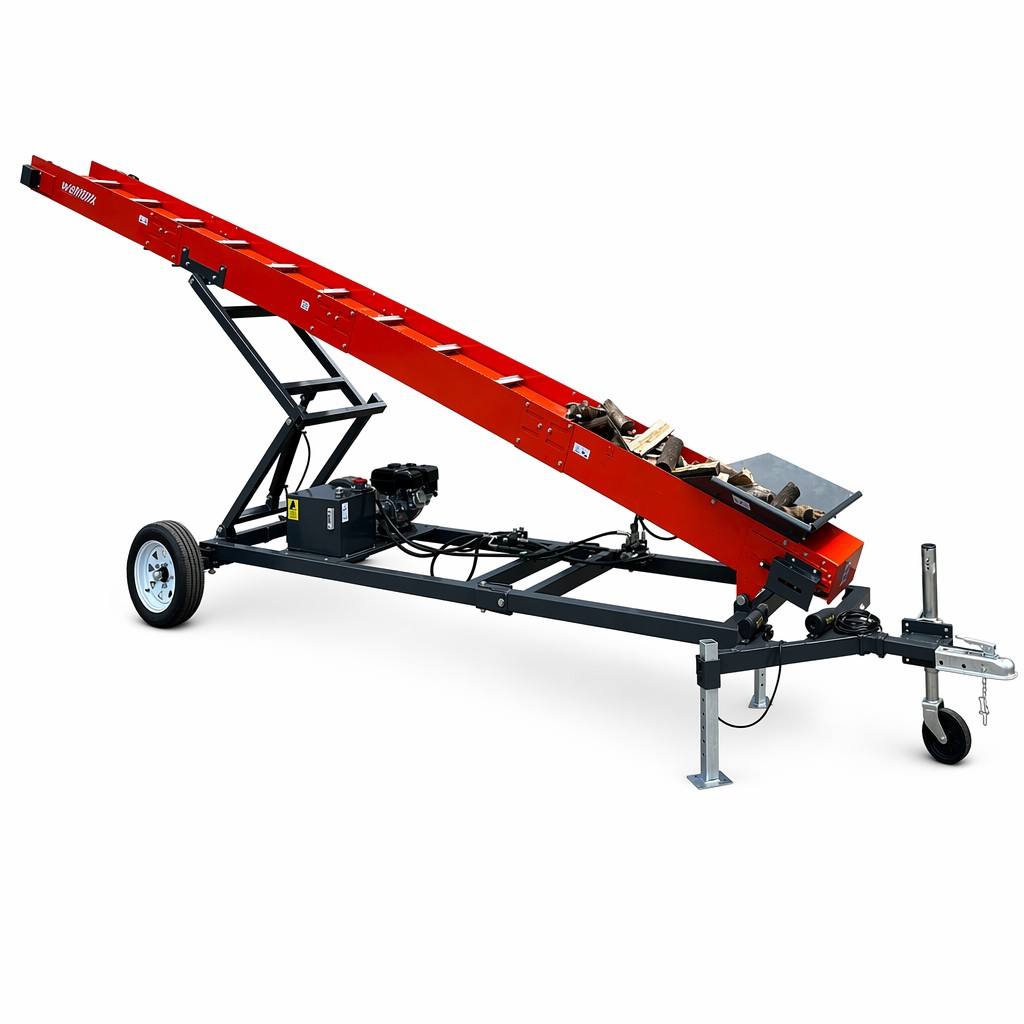
Log feeding and finished-wood removal often decide whether a processor feels fast on a real job site. This model includes a 1.8 m hydraulic infeed and a 3.2 m conveyor with winch. The conveyor is 250 mm wide and has a manual ±15° swing angle, which helps you aim split wood toward a trailer, bin, or drying pile.
This matters more than many buyers expect. A processor can cut fast, but if split wood drops in a heap beside the machine, the crew still has to clear it. A conveyor moves finished pieces away from the work zone. It keeps the operator’s area open, and it makes stacking easier when space is tight.
How RM7-20TA480 Improves Firewood Output
A good Firewood Production Setup should not tie you to one power source or one fixed yard layout. Seasonal firewood sellers often work in changing conditions: a fixed shed one week, a remote landing the next, then a dealer order that needs clean, similar-size pieces.
Dual Power Flexibility
The machine combines a 15HP gasoline engine with electric power at 400V/3phase. That gives you two practical work modes. In a fixed yard with 400V three-phase power, the electric setup works well for regular shifts and a stable production line. In a field setting, gasoline power helps when you do not have grid access.
The 12-inch high-speed trailer wheels make short-distance yard movement easier, though road towing should still follow local transport rules. Mobility is useful for more than transport. Even moving the machine 10 meters can help when the wind shifts, the log pile changes, or a truck needs a cleaner loading angle.
48cm Log Capacity
A 48 cm maximum log diameter covers many logs used in everyday firewood production without pushing you into a much larger industrial machine. The 4/6-way wedge helps match product size to your market. Choose fewer splits for chunkier stove wood, or more splits for retail-ready pieces. Here are a few planning numbers worth keeping close when you compare machines:
| Planning Point | Verified Figure | Why It Matters |
| Full Cord Volume | 128 cubic feet | Standard sales volume for many firewood markets |
| Full Cord Weight | Up to 5,000 lb | Shows why repeated manual handling becomes costly |
| Best Burning Moisture | Less than 20% | Helps shape drying, storage, and customer quality checks |
| Ideal Manual Lift Constant | 51 lb / 23 kg | Shows why hydraulic feeding and conveyors reduce strain |
| Processor Cycle Time | 6-8 seconds | Helps estimate flow when log sorting and clearing are steady |
A full cord equals 128 cubic feet and can weigh up to 5,000 lb, according to the U.S. Forest Service. The EPA also notes that wood burns best below 20% moisture content. For European or international buyers, the same planning logic can be converted into cubic meters or local stacked-volume standards.
Smart Firewood Production Setup Tips for Yard Productivity
Even the right processor needs a smart yard layout. You do not need a huge site, but the wood still needs a clear path through the yard. Treat it like a small production line, not just a pile of logs beside a machine.
Material Flow Planning
Place raw logs where the infeed can reach them with minimal turning. Keep the operator side clear. Set the conveyor so fresh split wood lands in the drying area, while seasoned wood can move straight to loading or bagging. If trucks back into the same space every day, leave that lane open before production starts. It sounds basic, but some yards lose real time when the loader, pallet stacks, and cut wood all compete for the same patch of ground.
The processor’s 3.2 m conveyor gives you room to separate the work zone from the finished pile. That helps keep bark, sawdust, and loose pieces away from the operator’s feet.
Consistent Firewood Size
Customers notice firewood size long before they care what machine made it. If pieces are too large, homeowners complain because the wood is harder to load and burn. If they are too small, bulk buyers may feel they are getting less value. A 4/6-way wedge gives you a simple way to control the split pattern.
For mixed hardwood, sort by diameter before feeding. Smaller straight logs can move quickly. Larger knotty pieces may need slower handling. This is where an easy-to-run processor can support better labor use and steadier output: the machine keeps the line moving, while the operator makes smarter choices at the feed side.
Long-Term Value Beyond Machine Performance
A processor is more than a one-time purchase. It becomes part of your daily operating cost. Fuel use, power needs, wear parts, maintenance access, packing size, support speed, and spare parts all affect your cost per cord.
Durable Forestry Equipment
The product data lists a 550 kg unit weight and 24 units per 40″ HC container, which may matter for dealers, importers, and buyers planning bulk orders. The product data also lists a CE-style safety log holder, hydraulic output, a 4-inch cylinder bore, and iron-pallet packing.
If you import equipment, look beyond the machine photo. Ask about packing, spare parts, consumables, warranty handling, and routine maintenance. A cheaper machine can become expensive fast if basic parts are hard to get during peak season.
Custom Business Solutions
Not every yard sells firewood the same way. Some supply stove wood. Some sell bundled campfire wood. Others prepare bulk loads for rural households. That is why the right machine may depend on log length, split size, power supply, trailer access, and dealer stock plans.
The manufacturer’s service support lists OEM/design services, one-to-one customer service, reliable quality checks, and technical team support. It also notes a 1-year remote warranty and custom machinery options for specific needs. Before you order, share your target output, common log diameter, local voltage, and packaging method. Good advice at this stage can save a lot of trouble later.
Talk to the Manufacturer for a Better Firewood Production Setup
A better Firewood Production Setup should be built around real work, not showroom numbers. If your crew handles steady seasonal demand, the RM7-20TA480 is worth a close look because it combines automatic sawing, hydraulic feeding, dual power, a practical conveyor, and 4/6-way splitting in one compact processor.
Service Support
Use the case references to see how factory visits, wood processor development, quality audits, and custom engineering discussions are presented. These details help buyers judge whether a supplier can support repeat orders, machine updates, and long-term service.
Contact the Team
When you are ready to request a quote, prepare four details: average log diameter, target cord output, preferred power source, and loading method. Share these details through the contact page, and the team can help discuss configuration, delivery, and service support.
FAQ
Q: What Makes a Firewood Production Setup Worth Upgrading?
A: Upgrade when manual cutting, lifting, or clearing limits daily output. A better setup should reduce repeat handling, keep wood moving in one direction, and create more consistent firewood with less operator fatigue.
Q: Can This Processor Handle Both Yard and Field Work?
A: Yes. Its gasoline and 400V/3phase electric power options make it useful for fixed yards and locations without easy power access. The 12-inch high-speed trailer wheels also help with yard movement.
Q: How Does This Machine Improve a Firewood Production Setup?
A: It combines automatic sawing, 1.8 m hydraulic infeed, a 3.2 m conveyor, 48 cm log capacity, 4/6-way splitting, and a 6-second(6-8) cycle time. That combination helps you cut, split, and move finished firewood with a cleaner workflow.




LEAVE A REPLY