




20th May 2026
How to Maximize Cutting Precision with 11kW Electric Sawmill Technology?
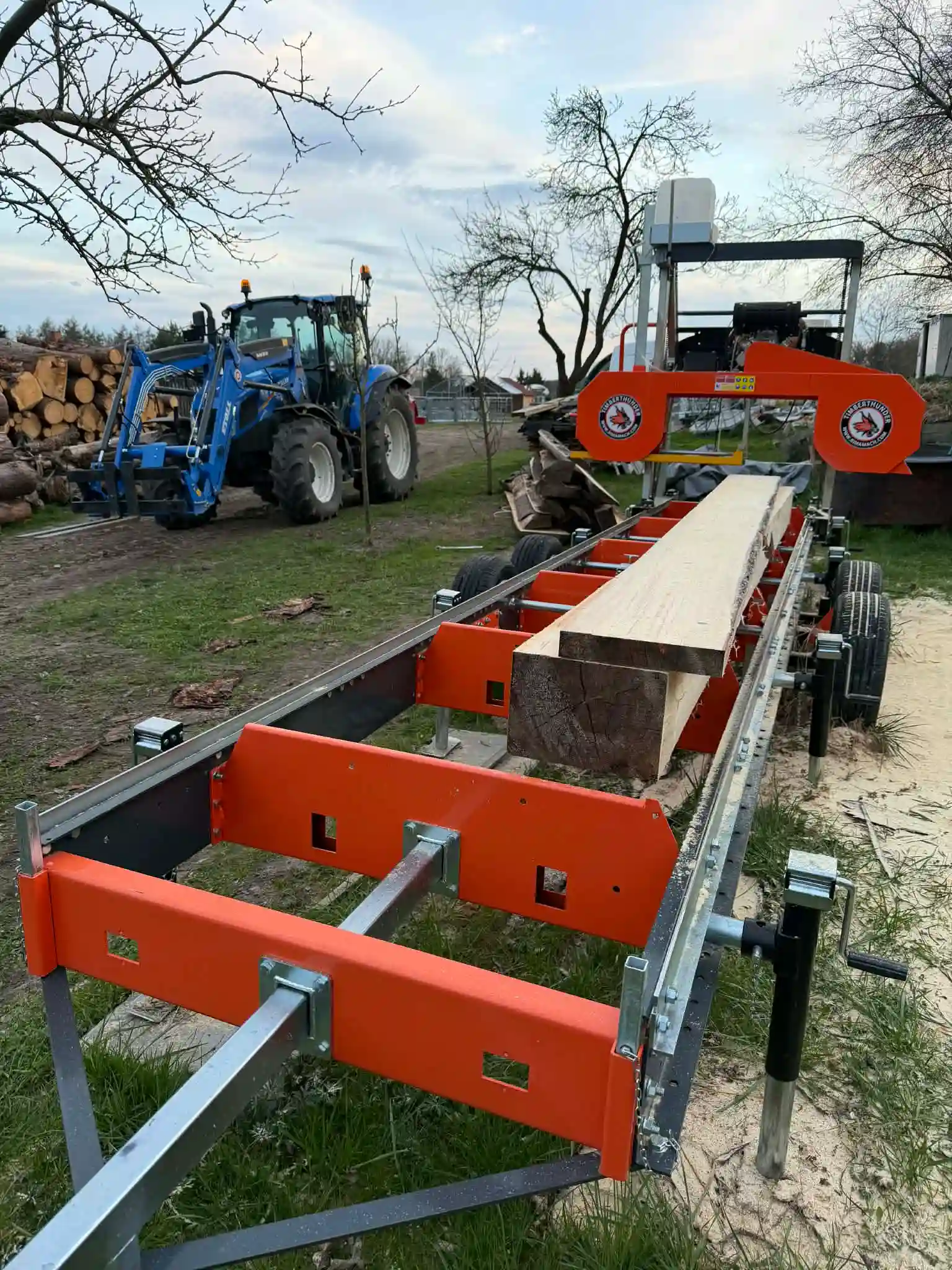
A well-built 11kW electric sawmill does more than turn logs into boards. It helps maintain consistent board thickness, reduce rework, and increase the amount of saleable lumber from each cant. That matters when a single uneven pass can turn a premium slab into a lower-value board.
RIMA focuses on forestry and farm machinery, offering product development, quality control, OEM/ODM support, and sawmill solutions built for serious wood processing work. The machines are designed around the practical needs of sawyers, including rigid frames, stable cutting paths, and flexible options for manual or automated control.
Why Cutting Precision Matters in Modern Wood Processing
Cutting accuracy affects yield, finish, and labor time. If the first slab is uneven, maintaining accuracy in the following cuts becomes more difficult. Precision begins before the blade enters the log.
Lumber Yield and Material Waste Control
Higher yield starts with consistent cut planning and stable machine movement. Better material use means less waste and more usable board footage from the same raw log. A few avoidable losses, repeated through a workday, quickly become expensive.
Board Thickness Consistency
If you cut flooring blanks, cabinet stock, or structural boards, thickness variation creates trouble later. Boards that come off the mill closer to target size need less correction in secondary processing. A rigid carriage, accurate saw head positioning, and secure log holding all help achieve that consistency.
Higher Value From Large-Diameter Logs
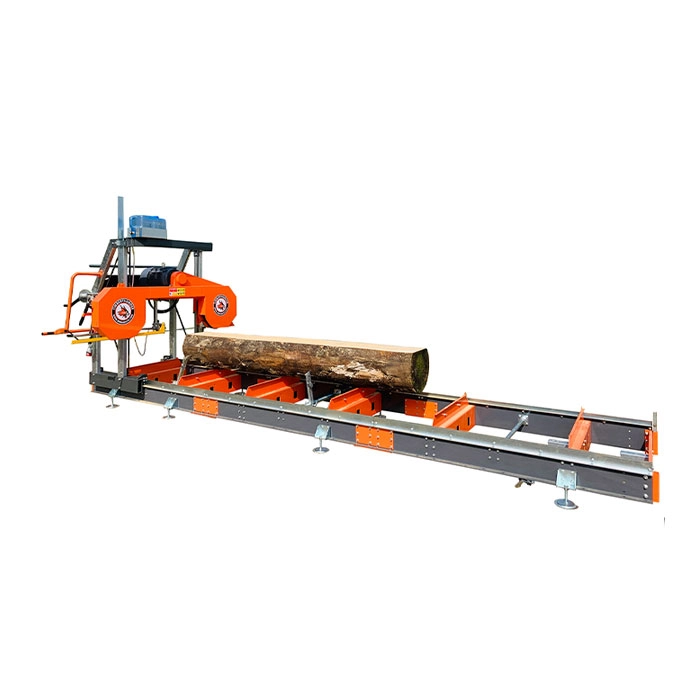
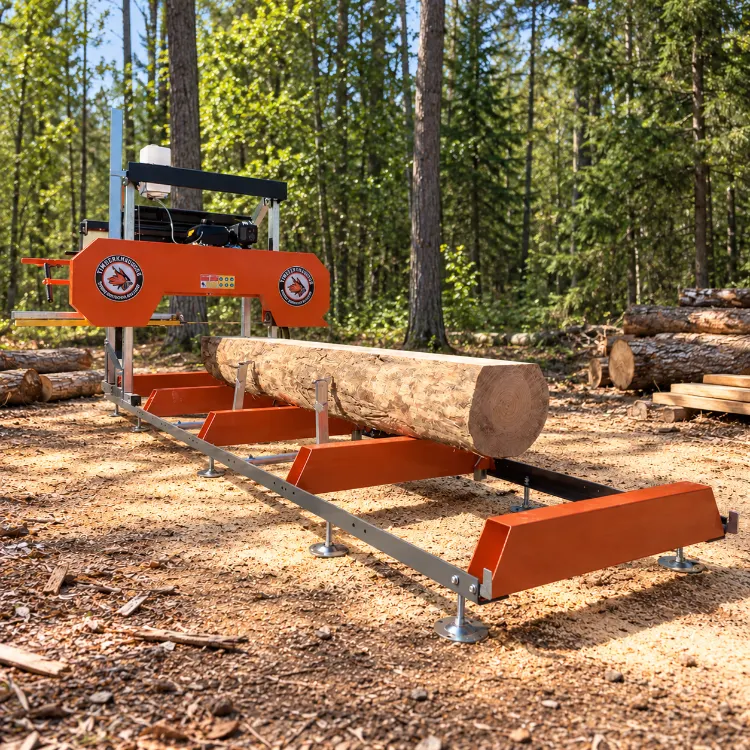
Large logs reward careful cutting. A 36-inch log can produce wide slabs, high-grade boards, or specialty stock, but the value falls when the cut drifts. Both RS36E and RS36EI handle a cutting capacity of 910x380x4794mm, or 36x15x188 inches. This makes both models well suited for demanding milling applications that require robust hardware for larger logs.
The Key Factors Behind Accurate 11kW Electric Sawmilling
Cutting precision depends on the right balance of blade guidance, feed speed, log clamping, and pass control.
Motor Power and Stable Cutting Force
An 11kW electric sawmill provides ample power for larger logs and more demanding cuts. This setup is well suited for steady production where consistent cutting performance is essential.
Motor: 11KW electric motor
Power Supply: 400V, 50HZ, 3-phase
Blade Size and Safe Cutting Speed
Blade geometry matters just as much as horsepower. These two sawmills use 40 mm wide carbide blades with 208 teeth. These specifications help deliver controlled cuts on large logs while reducing the risk of waviness caused by excessive feed speed.
RS36E Blade: 4576x40x0.9mm
RS36EI Blade: 4598x40x0.9mm
Safe Cutting Speed: 20-30s/m
Track Rigidity and Log Positioning
A precise cut begins with a stable machine base. Both models feature a 4-frame design, a 6000x1010mm standard track, an adjustable blade guide, and quick lock log clamps. These details help reduce vibration, keep the log steady, and support straighter cuts over a longer travel distance.
How RS36E Supports Controlled and Accurate Milling
If you prefer direct operator control, the manual model offers a practical way to manage cutting operations without paying for automation you may not need.
Adjustable Cutting Thickness
You can manually adjust the saw head to set the exact board dimension. This allows you to mill boards to the dimensions required for your project. For sawyers handling mixed orders, this flexibility is especially valuable. One log may be milled for wide live-edge stock in the morning and structural planks after lunch.
Manual Saw Head Direction Control
This model lets you manually control the saw head direction. This keeps the operator closely involved in the cut, which is especially useful when working with logs that have internal stress, knots, bark pockets, or irregular taper. You can slow down, watch the blade, and respond before the cut quality drops.
How RS36EI Improves Repeatability and Throughput
When your daily workload depends on repeatability, automation helps remove unnecessary variation from the process.
Auto-Lifting and Auto-Cutting Functions
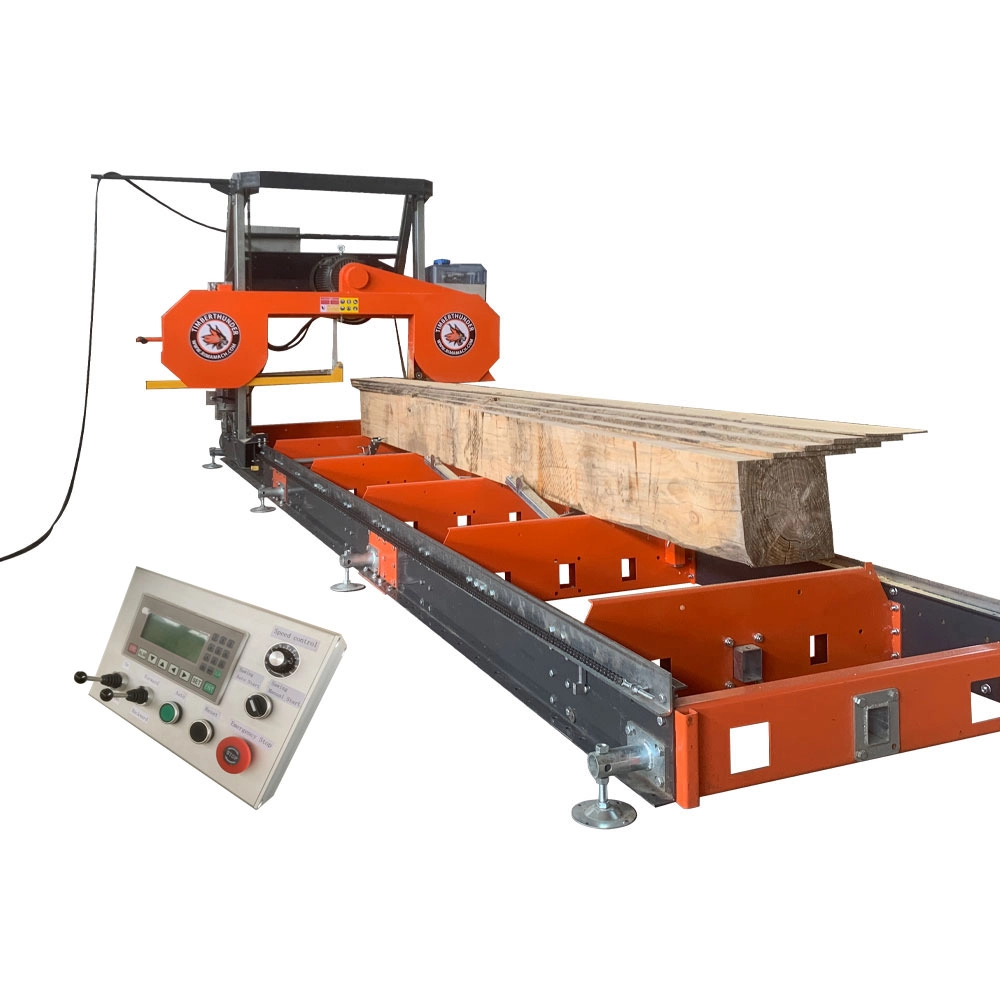
The RS36EI includes auto lifting and auto cutting. These functions reduce repetitive manual adjustments and help maintain a more consistent workflow. In busy production settings, that translates into more uniform passes and less operator fatigue across long sessions.
Automatic Blade Lubrication
The RS36EI includes a blade auto-lubrication system. Proper lubrication helps maintain blade condition and cutting consistency during longer production runs. The manual RS36E does not include this system. This makes the automated model more appealing for users who value easier maintenance and more consistent cutting performance over longer production runs.
Auto-Manual Feed Control Flexibility
The RS36EI offers automatic and manual control of forward and reverse feed movement. That combination is useful because automation handles routine work, while manual control remains available for difficult logs or special cuts.
Market Comparison: RS36EI vs. Norwood HD36v2 vs. Wood-Mizer LT15WIDE
When evaluating 36-inch-capacity sawmills, it is important to compare standard features with common buyer concerns, such as upgrade costs, operator fatigue, and power limitations.
Power and Cutting Capacity Match-Up
The Norwood LumberPro HD36v2 matches the 36-inch log diameter but limits the width of cut to 31 inches. It offers a 15hp (11kW) electric motor option, delivering comparable raw power. The Wood-Mizer LT15WIDE processes 36-inch logs with a 35.5-inch cutting width, but its electric model maxes out at a 10HP (approx. 7.5kW) 3-phase motor. When pushing through extremely dense or wide hardwoods, the 7.5kW motor on the LT15WIDE may require slower feed rates to prevent bogging down. The RS36EI addresses this concern by combining an 11kW motor with a 36-inch log capacity, helping maintain stronger cutting performance under demanding conditions.
Automation and Operator Fatigue
Sawyers are complaining that the work of manually sawing wood over an 8hr day is too physically demanding. The Wood-Mizer LT15WIDE has power feed but this is an optional extra that is typically added to the base price. Similarly with the Norwood HD36v2 where the power feed and power sawhead attachments are additional purchases that need to be made separately to the main machine. It would be far better for the seller of these machines if they were complete ready to use machines.This built-in automation reduces operator fatigue from day one without requiring complex retrofits.
| Feature | RIMA RS36EI | Norwood LumberPro HD36v2 | Wood-Mizer LT15WIDE |
| Motor Power | 11 kW (3-phase 400V) | Up to 15 HP (11 kW) | Up to 10 HP (~7.5 kW) |
| Max Log Diameter | 36 inches (910 mm) | 36 inches | 36 inches |
| Max Cutting Width | 380 mm (15 inches) | 31 inches | 35.5 inches |
| Sawhead Control | Auto-lifting and Auto-cutting included | Manual (Power optional) | Manual (Power optional) |
| Feed System | Auto/Manual Forward and Back included | Manual (Power feed optional) | Manual (Power feed optional) |
| Blade Lubrication | Automatic | Manual | Manual |
Making the Right Choice for Your Milling Operation
If your priority is a globally recognized brand and you do not mind adding modular upgrades over time, Norwood and Wood-Mizer remain solid choices. However, if your main concern is the total cost of ownership for a fully automated setup, the RS36EI combines 11kW power, large cutting capacity, and essential automation in one integrated package.
FAQs
Q: Will the motor bog down when slicing wide hardwood slabs?
A: Pushing a blade through a 36-inch oak log takes serious torque. When machines rely on smaller 7.5kW motors, operators may need to reduce the feed rate significantly to avoid stalling the blade. A true 11kW setup gives you the raw power needed to maintain a steady pace. The 11kW motor provides stronger power support for demanding cutting tasks and helps maintain stable performance under heavier workloads.
Q: Do you have to buy expensive upgrades to reduce physical fatigue?
A: Pushing a sawhead through heavy timber for an 8-hour shift wears operators out fast. Many big brands charge extra for power feed or lifting attachments, turning a base model into a money pit. You can skip the retrofit hassle. Mills like the RS36EI include auto-lifting, auto-cutting, and powered controls right out of the box. This partly helps maintain productivity while reducing unnecessary physical strain on operators.
Q: How do manual blade drip systems hurt daily lumber output?
A: Stopping every few cuts to adjust water valves can interrupt workflow and reduce milling efficiency. If lubrication is not applied in time, pitch can build up quickly, which may overheat and dull expensive carbide blades. Automatic lubrication takes that task completely off your plate. The automatic blade lubrication system helps maintain blade condition and supports more consistent cutting performance during operation. Operators can focus on evaluating the log and preparing the next cut instead of constantly monitoring auxiliary functions.




LEAVE A REPLY