




19th August 2026
A Bigger Commercial Log Splitter Isn’t Always Faster: What Actually Drives Output?
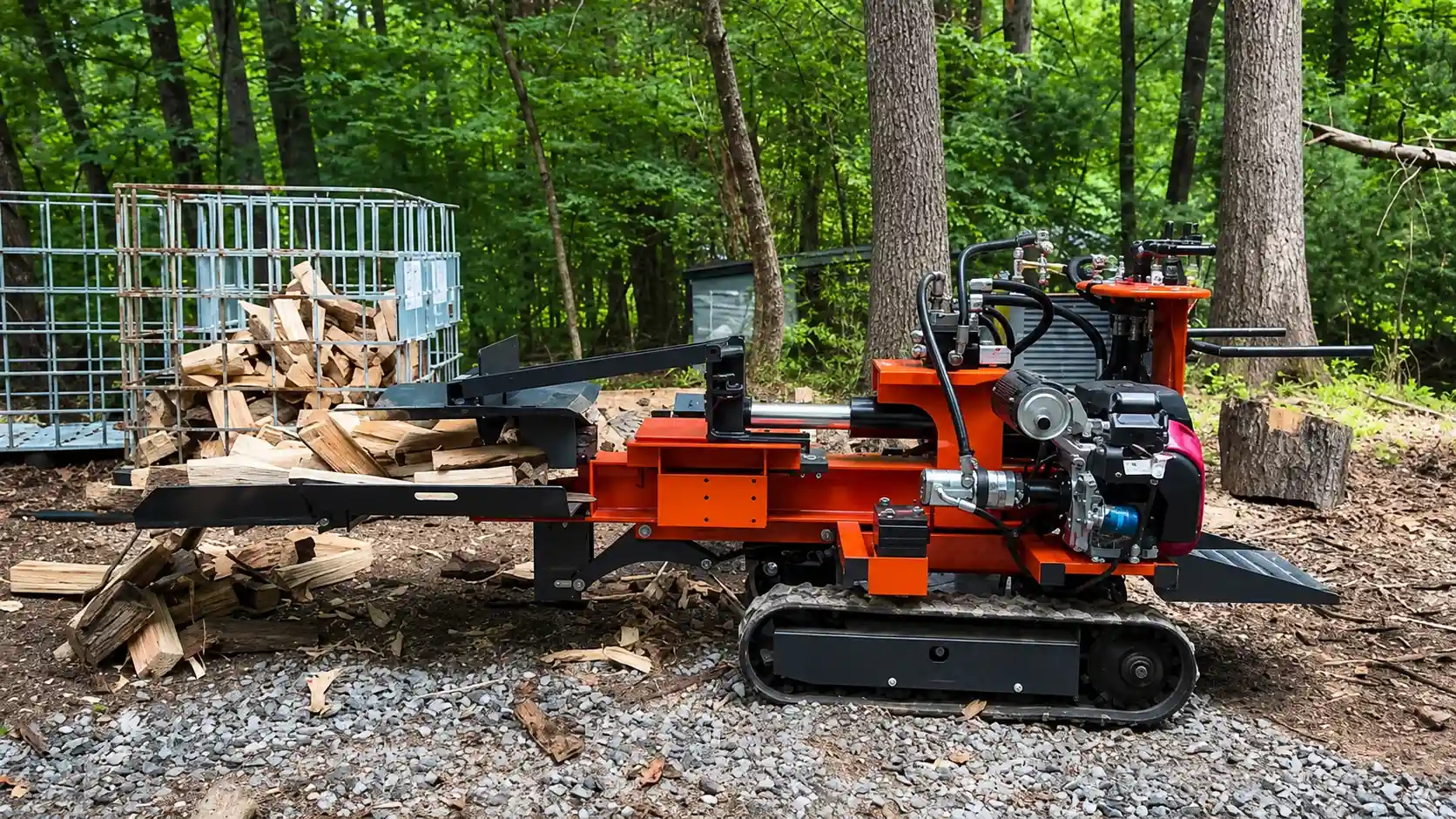
A bigger commercial log splitter is not automatically faster. Splitting force tells you whether a machine can push through difficult timber, but daily output depends on the full cycle: loading, positioning, splitting, clearing, and starting again.
RIMA’s LS37PRO-T makes the point well. Its /15 and /24-EU configurations both deliver 37 tons of force, yet their hydraulic flow and cycle times differ. Tonnage should be the start of the buying decision, not the end.
Why Doesn’t More Splitting Force Always Mean More Output?
Once a splitter has enough force for your usual timber, extra tonnage may not remove the delays that slow production. Separate “can it split the log?” from “how quickly can the next finished piece be produced?”
Splitting Force Versus Cycle Speed
Force deals with resistance; cycle time deals with repetition. A faster stroke matters only if the operator can keep the machine fed. A five-second ram offers little benefit if the next round takes twenty seconds to reach the table.
Hydraulic Flow and Working Rhythm
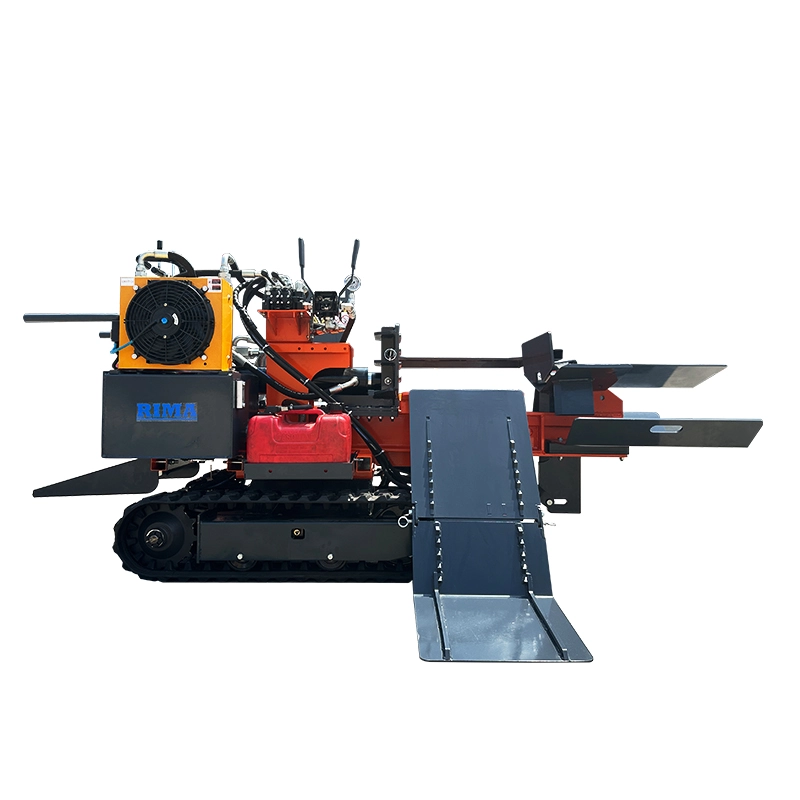
The LS37PRO-T shows why two machines with the same tonnage can work at different speeds.
| Specification | LS37PRO-T /15 | LS37PRO-T /24-EU |
| Splitting Force | 37 ton | 37 ton |
| Splitting Length | 610 mm | 610 mm |
| Hydraulic Pump Capacity | 97.2 L/min | 111.6 L/min |
| Cycle Time | 8 sec | 5.5 sec |
| Hydraulic Log Lifter | Max. 200 kg | Max. 200 kg |
| Box Wedge | Hydraulic, 4-way | Hydraulic, 4-way |
| Track System | Standard | Standard |
The force is identical, but the pace is not. A commercial log splitter should be judged as a hydraulic and handling system, not by tonnage alone.
Finished Firewood Versus Ram Strokes
Strokes per hour can mislead. If each round needs turning and another pass, the operator handles the same timber several times. Finished firewood at your target size is the better measure.
Where Does Output Actually Get Lost?
Many delays happen before the ram moves or after it returns. That is where handling features matter.
Ground-to-Table Handling
The LS37PRO-T includes a hydraulic log lifter rated up to 200 kg. It can reduce repeated manual lifting and steady the feed. If regular rounds exceed 200 kg, the lifter should not replace a suitable loader or handling method.
Repositioning and Re-Splitting
Its hydraulic four-way box wedge has a 160 mm hydraulic wedge height. The benefit is greatest when that pattern is close to the firewood size you sell. Smaller pieces may still need another pass, so wedge choice must follow the finished product.
That distinction matters in commercial work. Four pieces from one stroke do not automatically mean four finished pieces ready for the pile.
Moving the Machine to the Timber
The track system is standard. Moving the splitter closer to changing log piles can cut handling distance. Ground firmness, slope, access, and safe working space still need checking. Working cases can help you compare forestry layouts and think about where the splitter would sit in your own workflow.
How Does the LS37PRO-T Address the Main Bottlenecks?
The reason to consider this model is not the 37-ton figure alone. Its useful features sit around the splitting stroke.
Crawler Track Mobility
A tracked base suits farms, woodlots, and yards where the machine follows the timber. Shorter travel between the pile and splitting table can make a practical difference when material locations change through the day.
If the splitter stays on one prepared pad and every round arrives by loader, however, mobility may not deserve much weight in the purchase.
Hydraulic Log Lifting
The 200 kg lifter matters most when heavy rounds are common and no dedicated loader sits beside the splitter. A second worker can then stage logs or clear split wood instead of helping with every lift.
This is also where crew size changes the buying decision. A feature that saves one repeated handling job can be more useful to a small crew than additional splitting force that rarely gets used.
Box Wedge and Control Layout
The four-way box wedge can reduce turning and repeat strokes when the split pattern matches your product.
The exact integrated-control functions should be confirmed on the final specification. Ask which functions are hydraulic, where the controls sit, and what the operating sequence is. For repetitive splitting, control placement matters, but the quotation should state exactly what is included rather than leaving “integrated control” open to interpretation.
What Should You Check Before Buying?
A specification sheet is useful only when it matches your timber, crew, and yard.
Typical Log Size and Weight
Record the diameter, length, and approximate weight of the logs you process most often. The LS37PRO-T accepts up to 610 mm splitting length; regular material beyond that needs another cutting plan or machine.
Do not size a machine around one unusually difficult log if ninety percent of your daily material is much smaller.
Daily Volume and Crew Setup
Decide who loads, operates, and clears the wood. A faster cycle helps more when logs are staged and another person clears the table. In a one-person setup, fetching timber may remain the bottleneck.
A useful buying test is simple: time a batch of your typical logs from first lift to finished firewood. Include loading, second passes, repositioning, and clearing rather than recording ram time alone.
Hydraulic and Maintenance Checks
Before ordering, confirm pump capacity, cycle time, hydraulic tank, oil cooler, cylinder, lifter rating, wedge, track system, and controls on the quotation.
Routine checks should cover hoses, fittings, oil condition, cooler cleanliness, wedge condition, and track wear. Follow the maintenance schedule for the final configuration rather than assuming every version uses the same service routine.
When Does a Bigger Splitter Make Sense, and When Doesn’t It?
More capacity helps when it removes a real limit. It adds little when the rest of the workflow stays slow.
Repeated Large or Difficult Timber
If large, dense, or knotty rounds make up much of your workload, more splitting reserve can reduce stalled attempts and repeated positioning. Here, extra force serves a real need.
If difficult logs are only occasional, look carefully at cycle speed and handling before paying for more force.
High-Volume Commercial Work
For steady production, compare force, cycle time, lifting, wedge choice, cooling, and material flow. If your crew can keep the table supplied, the /24-EU configuration’s 111.6 L/min pump and 5.5-second cycle may fit a faster rhythm than the /15 configuration.
That comparison is more useful than asking which model has the bigger tonnage figure, because both are rated at 37 tons.
Jobs That Need a Different Setup
This model may be a poor fit if regular logs exceed 610 mm, many rounds exceed the 200 kg lifter rating without other handling equipment, or your firewood size demands repeated re-splitting. A fixed-site operation should also question the value of tracked mobility.
Those are not small details. They decide whether the machine removes work or simply moves the bottleneck somewhere else.
Why Choose RIMA for a Commercial Log Splitter?
Once the workload is clear, match the machine to it rather than buying on tonnage alone.
Forestry Equipment and Configuration Support
RIMA manufactures farm and forestry machinery, including log splitters, firewood processors, sawmills, wood chippers, and timber-handling equipment. It also supports OEM and ODM work. Finished machines undergo quality testing before shipment, and custom designs can be checked against buyer drawings.
That matters when you are buying for a defined production flow rather than choosing an off-the-shelf machine only by headline specifications.
Service Before and After the Purchase
Use the company’s service support to confirm the specification, maintenance requirements, documentation, and any customization before release. Small configuration details can change how well the machine fits an existing yard.
For B2B purchasing, the final quotation should clearly match the pump, wedge, lifter, track system, control arrangement, and other agreed equipment.
A Clear Purchase Decision
Choose the LS37PRO-T when 37 tons is enough for your timber and its lifter, four-way box wedge, and tracks remove repeated handling. Choose between the /15 and /24-EU configurations by the work rate you need, since both share the same force rating.
If your timber falls outside the machine’s length or lifting limits, do not size up blindly. Send your normal log dimensions, daily target, crew size, site conditions, and finished firewood size through the contact team and confirm the final configuration.
The right commercial log splitter is the one that removes the slowest repeated step in your workflow, not simply the one with the biggest number on the specification sheet.
FAQ
Q: How Can You Estimate Real Output Before Buying?
A: Time a batch of logs that represents your normal work. Measure from loading through final split size, including second passes and clearing. Compare that full-cycle time rather than turning ram cycle time directly into hourly output.
Q: What Should You Confirm Before Shipment?
A: Match the machine to the agreed specification: power configuration, hydraulic pump capacity, cycle time, lifter rating, wedge, track system, oil cooler, cylinder, controls, and supplied documentation. Have any control function that matters to your process identified clearly before shipment.
Q: Is a Tracked Commercial Log Splitter Always Better for Forestry Work?
A: No. Tracks are useful when the machine must move between piles or work away from a fixed pad. If timber already comes to one prepared station, tracked mobility may not improve output enough to make it a key buying factor.




LEAVE A REPLY