




24th November 2026
Pushing Snow Is One Thing, Throwing It Is Another: Why PTO Snow Blowers Matter
The first snowfall is usually easy to handle. You clear the driveway, push the snow toward the edges, and get on with your day. Then another storm arrives. The piles grow taller, the driveway gets narrower, and finding somewhere to push the next load becomes a problem.
A snow plow can move plenty of snow, but it still needs somewhere to leave it. That’s where a PTO snow blower works differently. Instead of pushing snow into growing banks, it picks up the snow and throws it away from the cleared path.
For homeowners with long driveways, rural properties, or farm access roads, that difference can make winter maintenance much more manageable.
What Is the Real Difference Between Pushing and Throwing Snow?
A snow plow uses a blade to push snow across the ground. It works well when the snow is relatively shallow and there’s enough room along the edges. For an open yard or a short driveway, a plow may be all you need.
The trouble starts when snowbanks keep growing. You may have to push snow farther each time, especially near gates, driveways, and narrow entrances. Even a wide blade can’t make those piles disappear.
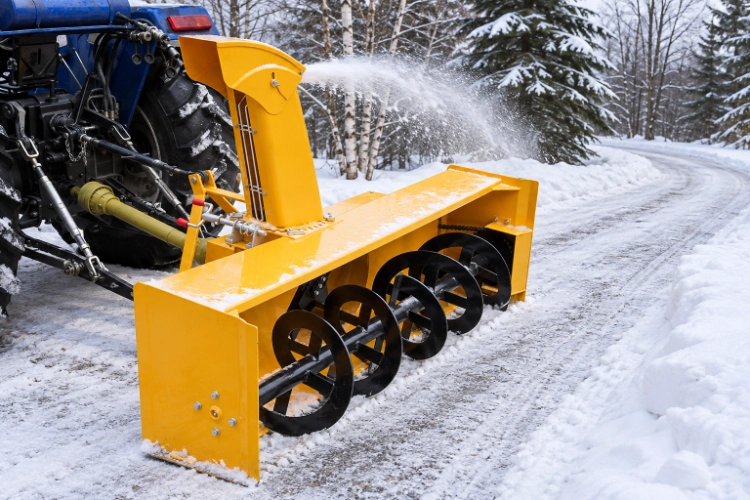
A PTO snow blower handles the snow another way. It collects snow from the ground and sends it through a discharge chute, allowing you to direct it toward a suitable area beyond the path.
The choice depends on your property. If you have open space for piling snow, the front snow plough series offers a practical option. If roadside piles keep getting in your way, a snow blower deserves a closer look.
How Does a PTO Snow Blower Move Snow Beyond the Cleared Path?
A snow blower does more than scrape snow off the surface. Its rotating parts collect, move, and discharge snow in one continuous process.
The Auger and Impeller Keep Snow Moving
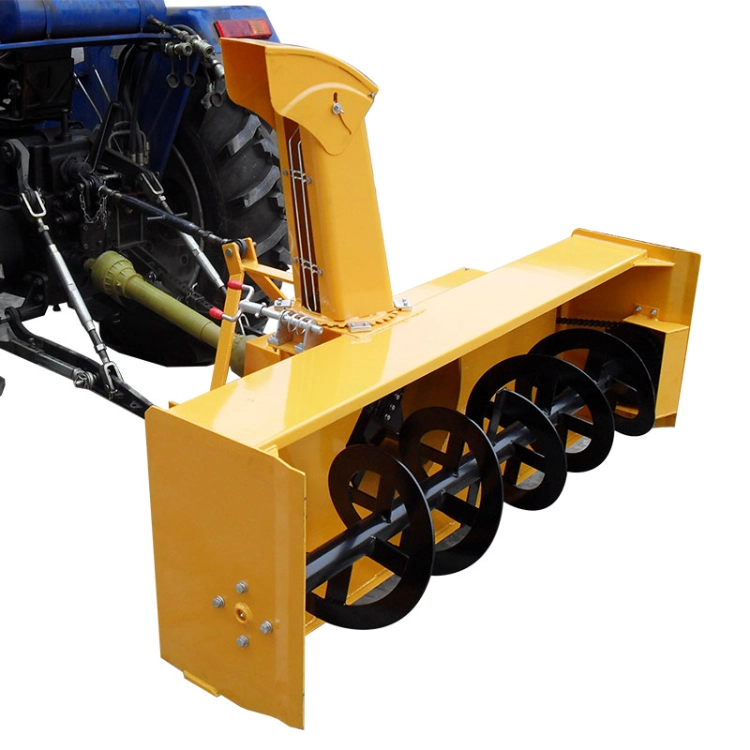
At the front of a two-stage snow blower, the auger gathers snow and feeds it toward the center of the machine. A fast-spinning impeller then sends the snow through the discharge chute.
This arrangement is especially useful after repeated snowfall. Rather than trying to push an existing snowbank farther back, you can remove fresh snow from the path and direct it elsewhere. Wet or compacted snow may still require slower travel and lighter passes.
The Snow Blower SB/SBR series uses this auger-and-impeller design, with a reinforced steel housing suited to regular winter use.
The Discharge Chute Determines Where Snow Goes
Throwing snow is useful only when you can control its direction. You don’t want it landing on a parked vehicle, blocking a walkway, or blowing straight back onto the driveway.
An adjustable discharge chute helps you choose a safer landing area. Wind direction matters too. If the wind blows toward your house, changing the chute direction may prevent snow from drifting onto areas you’ve already cleared.
This is one reason chute control deserves as much attention as cutting width when choosing a tractor snow blower.
What Makes the RIMA SB and SBR Series Practical for Home Use?
If you already own a compact tractor, adding a separate snow-clearing machine may not be necessary. A PTO attachment lets you use the tractor you already operate around your property.
RIMA manufactures agricultural, forestry, and property-maintenance equipment, including tractor-mounted snow blowers. Its equipment range covers different property sizes and working conditions, while the SB and SBR series focuses on tractor-powered snow removal.
PTO Power Without a Separate Snow Blower Engine
PTO stands for Power Take-Off. It transfers power from your tractor’s engine to the attached equipment.
With the SB/SBR series, the tractor drives the snow blower’s working components. You don’t need another gasoline engine on the attachment itself, although the tractor still needs normal fuel and maintenance.
This setup makes sense if your tractor is already part of your year-round property routine. The blower can be stored when winter ends and fitted again when snow returns. You still need to check PTO speed, shaft compatibility, hitch requirements, and available tractor power before installation.
Working Widths for Different Driveways and Properties
A wider snow blower can cover more ground in one pass, but width alone doesn’t tell you which model to buy.
The standard SB series offers three working widths: approximately 55 inches for the SB140, 63 inches for the SB160, and 71 inches for the SB180.
The SBR range adds a smaller option. The SB120R starts at about 47 inches, followed by the SB140R, SB160R, and SB180R at roughly 55, 63, and 71 inches.
A narrower model may suit a tight driveway with gates or landscaping. A wider model can be useful for long, open stretches, provided your tractor has enough power.
Manual or Motor-Driven Chute Adjustment?
The standard SB models use manual chute adjustment. If you usually throw snow toward the same side of a straight driveway, this can be a sensible choice.
The SBR models feature motor-driven chute rotation, allowing you to change the snow discharge direction from the tractor seat.
Imagine clearing a driveway that bends around a garage. The best place to throw snow changes as you turn. With the SBR series, adjusting the chute is more convenient during those changes. For properties with several turns and obstacles, that feature may be worth choosing.
Where Does Throwing Snow Make the Greatest Difference?
A snow blower becomes especially useful when the shape of your property leaves little space for repeated plowing.
Long Driveways and Narrow Farm Roads
On a long rural driveway, snowbanks can gradually creep toward the center after several storms. You might clear the same stretch repeatedly, yet have less room to drive through each week.
A PTO snow blower lets you direct the snow beyond the immediate road edge where space and conditions allow. This can help preserve the usable width of your driveway through the winter.
For a straight access road, a standard SB model may be enough. If the route includes frequent bends, the SBR’s adjustable chute control becomes more useful.
Parking Areas, Gates, and Home Entrances
Snow piling up near a garage door or gate can make an otherwise clear driveway difficult to use. Parking areas have similar problems when snowbanks occupy the spaces you need.
Directing snow away from these areas gives you more control over where it accumulates. You should still check for people, vehicles, windows, and nearby roads before choosing a discharge direction.
A blower also has limits. Frozen debris, gravel, and hidden objects can damage the machine or be thrown from the chute. Keeping the work area clear of obstacles is an important part of safe operation.
How to Choose the Right RIMA SB or SBR Snow Blower?
The right model should suit your tractor and the places you actually need to clear. There’s little benefit in choosing the widest attachment if your tractor can’t operate it properly.
Match the Model to Your Tractor’s Horsepower
The SB140 and SB160 are listed for tractors with 20–50 HP. The SB180 is specified for 30–40 HP.
For the motor-driven models, the SB120R suits 20–30 HP tractors, the SB140R suits 25–35 HP, the SB160R suits 30–40 HP, and the SB180R suits 35–50 HP.
These ranges provide a starting point, not a guarantee of compatibility. PTO speed, hitch fit, available PTO horsepower, and operating conditions also matter.
If you use other tractor attachments during warmer months, the same matching principles apply. The discussion in Gas vs Electric vs PTO offers another example of how power-source choices affect equipment use around a property.
Think About Maintenance Before the First Storm
Snow equipment often sits unused for months. Before winter, inspect the PTO driveline, moving parts, lubrication points, and discharge chute.
The SB/SBR series has reinforced welded construction, grease fittings, and accessible service points. These features make routine checks more straightforward, but they don’t eliminate the need for maintenance.
After clearing snow, remove buildup according to the operating instructions. Never reach into the auger or chute to clear a blockage. Shut down the tractor, disengage the PTO, and wait until all moving parts stop before following the manufacturer’s clearing procedure.
Conclusion: Effective Snow Removal Is About More Than Clearing the Surface
A snow plow is useful when there’s plenty of room to push snow aside. A PTO snow blower becomes more attractive when those piles start taking up the space you need.
The RIMA SB and SBR series gives tractor owners several width and chute-control options. The standard SB suits straightforward clearing routes, while the SBR offers convenient motor-driven discharge adjustment for properties with more turns and obstacles.
RIMA’s service support can help with equipment questions, and you can contact the team to discuss tractor compatibility and the most suitable SB/SBR configuration for your property.
FAQ
Can a PTO Snow Blower Handle Wet and Heavy Snow?
Yes, a suitable PTO snow blower can handle wet and heavy snow, but performance depends on snow density, depth, and available tractor power. Reduce your travel speed when the snow is difficult to move, and avoid overloading the machine.
Is a PTO Snow Blower Better Than a Snow Plow for a Long Driveway?
It can be, especially when repeated snowfall leaves little space for pushing snow aside. A plow remains useful on open ground, while a snow blower gives you more control over where the cleared snow ends up.
What Is the Difference Between the SB and SBR Snow Blower Series?
Both series use tractor PTO power. The main difference is chute adjustment. The SB series uses manual adjustment, while the SBR series has motor-driven chute rotation that can be controlled from the tractor seat.
Does a Wider PTO Snow Blower Always Clear Snow Faster?
Not necessarily. A wider blower covers more ground per pass, but it also needs enough tractor power to handle the snow. Heavy or wet snow may require slower operation, regardless of working width.
How Often Should You Maintain a PTO Snow Blower?
Inspect the equipment before each use and follow its recommended lubrication schedule. Check the PTO driveline, auger area, fasteners, and chute regularly. Clean and inspect the machine before storing it at the end of winter.




LEAVE A REPLY