




22nd July 2026
Don’t Give Debris a Free Ride: How to Add a Wood Screener before the Firewood Conveyor
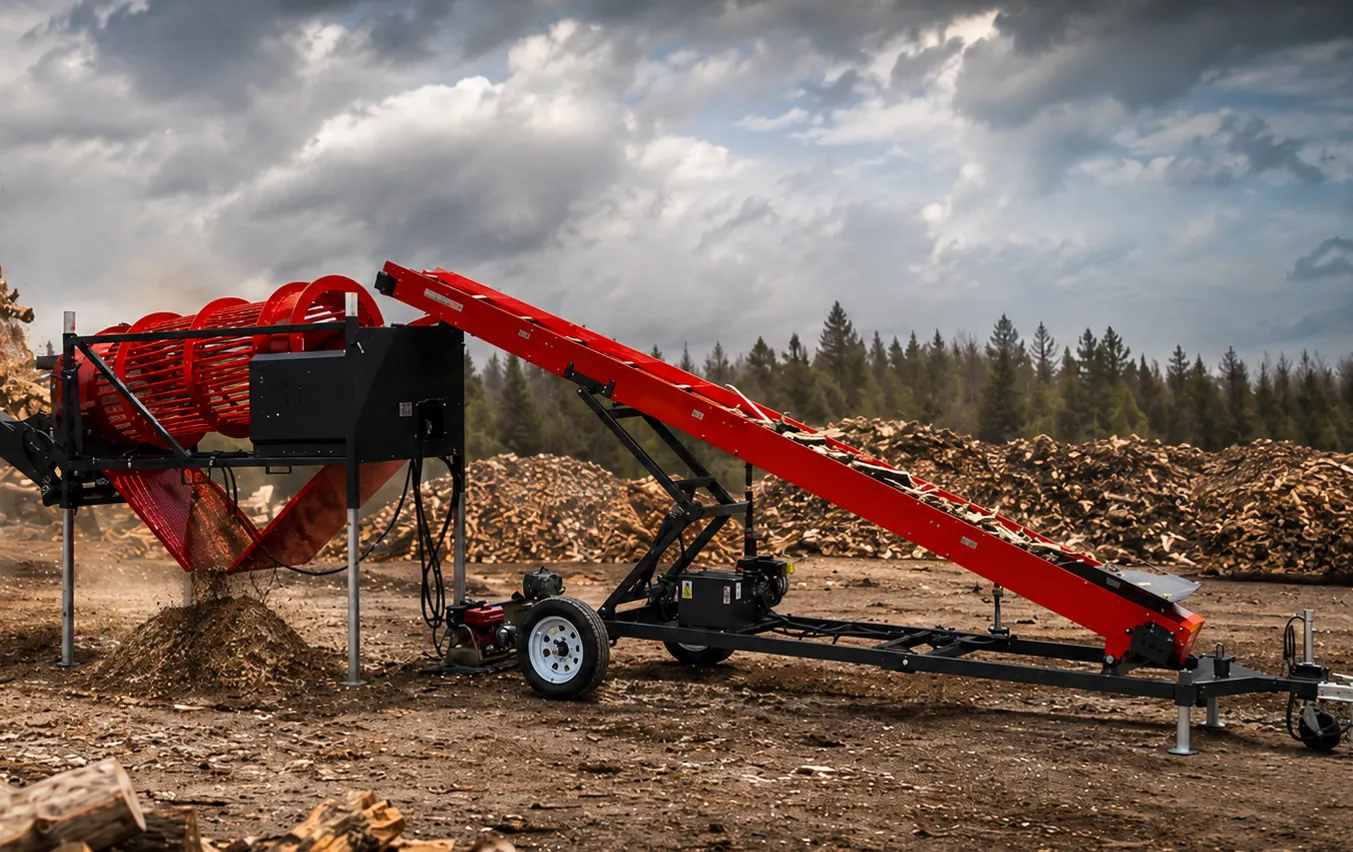
Every trailer of split firewood can carry material that nobody ordered. Bark, chips, sawdust, and small splinters settle between logs and fill the bottom of bulk bags. A wood screener removes much of that loose material before you spend time and fuel moving it farther down the line.
RIMA manufactures farm and forestry machinery backed by in-house design, product testing, OEM and ODM capability, and a 6S-managed production system. In a commercial yard, each machine should remove a real bottleneck. Here, the rotary screen cleans first, while the chain conveyor carries the output to its loading point.
Why Does Debris Reduce the Value of Finished Firewood?
Split logs may be ready in size, but not for sale. Processing loosens bark and creates chips, while drying can release more fines. Leave that material in place and you handle it several times.
Debris in Finished Firewood
Loose material collects wherever wood changes direction. A bag can look clean at the top yet hold a layer of fines at the bottom, which becomes obvious on a customer’s clean patio or shop floor.
Lost Space in Bags and Trailers
Debris takes up volume without offering the same value as usable logs. Cleaner firewood may not raise prices in every market, but it presents better in retail bags, home deliveries, and wholesale loads.
Repeated Handling and Yard Cleanup
Once debris reaches the conveyor, it travels with the saleable wood. Staff may later sweep it from a trailer or packing area. Earlier screening keeps the mess in one collection zone.
How Does a Rotary Wood Screener Separate Firewood from Debris?
A rotary cleaner uses tumbling, screen openings, and gravity. Movement frees trapped fines while the drum carries full-size pieces toward the outlet.
Rotating Drum Action
Firewood rolls as the drum turns, exposing each side and opening gaps between pieces. Bark, sawdust, and short chips drop away rather than riding on the load. The goal is cleaning, not resizing.
Gravity-Based Fines Separation
Material smaller than the openings falls through while full-size pieces continue to discharge. This creates cleaned logs and collected fines. Clean bark or chips may suit kindling, depending on moisture, contamination, size, and local demand.
Dry Firewood Rescreening
Screening after splitting removes fresh debris, yet drying can loosen more bark. Bagged or kiln-dried products may benefit from a second pass. A flexible wood screener can work in line or receive stored wood from a bag or front loader.
What Makes the AutoDrum Practical for Commercial Screening?
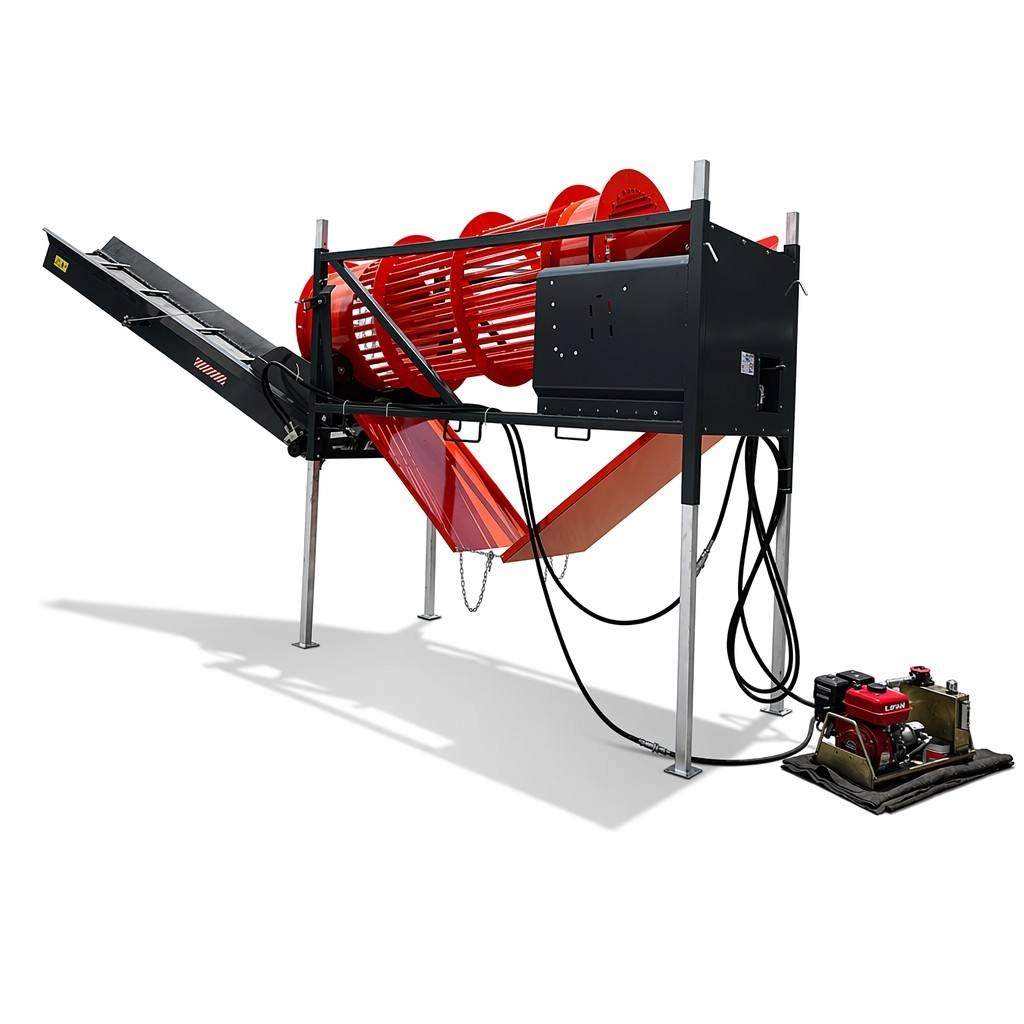
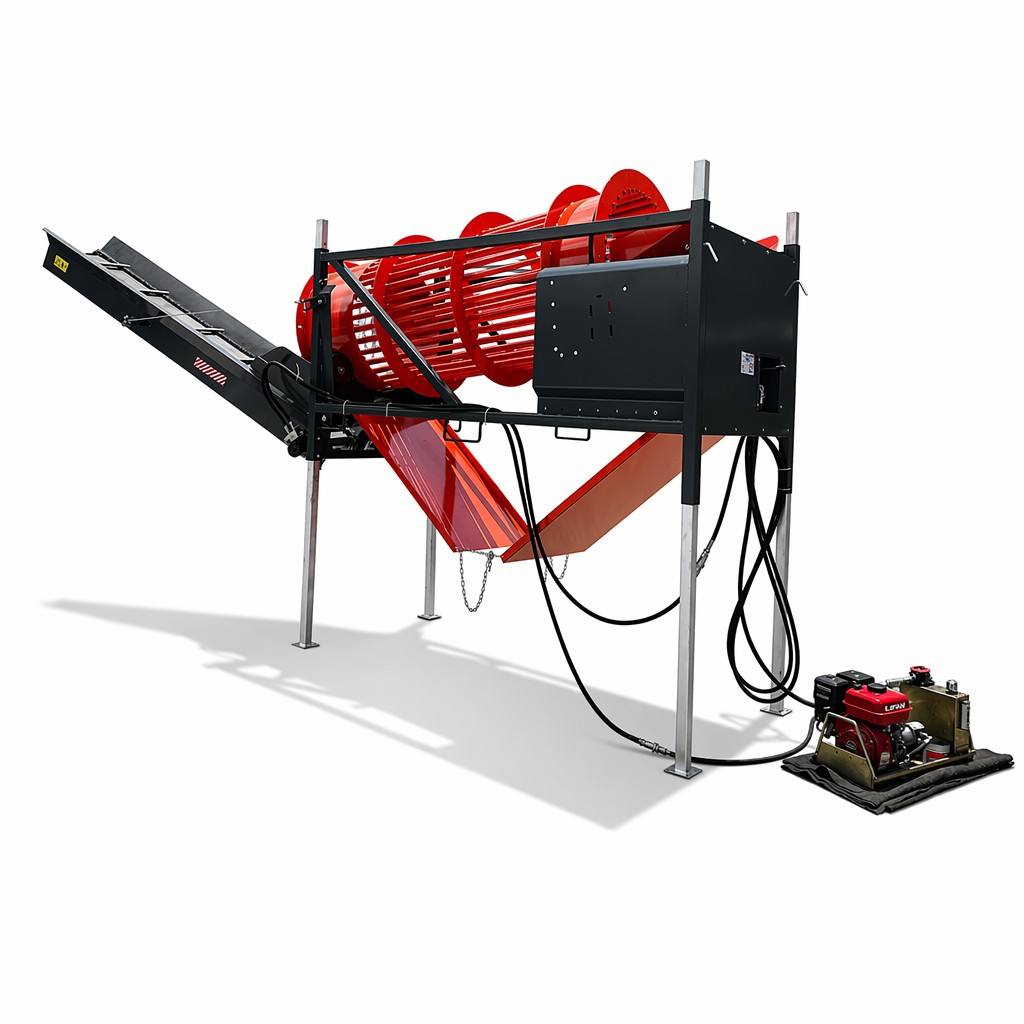
img.The AutoDrum rotary firewood screener uses this tumbling process and is intended for firewood under 50 cm long.webp
The AutoDrum rotary firewood screener uses this tumbling process and is intended for firewood under 50 cm long. This wood screener can follow a processing line or handle separate rescreening. Power choices include tractor hydraulics, a 7 HP hydraulic unit, and electric configurations.
The figures below are published specifications. Confirm power, guards, layout, and connection heights before ordering.
| Published Specification | AutoDrum Rotary Screen | HC06-C Chain Conveyor |
| Main role | Separate loose debris | Transfer screened firewood |
| Material detail | Firewood under 50 cm | Split Firewood Pieces |
| Working section | 2,248 × 788 mm drum | 236 × 16 in conveyor |
| Power | Hydraulic or electric choices | 212 cc, 7 HP hydraulic system |
| Height data | Total height: 2,155–3,020 mm | Discharge: 60–124 in |
Heavy-Duty Drum Construction
Repeated batches bring impact and vibration. A solid drum and frame are important when handling repeated loads of hardwood and split firewood. The 2,248 × 788 mm drum lets wood turn while fines fall through.
Flexible Feeding and Rescreening
You can place the unit after a processor or feed stored material separately. Dry wood may sit for weeks, then receive a final pass shortly before a wholesale order is packed.
Multiple Power Configurations
Tractor hydraulics suit yards with compatible power. A gasoline hydraulic unit allows independent placement, while electric power may fit a fixed site. Let utilities, working hours, and maintenance guide the choice.
How Does a Conveyor Support the Screening Process?
Cleaning solves only half the problem. If screened wood falls onto a dirty surface, it can pick up fines again. A downstream conveyor keeps it moving toward a bag, storage bay, or trailer.
Clean Outfeed without Rehandling
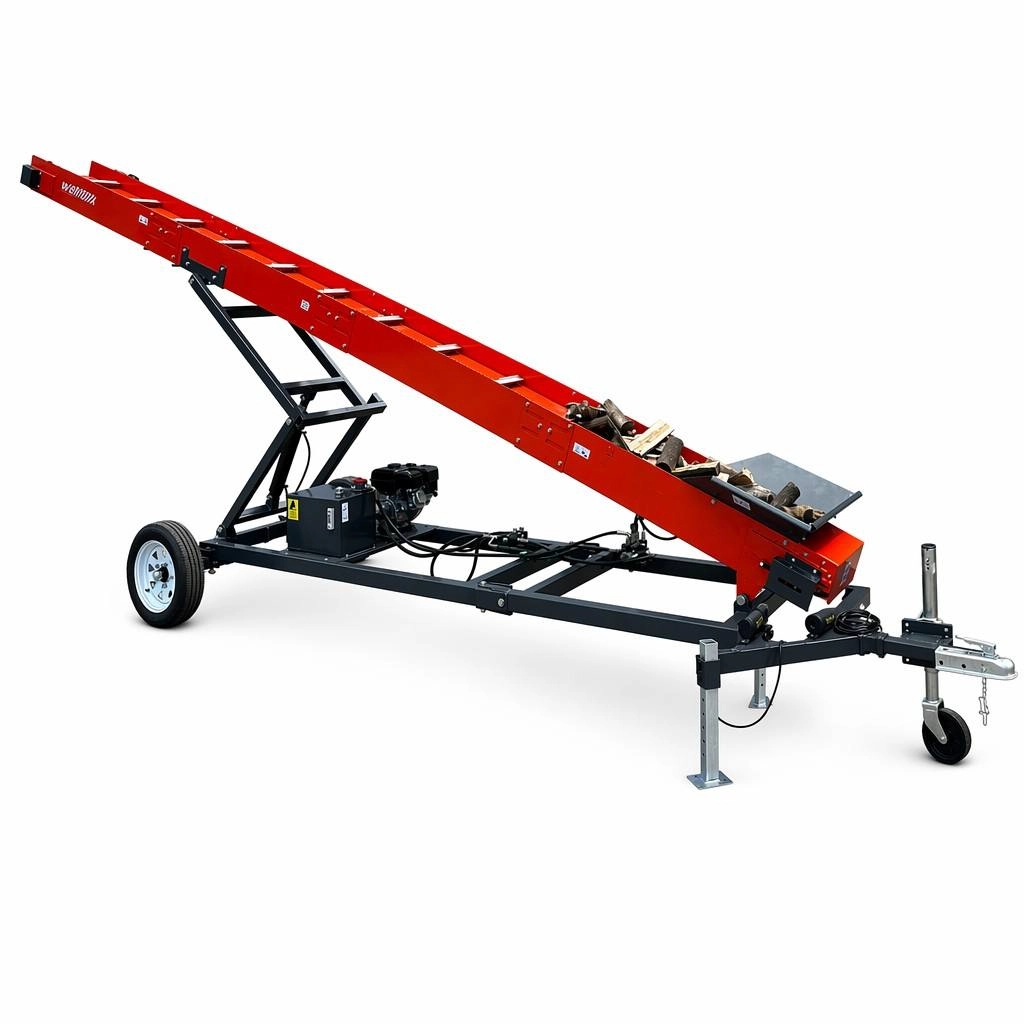
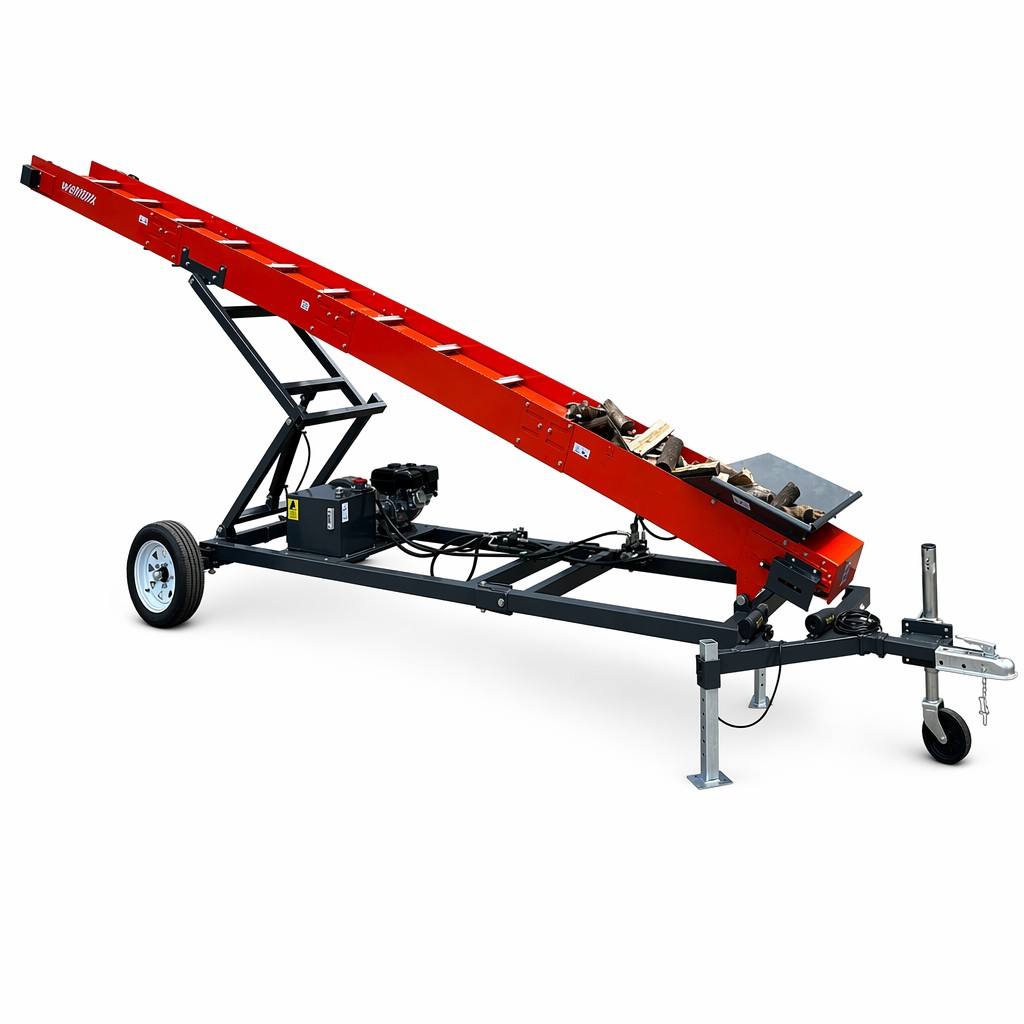
img.This firewood conveyor offers efficient, powerful and safe performance, making it an essential tool for conveying and lifting firewood in diverse settings.webp
The HC06-C chain conveyor is about 6 metres long, based on its listed 236-inch conveyor length. Its steel chain and serrated flights firmly grip split firewood and help prevent rollback. The hydraulic drive supports steady conveying and lifting during firewood processing.
Elevated Loading into Trailers and Storage
The listed discharge range is 60 to 124 inches. Before purchase, check the trailer wall, bag frame, hopper opening, and outlet clearance. A few inches at the discharge point can decide whether wood lands cleanly or spills down the side.
Reduced Manual Handling
When the conveyor receives wood near the drum outlet, operators do less bending, lifting, and bucket transfer. Supervision, routine checks, and safe cleanup remain necessary, but one repetitive handling step can leave the normal production flow.
How Do the AutoDrum and HC06-C Create a Smarter Workflow?
Together, the machines create a flexible material flow for feeding, screening, transferring, and loading firewood. The wood screener remains the main cleaning step. The conveyor protects that result by moving the output without sending it back through a loose pile.
Screening-to-Loading Material Flow
Position the equipment around your available space and material flow. The conveyor can provide steady infeed to the drum or transfer screened firewood from the outlet to the next handling stage. The chute, gap, guards, and emergency controls should be agreed during layout planning rather than assumed from photographs.
Positive-Drive Chain Transfer
Serrated flights grip pieces that may slide on a smooth belt. This supports steadier conveying on inclined sections and helps reduce rollback.. Variable speed through engine control also helps match the transfer pace with the screen output and receiving container.
Cleaner Loads and Recoverable Fines
Residential suppliers may gain a tidier trailer and less cleanup at the delivery point. Wholesalers may produce more consistent bulk bags. Screening also gathers bark and chips in one place, where suitable material can be checked for kindling. Published equipment application cases offer further layout references.
Why Choose RIMA for Your Firewood Processing Setup?
A useful quote should cover more than price. Log length, moisture, feed method, power, discharge height, working space, and the receiving container all matter. The company combines forestry machinery production with custom design, pre-shipment checks, overseas sales support, and after-sales assistance.
Equipment Matching Support
Share your processor output, firewood length, utilities, feed method, and target loading height. The technical team can discuss a workable arrangement and flag places that may need a chute, support, guard, or site-specific change.
Service and Application Guidance
Buyers can use the available equipment service and support for operating and after-sales questions. Product cases also help you compare layouts before deciding where each machine should sit in your yard.
Pricing, Videos, and Worldwide Shipping
Cleaner output starts with a wood screener, but a practical line must carry that result to the loading point. Pairing the AutoDrum with the 6-metre chain conveyor can reduce loose debris in final loads and repeated lifting between stages. Contact the sales team for pricing, operating videos, configuration details, and worldwide shipping information.
FAQ
Q: Should the wood screener go before or after the firewood conveyor?
A: Both layouts can work well. The best position depends on your material flow and available space. A conveyor before the screener provides steady feeding, while a conveyor after it moves screened firewood directly to loading, bagging, or storage.
Q: Can dry firewood be screened again before delivery?
A: Yes. Drying and later handling can loosen more fines. The AutoDrum can receive material from a processing line, bag, or front loader, allowing a final cleaning pass before packing or dispatch.
Q: Does every firewood operation need a chain conveyor?
A: No. The choice depends on volume, moisture, incline, log shape, and loading height. A positive-drive chain is particularly useful when wet, frozen, or irregular pieces may slip on a friction-based belt.




LEAVE A REPLY