




11th November 2026
30 Tons of Splitting Force: What Does It Mean for Processing Logs Up to 500 mm in Diameter?
You meet the 20-inch log on a bad day, most of us do. All winter you cut fallen oaks into rounds and split them without complaint, and then one trunk section shows up that your splitter simply won’t open. The grain spirals around an old burl, the round is heavy, and it won’t come apart on any line you strike.
That’s the moment tonnage starts to matter. Thirty tons gives a hydraulic splitter enough push that thick hardwood stops being a wall, though nobody should pretend it’s a magic number.
Before you start shopping, one thing is worth straightening out: splitting force and log capacity measure different things, and neither one tells you how the machine behaves with a real log on it. If a firewood processor is on your shortlist for a farm or a wooded lot, spend your attention on what happens before the log reaches the wedge and after it leaves.
What 30 Tons of Splitting Force Actually Means
The rating is the maximum force the splitting side of the machine can produce. It says nothing about what your particular logs will demand.
Where the Push Comes From
Simple physics underneath it. A hydraulic cylinder drives the wood into a wedge, pressure climbs as the wedge meets resistance, and the log either separates or the system runs into its operating limit first.
A straight pine section gives up cheap. A fat oak round with three knots inside it does not. Both could sit on the same machine, and the two jobs feel nothing alike.
Then there’s the part near the end of the stroke. Plenty of logs crack open down nearly their whole length and still hold on at the far side, where an old branch joint or a patch of twisted fiber keeps the two halves connected.
That is the honest reason maximum force matters. Nobody buys 30 tons just to split the easy pieces sitting on top of the pile.
A 20-Inch Log Isn’t Always the Harder Job
Diameter alone doesn’t decide much.
Big straight-grained logs often come apart easier than people expect. A small section sawn out of a tree fork can fight you the whole way, on the other hand, since the wedge has to cut through fibers running in three directions at once.
Species and moisture condition and the way the grain runs all pull on the result.
If your place is mostly mature hardwood, go look at the wood you’re actually cutting before picking a machine. A processor rated for big logs needs real force behind the rating, not just a cradle wide enough to hold them.
Getting Large Logs Ready for Processing
At around 20 inches across, the log itself becomes part of the equipment question. Rounds that size are heavy, they roll, and getting one parked in position takes more out of you than the splitting does.
Length deserves a separate look as well. A machine that swallows a wide log can still cap the length of each cut section.
Check Diameter and Cutting Length Separately
The RM500 ECO takes logs to a maximum diameter of approximately 19.7 inches. Its maximum cutting length is 19.7 inches as well.
Two different limits, and buyers mix them up constantly.
The diameter number is about how thick a piece of timber the machine can accept. Cutting length sets the longest section you can prepare for the wedge.
A stove that burns 16-inch logs does not want every piece at the machine’s maximum. Whatever firewood size you actually stack should drive the cutting setup.
Same logic for a fireplace. Measure the firebox first, because longer pieces are rarely the convenient ones.
Watch for Crooked and Knotty Timber
Staying inside the diameter limit is no guarantee a log will feed cleanly. Shape causes its own trouble.
Large branch stubs, ends that were never cut square, and a pronounced sweep running through the length all deserve attention before anything starts. Don’t assume a powerful splitting cylinder can make up for poor positioning.
Process firewood week after week and pulling the awkward pieces aside before they reach the machine becomes a habit you keep. The operating instructions are the authority on how each piece should be handled, so read them.
Where the RM500 ECO Uses Its 30-Ton Capacity
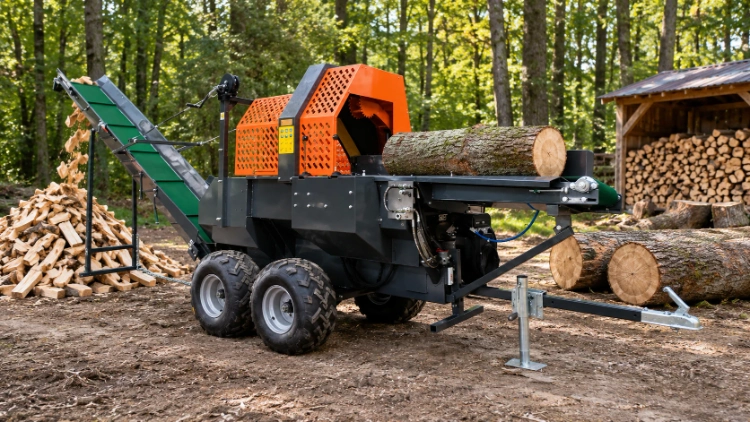
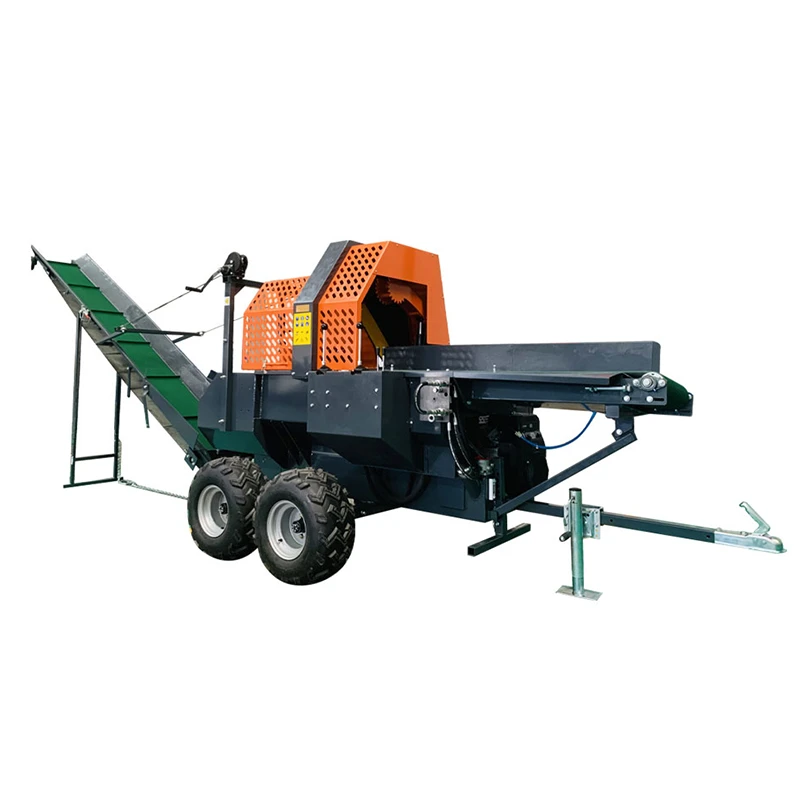
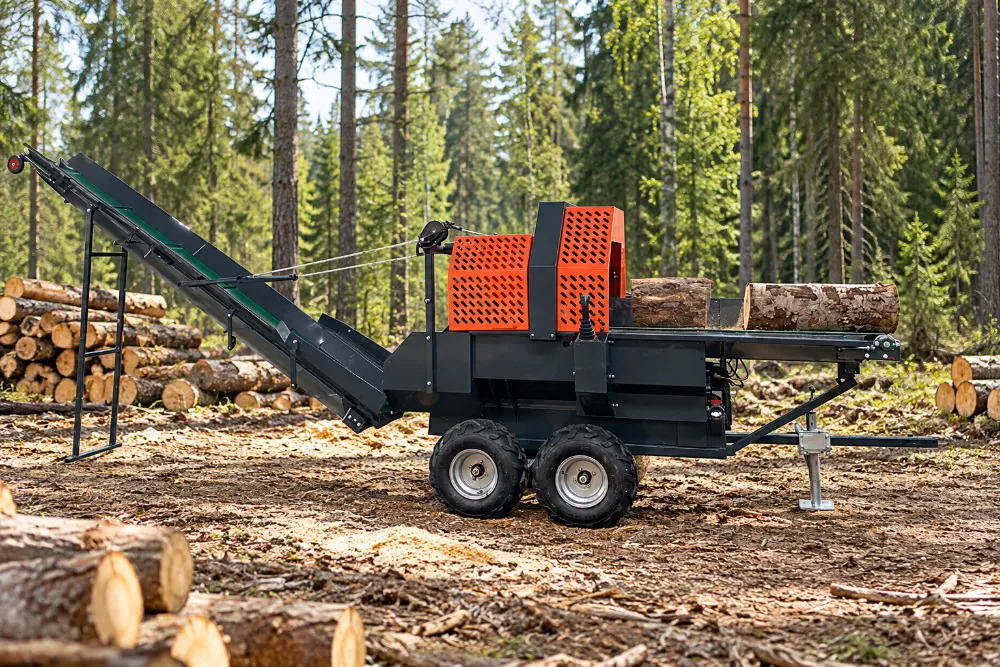
The RM500 ECO cuts and splits in one frame. No second machine for breaking rounds, no dragging sections across the yard. Feeding, cutting and a splitting wedge all ride on the same base.
On a property that keeps throwing off larger timber, a setup like that gets a serious look from me.
Splitting Force, Cylinder Size, and Pump Flow
The RM500 ECO carries a 30-ton maximum splitting force rating. Hydraulics: a 4.5-inch cylinder with a pump flow of approximately 13.2 gallons per minute, per the spec sheet.
Those numbers aren’t interchangeable, and mixing them up is where most shopping conversations go wrong.
Pump flow is a measure of how much hydraulic oil moves through the system. Splitting force is something else: hydraulic pressure working against cylinder dimensions.
Then there’s the six-second splitting cycle in the spec. That number belongs to the splitting mechanism. A whole log takes considerably longer than that.
A thick trunk may need several cuts, and every section rides the wedge on its own trip. How long the log really takes depends on the material and the order of operations.
What the Six-Way Splitting Knife Does
The RM500 ECO is listed with a six-way splitting knife.
For a suitable round, that knife can divide the wood into several pieces during one splitting stroke. It earns its keep on sections that would otherwise need several separate passes through a conventional wedge.
Just don’t expect matching dimensions out the other end.
A fairly round log divides into similar-sized pieces. Put an irregular hardwood section through the same knife, though, and the outcome changes; the wood gets the final say, not the knife.
Watch what comes off the machine. Anything oversized may need a second pass, especially when your stove mouth is small.
Following a Log Through the Machine
Everyone talks about the splitting cylinder. Feeding and discharge don’t get much talk, yet they’re what decides how timber moves through the processor.
Feeding and Cutting, Hydraulically
The feeding section on an RM500 ECO runs approximately 70.9 inches long and 15.4 inches wide.
That section pushes timber toward the cutting area. Long logs make a dedicated feeding mechanism a relief, since the wood gets too awkward to inch forward by hand.
The machine’s specification lists manual controls. You still manage the operating sequence, and each log still has to be correctly positioned before anything moves.
Power, as standard, is a 27 HP gasoline engine. An electric motor option is also listed, so check what supply you have on site before you order.
Moving Split Firewood Away From the Wedge
Finished wood needs somewhere to go.
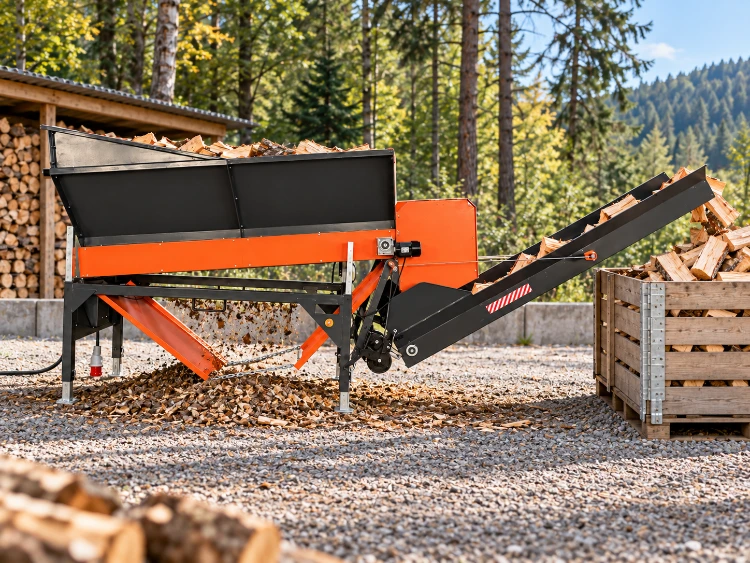
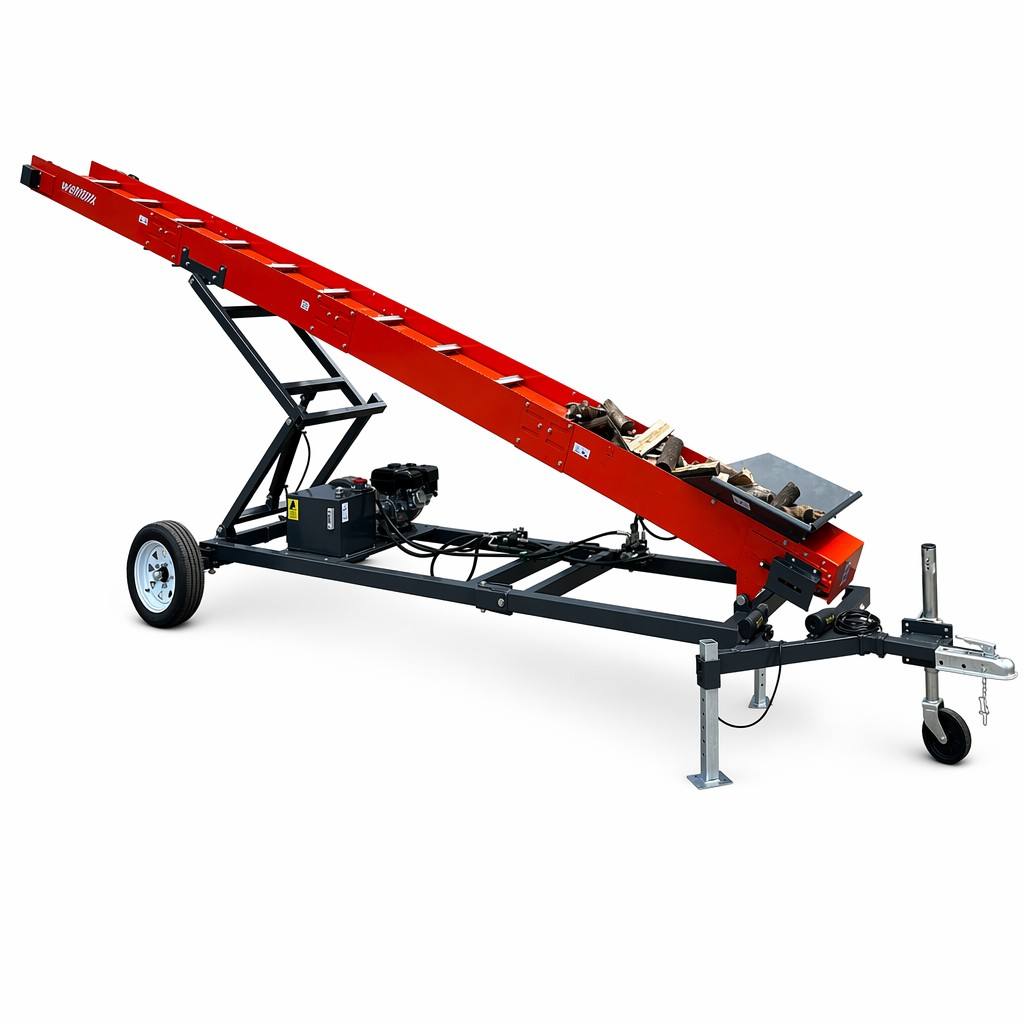
The RM500 ECO includes a standard discharge conveyor approximately 11.5 feet long, with a belt around 11.8 inches wide, carrying split pieces away from the processing area toward a collection point.
A trailer works, a bin works, a prepared stacking area works. What fits best depends on the space around your machine.
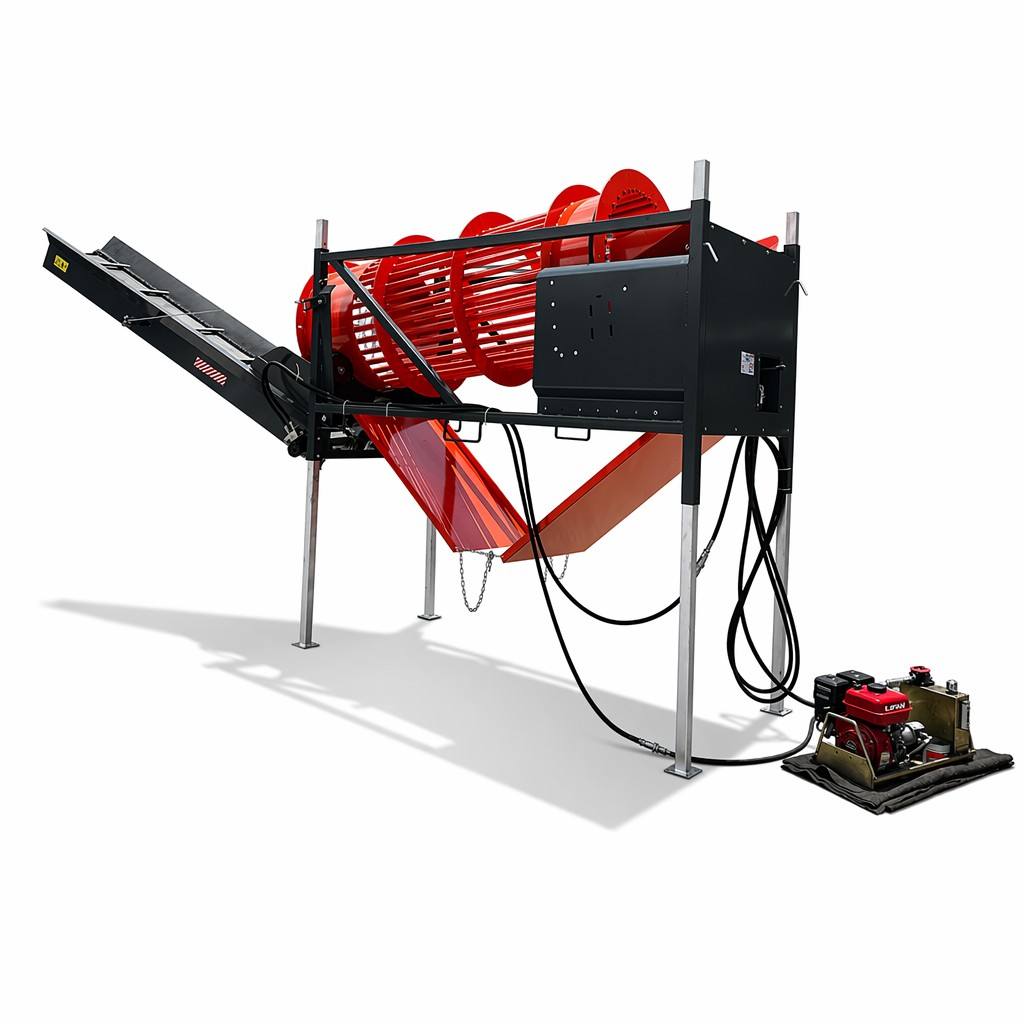
Bark, sawdust and small chips ride along with freshly processed wood, and that’s normal. Some folks screen the loose material out before storage, which is a separate step in itself.
Know what screening buys you, though. Debris comes out; nothing dries. Fresh firewood still needs suitable seasoning conditions before it burns.
Choosing a Processor for Your Property
A 30-ton machine is overkill for plenty of households. Someone splitting a few small logs each winter will be happier with a simpler splitter.
The RM500 ECO suits the situation where wood gets processed in substantial quantity, regularly.
Fit the Machine to the Work You Actually Do
Start with the timber you usually handle, not the biggest standing tree on the property.
If nearly everything you cut comes small and straight, a large processor is simply more machine than the job needs. Thick hardwood trunks every season change the math, and cutting capacity plus the hydraulic system start to matter.
Space is the quiet factor. We’re talking roughly 2,205 pounds for the RM500 ECO, so think through where it will run and how it moves.
Give yourself room on every side: incoming logs in front, the discharge conveyor out back, finished firewood somewhere it can pile.
Should your work call for something smaller or set up differently, the forestry equipment range lists other machines to compare against.
Check the Machine Configuration Before Ordering
Then confirm the practical items one at a time before signing anything. Engine, splitting knife, feeding system, conveyor arrangement.
RIMA builds forestry and agricultural equipment; firewood processors, log splitters, sawmills and wood chippers all sit in the catalog.
The company’s been running since 2002. That span of machinery manufacturing covers equipment development, customization, and whatever customer support has to follow a machine.
On the RM500 ECO, ask what configuration exists for your market, then ask for the maintenance instructions and a conversation about replacement parts.
None of that is glamorous. All of it decides whether the machine still works three firewood seasons out.
Conclusion
Thirty tons earns its keep when large hardwood logs are a regular part of your supply. Knots and difficult grain are where the extra force pays, though the wood always gets a vote on the result.
That splitting force rides with a 19.7-inch maximum log diameter, hydraulic feeding, a six-way splitting knife and a discharge conveyor on the RM500 ECO. Judging by the spec sheet, this machine is meant for farms and wooded properties with substantial firewood needs.
Put the machine against your usual log sizes and your actual working space before deciding. And confirm service support, configuration and maintenance requirements with the manufacturer directly.
FAQ
Is 30 Tons Enough for a 19.7-Inch Log?
Rated numbers first: the RM500 ECO takes logs up to 19.7 inches in diameter, with 30 tons of maximum splitting force. Some of those logs will still fight you, since wood density, knots and grain direction each get a vote, and a few need extra handling.
Must Every Big Log Use All 30 Tons?
No. Straight-grained softwood opens with far less force than dense hardwood packed with knots. The hydraulic system builds pressure against whatever resistance it meets, up to the rated operating limit.
What Is the Maximum Log Size for the RM500 ECO?
The maximum rated log diameter is approximately 19.7 inches, and the maximum cutting length sits at approximately 19.7 inches too. The log also has to suit the machine’s feeding and cutting arrangement.
Can the RM500 ECO Be Used for Home Firewood Preparation?
Yes, particularly farms and wooded properties that put up substantial firewood regularly. For the odd small log, honestly, a compact splitter is the better buy.
Does the Six-Second Cycle Cover Cutting and Feeding?
It doesn’t. Six seconds describes the splitting cycle. Feeding, cutting and hauling the finished pieces away are separate operations, so a complete log takes as long as it takes.




LEAVE A REPLY