




22nd September 2026
37 Tons Isn’t Everything: What Really Makes a Log Splitter Ready for High-Volume Firewood Work?
If you split a few logs now and then, almost any properly sized machine can feel quick enough. The picture changes when you are preparing a large stack of firewood for winter, cleaning up a wooded property, or working through heavy rounds over several weekends.
That is when splitting force stops being the only number that matters. A 37-ton machine may have the strength to open a stubborn round, but your actual pace also depends on how fast the cylinder cycles, how easily you get a heavy log into position, how many pieces you make per pass, and whether the hydraulic system stays steady through a long session.
For high-volume home firewood work, the better question is not simply “How many tons?” It is “How well does the whole machine work from one log to the next?”
Why 37 Tons Alone Does Not Define a Good Splitter
Splitting force tells you how much pressure the machine can apply to the wood. That matters when you are dealing with dense hardwood, twisted grain, large knots, or green rounds that do not break cleanly.
Still, force only describes one part of the job. You may have plenty of power at the wedge and still spend most of your afternoon lifting, turning, and repositioning wood.
Splitting Force Still Matters on Difficult Logs
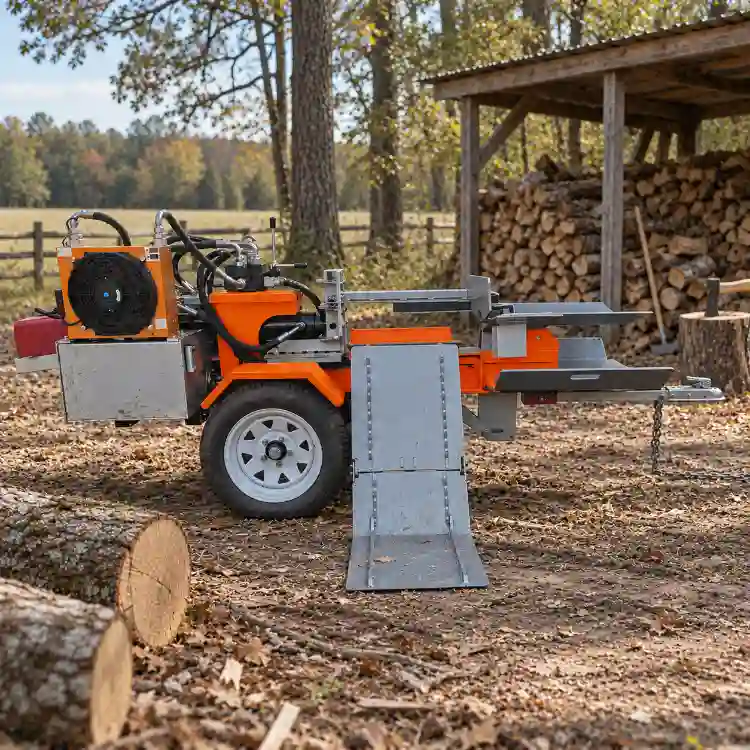
A stronger hydraulic system gives you more room to deal with difficult pieces. The LS37PRO delivers 37 tons of splitting force and accepts logs up to about 24 inches long. That makes it useful when your firewood pile includes larger hardwood rounds rather than straight, easy-to-split pieces.
If your main problem is dense oak, knotty hardwood, or uneven rounds, it is also worth looking at this guide on choosing a log splitter for tough hardwoods. Wood species and grain shape can change the job just as much as log diameter.
Finished Firewood Matters More Than a Force Rating
Think about what happens after the wedge finishes one stroke. The ram has to return. You need another piece ready. Split wood has to be moved aside. A large round may need another pass.
That is why a high force rating does not automatically mean fast firewood preparation. For home use, finished pieces per hour tell you more than a single specification on a product page.
What Actually Keeps Firewood Moving
Once a splitter has enough force for your wood, speed becomes a workflow question. A good setup should keep each step close to the next one without making you rush around the machine.
This is where cycle time, hydraulic flow, lifting, and wedge design start to matter.
Cycle Time and Hydraulic Flow Set the Working Rhythm
The LS37PRO is available with different hydraulic setups. Its standard version uses a two-stage pump rated at about 22 GPM and completes a cycle in about 7 seconds. Higher-flow versions reach about 27.5 GPM and shorten the cycle to about 5.5 seconds. The splitting force stays at 37 tons, but the pace changes.
That difference matters when you have a trailer load or a large winter stack to finish. A shorter cycle does not mean you should work at maximum speed all day. It simply cuts waiting time when your next log is already in position.
A Hydraulic Log Lifter Changes the Hard Part of the Job
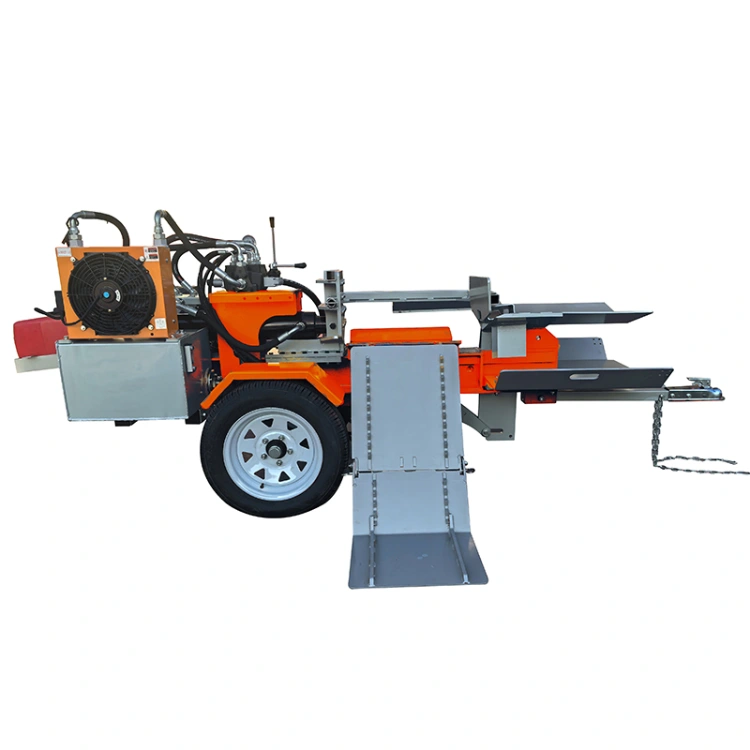
Large rounds are often more annoying to lift than they are to split. The LS37PRO includes a hydraulic log lifter rated for roughly 441 pounds, so you can move heavy pieces from near ground level into the working position without trying to muscle every round onto the beam.
For a homeowner with a woodlot or a large pile after tree cleanup, this can make the machine much easier to live with. You still need sensible log handling and a clear work area, but there is less repeated lifting before every split.
A 4-Way Wedge Can Reduce Repeated Passes
The hydraulic 4-way box wedge on the LS37PRO can divide a suitable round into several pieces during one pass. That is useful when you want firewood that is closer to stove or fireplace size without turning the same round again and again.
Wedge choice should still match the wood in front of you. Large, awkward rounds may need a different approach from straight, even pieces. If you want to compare layouts and handling styles, the guide to vertical vs. horizontal log splitters gives more context on how machine design affects the way you position heavy wood.
What Helps a Splitter Stay Useful Through Long Weekend Jobs
A machine can feel excellent for the first twenty minutes and less pleasant after several hours. If you regularly prepare a season’s worth of firewood, it makes sense to look at what happens after the machine has been working for a while.
Cooling, hydraulic capacity, and simple mobility become more useful than flashy numbers.
Hydraulic Cooling Helps During Longer Sessions
Hydraulic systems build heat while they work. The LS37PRO uses a 13.2-gallon hydraulic tank and includes an oil cooler. That setup helps manage oil temperature when you are splitting for longer periods instead of running a few quick cycles and putting the machine away.
For home firewood, that is a practical feature. Many people do their splitting in blocks of several hours when the weather is good. Stable hydraulic operation matters more in that situation than it does during a short cleanup job.
Towable Mobility Makes Yard Work Easier
Firewood is rarely stacked exactly where the logs fall. You may split near a barn one day, beside a woodpile the next, then move closer to another part of the property.
The LS37PRO uses 14-inch wheels with a high-speed torsion axle. That gives you a towable setup that is easier to reposition around a farm, wooded property, or large rural yard.
Why LS37PRO Fits Heavy Home Firewood Work
At this point, the 37-ton number makes more sense in context. The appeal of the LS37PRO is not one oversized specification. It is the way several useful features come together in one machine.
You get strong splitting force, a roughly 24-inch log capacity, a hydraulic lifter, a hydraulic 4-way wedge, 5.5- to 7-second cycle times depending on configuration, a 13.2-gallon hydraulic tank, an oil cooler, and a towable chassis.
It Suits Big Seasonal Jobs Without Turning Your Yard Into a Production Line
For a homeowner who burns a lot of wood, manages acreage, or regularly clears fallen trees, those features can make more sense than simply buying the highest-tonnage machine you can find.
The LS37PRO is especially worth considering when your logs are heavy enough to make manual loading inconvenient and when you want to finish a large batch of firewood over a weekend rather than stretch the work across several weeks.
RIMA Brings the Machine and Support Together
RIMA develops forestry and farm machinery and supports customization, quality control, and one-to-one customer service. You can also compare the wider product range if your property needs more than a log splitter, or review case studies to see how different forestry equipment is used in real settings.
For buyers who want more background before choosing, the company’s forestry equipment blog also covers log splitting, firewood preparation, sawmills, and other wood-processing jobs.
What Should You Check Before Choosing Your Setup?
Before you order, look at your own woodpile rather than starting with a specification sheet. Your typical log size, species, weight, and annual firewood volume will tell you far more about the machine you need.
Then look at how you actually work. Some people split a few hours at a time. Others save logs for months and process them in big batches.
Match the Machine to Your Logs and Work Pattern
If most of your wood is straight and easy to handle, you may not need every feature on a larger splitter. If you regularly deal with heavy hardwood rounds, large knots, or green logs, the combination of force, lifting capacity, and wedge control becomes much more useful.
Also think about where the splitter will sit. Leave enough room for incoming logs, split wood, safe movement, and towing access. A fast machine does not help much if the work area is crowded.
Choose the Configuration, Not Just the Model Name
The LS37PRO versions share the same 37-ton force and roughly 24-inch splitting length, but hydraulic flow and cycle time differ. That is worth checking before you buy.
For occasional large batches, the standard setup may already give you the pace you want. If you regularly process a much bigger seasonal stack, the faster hydraulic configuration may be more comfortable. Your choice should follow your real workload rather than the biggest number available.
Conclusion
Thirty-seven tons tells you how much splitting force a machine can deliver, but it does not tell you how efficiently the whole job will get done.
For high-volume home firewood work, cycle time, log lifting, wedge design, hydraulic cooling, and mobility all affect how smoothly the job moves. The LS37PRO brings those features together in a setup that suits homeowners, woodlot owners, farms, and larger rural properties where firewood preparation is a regular part of the year.
If you want help matching the LS37PRO configuration to your wood size and seasonal workload, you can review RIMA’s service support or contact RIMA before ordering.
FAQ
Is 37 Tons Enough for Home Firewood Splitting?
For many heavy home firewood jobs, 37 tons provides plenty of splitting force. Your wood species, grain, knots, moisture, and log size still matter, so force should be considered together with cycle time and handling features.
How Long a Log Can the LS37PRO Split?
The LS37PRO is designed for logs up to about 24 inches long. That size works well for many common firewood setups and home heating needs.
Why Does a Hydraulic Log Lifter Matter?
It helps move heavy rounds into the splitting position. The LS37PRO lifter is rated for about 441 pounds, which can make large-log handling more manageable during longer splitting sessions.
What Does a 4-Way Wedge Do?
A 4-way wedge can split a suitable round into multiple pieces in one pass. This can reduce the need to turn and split the same wood several times.
Should I Choose the 5.5-Second or 7-Second Cycle Setup?
It depends on how much wood you normally process. The 7-second version can suit regular home use, while the faster 5.5-second configuration makes more sense when you often work through larger seasonal batches and want less waiting between cycles.




LEAVE A REPLY