




6th May 2026
Why Fully Hydraulic Sawmills Are the Biggest Trend in Forestry for 2026
 The forestry industry is evolving rapidly. If your operators are still rolling logs by hand, you are actively losing money. The clear shift towards higher efficiency makes a fully Hydraulic Sawmill the most critical upgrade for any serious commercial milling operation in 2026. Far from merely saving your back, this change boosts board footage a lot. At the same time, it lowers labor costs.
When assessing your equipment options, focus on the machinery that actually drives revenue. Think about RIMA. This main producer holds about 15 years of strong field knowledge. It provides comprehensive, one-stop solutions for farm and forestry machinery worldwide. Their dedicated technical team continually upgrades designs based on real-world field feedback, resulting in exceptionally durable and high-performing equipment. Products span solid sawmills and log splitters to targeted tree tools. Each follows firm 6S quality standards. Active in Europe, North America, and farther, they go beyond sales. Tailored OEM and ODM services are backed by responsive support to keep your operations running smoothly.
The Shift Towards Automation in Modern Forestry
No longer is it necessary for four people to frequently wrestle heavy timber. The field confronts facts on staff and results demands. This pushes fast uptake of automated milling systems.
Rising Labor Costs and Shortages
Finding reliable, skilled labor to handle massive logs is becoming nearly impossible. Manual mills require a full crew to load, turn, and clamp the timber, which cuts deep into your margins. The constant heavy lifting simply burns out your workers, slowing down the entire process.
Demand for Higher Production Rates
Buyers seek speedier handling. Custom home builders and furniture makers demand precise cuts with fast turnaround times. Traditional manual methods simply can’t keep pace. Spend twenty minutes adjusting a heavy cant by hand, and your daily yield drops significantly.
Importance of Operator Safety
Manual log handling directly leads to workplace injuries. Rolling a 36-inch hardwood log with a peavey is dangerous work. Hydraulic systems replace brute force with mechanical power, drastically reducing the risk of crushed fingers or blown-out backs. A safer worksite means fewer work-stopping accidents. Operations stay even and reliable.
Core Advantages of Fully Hydraulic Sawmills
A true Hydraulic Sawmill changes the entire dynamic of milling, transforming backbreaking labor into a streamlined, single-operator job.
Effortless Heavy Log Handling
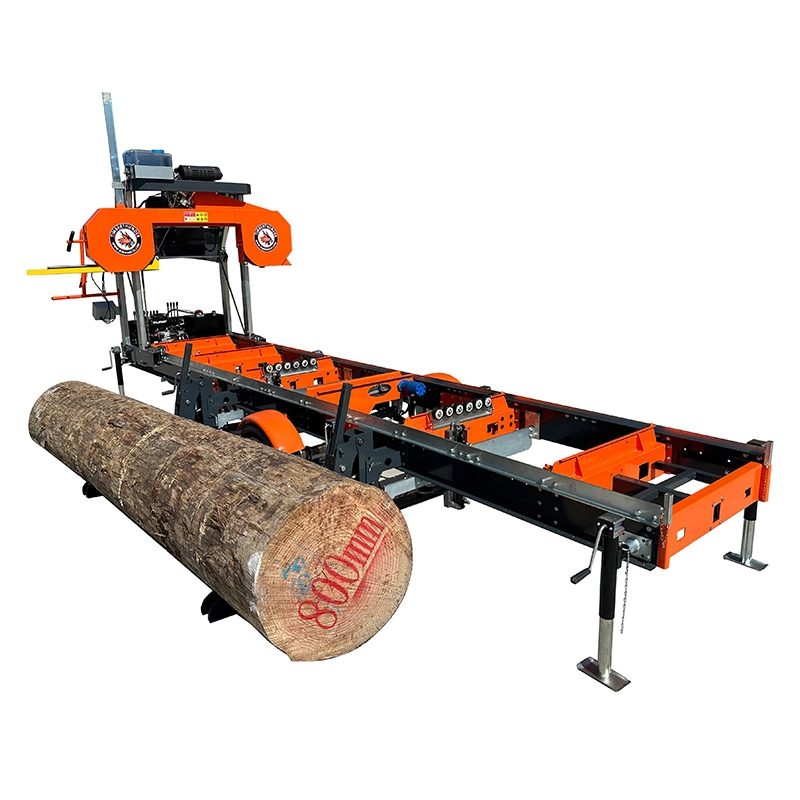
Lifting and turning massive logs manually is the biggest bottleneck in traditional milling. Hydraulic parts erase this snag. Consider the RS36G Deluxe. It employs a strong hydraulic log raiser that handles 2000kg lifts. So one handler almost loads a large 36-inch log straight to the bed with ease.
Precision and Consistent Quality
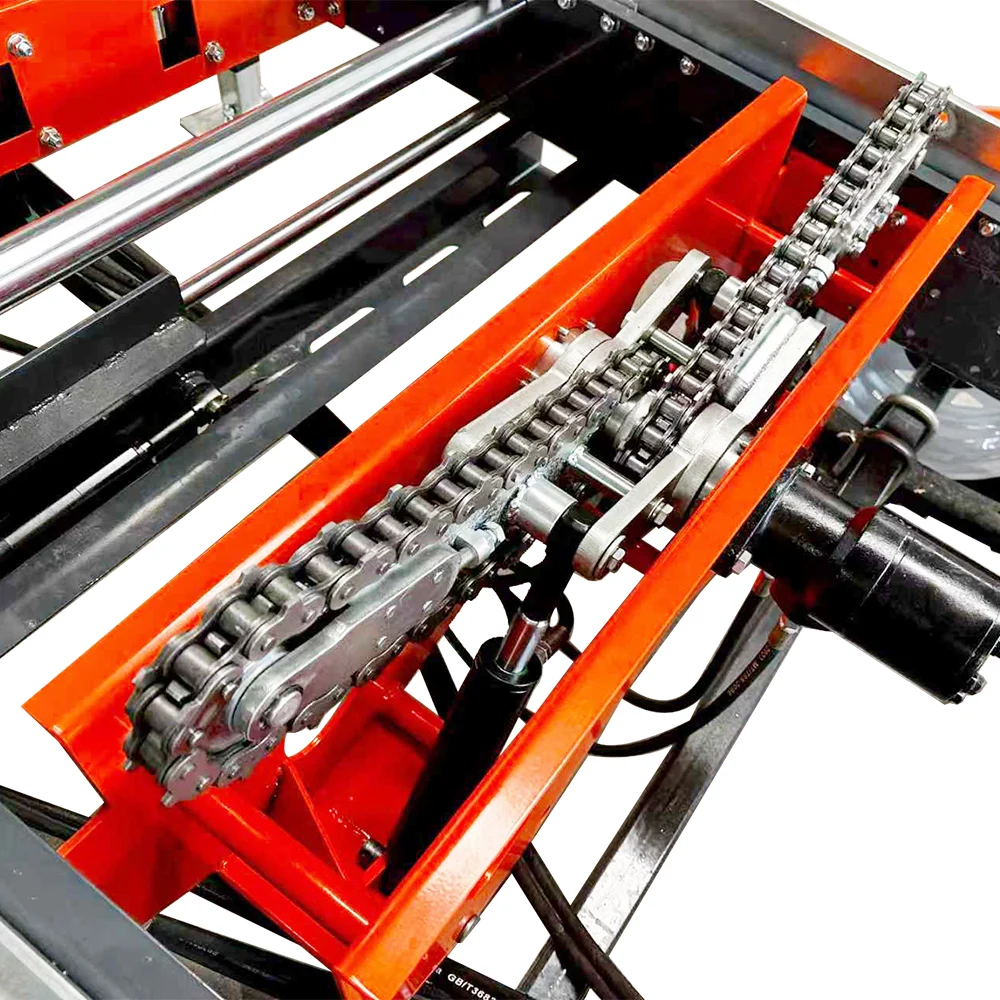
Cutting perfectly flat boards requires the timber to be held absolutely rigid. Heavy-duty hydraulic clamps lock the material securely in place against the blade. Furthermore, hydraulic toe boards allow for precise leveling of the log’s pith.
Maximizing Daily Output
Cut hand work from log moves, and yields soar. Instead of fighting the load, the operator focuses entirely on the cut. Auto parts manage the weight. The unit handles more logs hourly. That raises sellable board amounts daily.
Key Hydraulic Features that Drive Profitability
The right hydraulic components dictate how fast you can turn raw timber into cash.
Powered Saw Head Controls
Manually pushing a heavy saw head slows down the entire cycle. Drive controls enable handlers to guide the head up, down, ahead, and back with smooth precision. Fast, single-action adjustments keep the workflow steady and minimize downtime between cuts.
Hydraulic Log Turners and Clamps
Rotating a heavy cant for the next square cut is effortless with a hydraulic steel log turner. Once positioned, heavy-duty hydraulic clamps lock the material in place. These clamps adjust easily as the log’s diameter decreases, providing a firm grip that prevents shifting and delivers consistently true cuts.
Advanced Auxiliary Rolling Systems
Moving heavy slabs or cants along the bed frame can be a struggle. Add-on roll systems, linked to toe rests, allow handlers to move stock with little effort. It stops catches and maintains easy milling, even on very heavy or odd shapes.
Mobility Meets Power: The Portable Hydraulic Solution
Sometimes the timber can’t come to you; you have to go to the timber. Combining hydraulic power with a mobile chassis offers a massive advantage for contract millers.
Taking the Mill to the Timber
Hauling vast raw logs to fixed mills costs much and complicates logistics. Wheeled rigs let direct trips to cut areas or client lands. Milling on-site eliminates heavy haulage fees. You leave the waste materials behind in the forest, transporting only the valuable, finished lumber.
Commercial-Grade Towing Systems
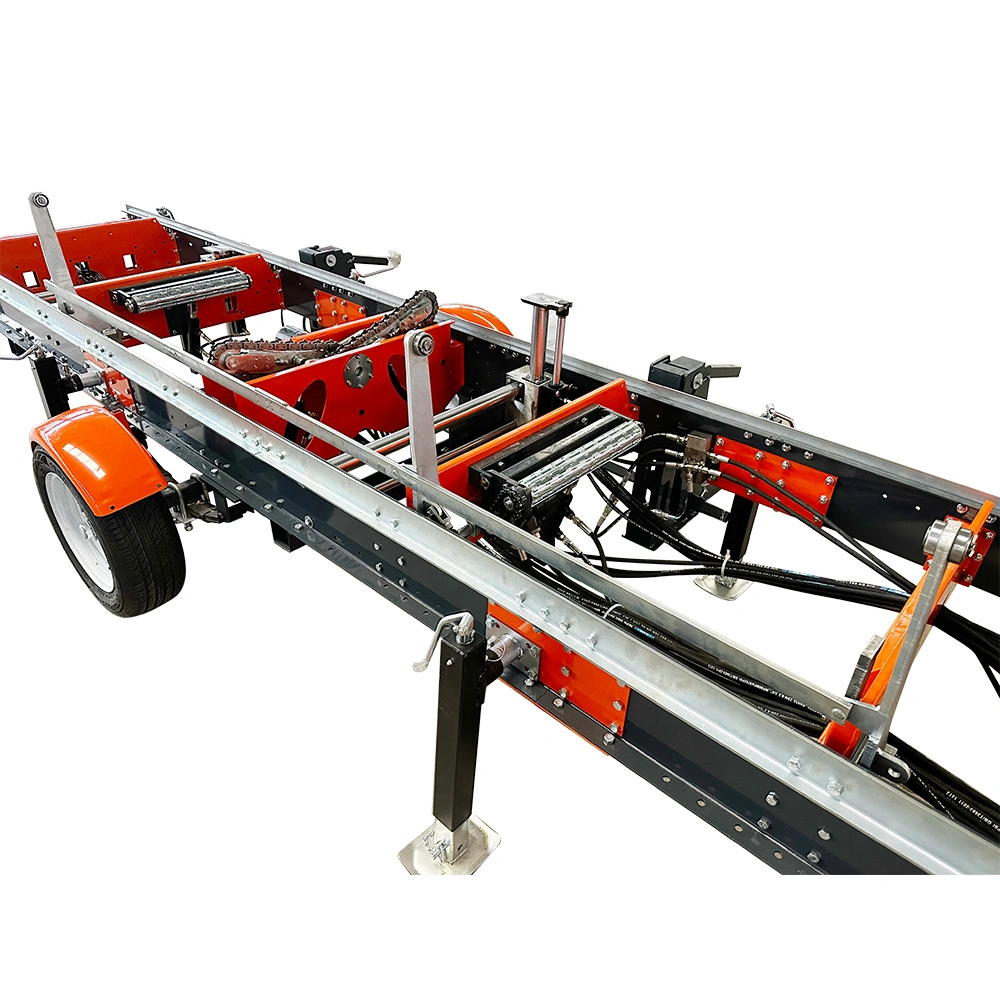 Wheeled mills endure bumpy wood trails. The RS36G-Deluxe(Hydraulic+Portable) rests on a sturdy trailer base. It features a torsion axle suspension system, large 14-inch wheels with fenders, and a full LED light kit. The build supports safe road moves and lasts on rough ground.
Quick Setup and Deployment
Time spent setting up is time not spent cutting. Professional portable mills feature heavy-duty support jacks—usually six of them—for rapid leveling on uneven ground. This quick deployment means you can pull up to a site, drop the jacks, level the bed, and start cutting in under ten minutes. It extends work time fully.
See build gaps in this side look at common setups:
| Feature | Entry-Level Manual Mill | Commercial Hydraulic Mill (e.g., RS36G-HD) |
| Max Log Diameter | 20 – 26 inches | 36 inches
|
| Log Loading | Manual / Winch | Hydraulic Lifter (up to 2000kg)
|
| Log Turning | Manual Peavey | Hydraulic Steel Log Turner
|
| Saw Head Drive | Manual Push | Powered Forward/Reverse
|
| Daily Output (Est.) | 500 – 1000 board feet | 2000+ board feet |
Analyzing the ROI of a Hydraulic Sawmill Investment
Auto machines start pricier. Yet payback arrives sooner than many handlers anticipate. Big drops in run costs lead mainly.
Reduction in Manpower Expenses
Hand mills typically need two or three for safe, smooth work. Hydraulic units reduce to one. By eliminating one or two daily salaries, the machine begins paying for itself immediately. Staff savings often match costs in the first full year.
Increased Yield from Large Logs
Large wood carries top worth, vital for broad slabs in custom items. Rigs with 36-inch cut space and 209-tooth carbide edge handle prime logs well. Pulling choice wide planks without hassle raises earnings per log a lot.
Long-Term Durability and Reliability
Pro gear lasts long. Quality welded steel frames and factory motors, such as 27HP Loncin or 11KW electric choices, make the unit endure daily grind. Less repair time means more order work. That builds steady profits.
Partner with a Proven Manufacturer for Your Forestry Equipment Needs
Gear selection links to partner choice. Producers must grasp wood work’s tough side.
Professional Manufacturing and R&D
Wins here demand gear that endures. Link with sources using dense steel sheets and exact builds. It ensures units suit big tasks. A focused R&D group keeps tech fresh. Machines fit real site needs, not just display appeal.
Comprehensive Global Support
Downtime is the enemy of profit. Look for a company that backs its products with robust global service. Quick aid access and proven good case records global ensure no isolation on problems. Dependable aid keeps edges spinning.
Get Your Custom Sawmill Solution Today
Ready to upgrade your milling operation and increase your daily yield? Whether you need a stationary setup for a large log yard or a mobile unit for contract work, you need the right tools. Contact us to talk how our full hydraulic setups ease processes and advance operations.
FAQ
Q: How much physical effort is required to operate a Hydraulic Sawmill?
A: Very little. The hydraulic systems manage the heavy lifting, including loading, turning, and clamping the logs, allowing a single operator to manage large timber without severe physical strain.
Q: Can the RS36G Deluxe handle extreme hardwoods?
A: Yes, it is equipped with a powerful engine and uses a durable carbide-tipped blade specifically designed to cut smoothly through dense, large-diameter hardwoods.
Q: Is a portable sawmill stable enough for precision cutting?
A: Absolutely. Commercial portable models feature heavy-duty steel sub-frames and multiple leveling jacks that create a rigid, stable base, ensuring accurate cuts even on uneven ground.




LEAVE A REPLY