



CONTACT US
HOME // PRODUCTS // FOREST & FIREWOOD // Sawmill // RS36EI

PRODUCTS

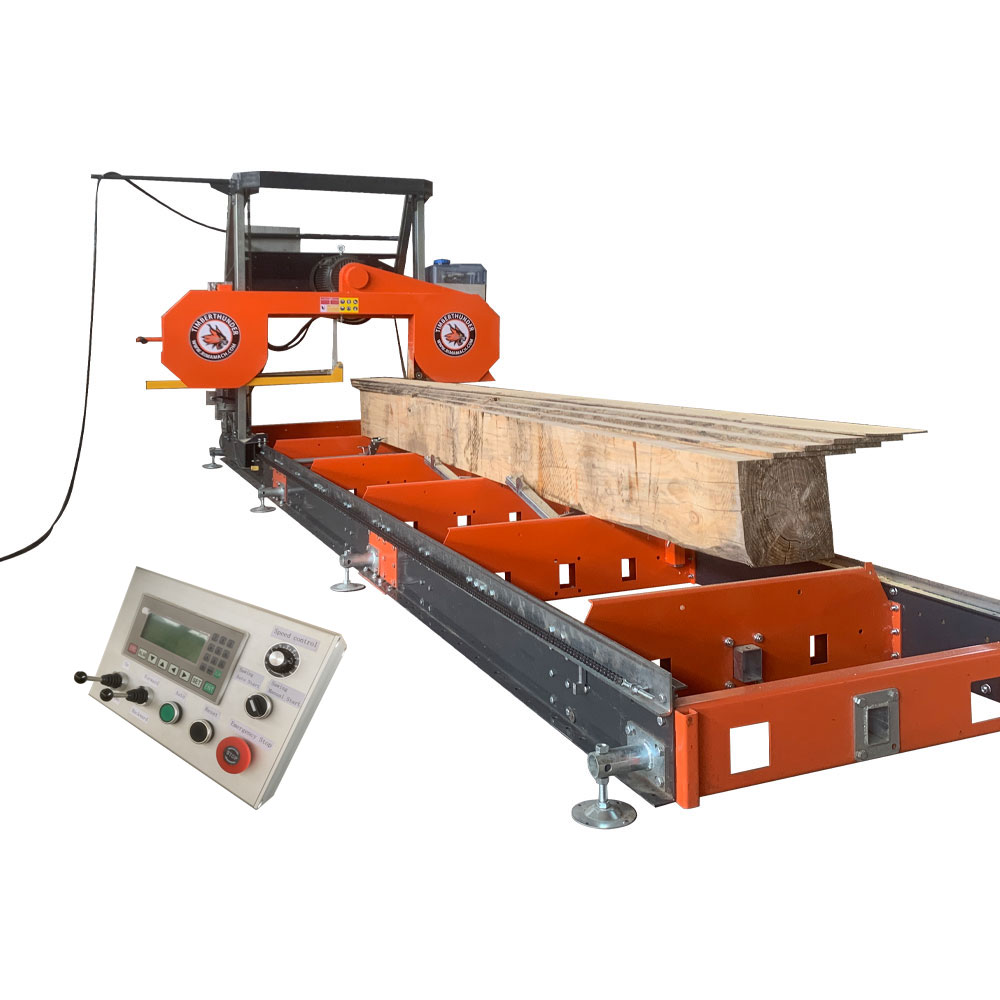
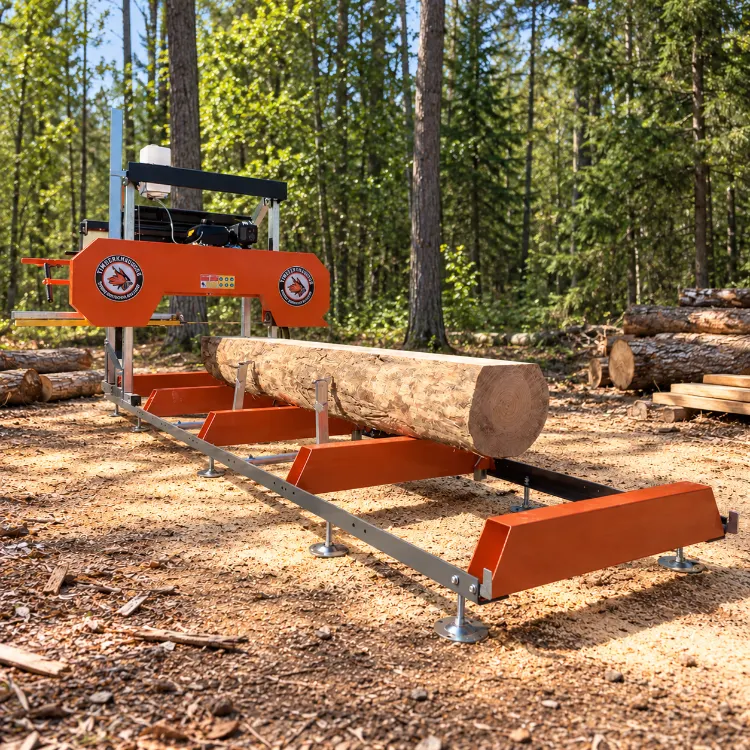
RS36EI

The RS Series Auto Portable Sawmill, including the RS31EI and RS36EI models, is a high-performance milling solution designed for efficiency and precision. Powered by robust 7.5KW or 11KW electric motors, these sawmills handle substantial logs with a maximum cutting capacity of up to 910mm in diameter and 4794mm in length. They feature a durable 4-frame construction and utilize large 420T/459T carbide blades for powerful, smooth cuts. Key automated functions include auto-lifting, auto-cutting, and an automatic blade lubrication system, significantly streamlining the milling process. Operation is versatile with both auto and manual forward/back control. With added conveniences like an adjustable blade guide and quick-lock log clamps, the RS Series is engineered for professional-grade performance, making it an ideal choice for high-yield wood processing and transforming raw logs into valuable lumber with remarkable accuracy and speed.

The RS Series Sawmills offer distinct advantages through their advanced automation and robust design. The fully automated operation, including auto-lifting and auto-cutting, ensures consistent, precise cuts with minimal manual intervention, boosting productivity and reducing operator fatigue. The integrated automatic blade lubrication system is a critical feature, extending blade life, maintaining optimal cutting performance, and reducing long-term maintenance costs.

These mills are built for power and substantial capacity. With strong electric motors and a large cutting diameter and length, they can process big logs into high-value timber efficiently. The use of long-lasting carbide-tipped blades with a safe, optimized cutting speed ensures clean cuts and durability even in demanding applications.

Enhanced control and safety are paramount. The option for both automatic and manual control provides flexibility for various cutting scenarios. Features like the adjustable blade guide improve cutting accuracy, while the quick-lock log clamps secure the log firmly, enhancing both safety and cut quality. Combined with a stable track system, the RS Series delivers a powerful, user-friendly, and reliable sawmilling experience tailored for professional results.


Model RS36EI
Power Electric Motor 11 KW
Displacement 400V 50HZ 3phase
Cutting capacity 910x380x4794mm (36”x15”x188”)
Frame 4pcs
Carbide blade size 4598x40x0.9mm (181”x1-1/2”x0.035”)

Carbide 208 teeth

Standard track size 6000x1010mm (236”x40”)
Safe cutting Speed 20-30s/m
Distance teeth 22mm (0.86”)
Blade Wheel Dia. 508mm (20”)
Auto lifting Yes
Auto cutting Yes
Blade auto lubrication system Yes
Forward/Back Auto/Manual control
Adjustable blade guide Yes
Quick lock log clamp Yes
- OUR PRODUCTS

RELATED CHAIR

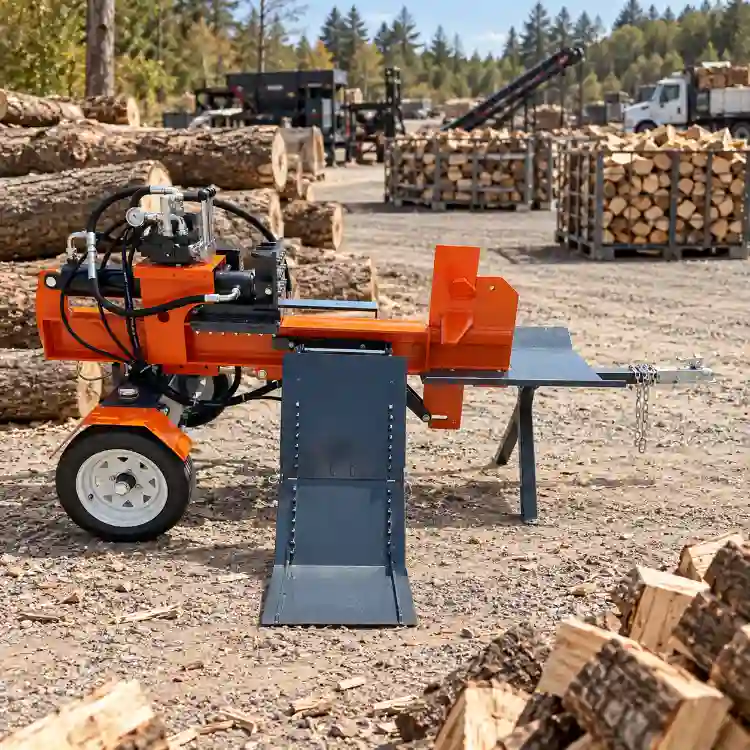
RX500 X Log Splitter
Our new RX500 firewood processor with a robust Hardox X-blade impresses with fully automaticsplitting cycle. This ensures effortless loading and efficient production of kindling and firewood,all while consuming minimal energy and offering easy operation.
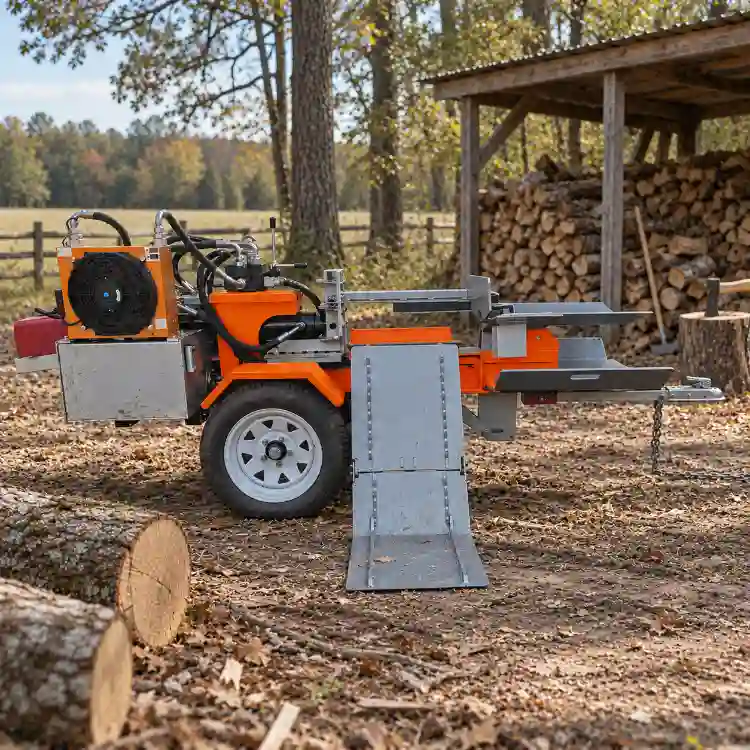
RX500G Professional Firewood Processor
The RX500G is RIMA’s flagship industrial-grade firewood processor, designed for high-capacity commercial production. It integrates heavy-duty hydraulic force with a high-speed automated cycle to transform logs into market-ready firewood with maximum efficiency.
Forestry Winch W55M
The W55M mechanical forestry winch with a puling force of 5.5t The window guard is foldable, which makes transport easier. A recognizable winch design with a durable construction and a compact butt plate prevents wear and makes it easy to work.
Infeed conveyor hopper IT10
Get firewood rounds to your log splitter quicker and easier with the IT10 Infeed table! Simply dump in cut rounds of wood and let the infeed table do the work-feeding directly into your firewood splitter for maximum efficiency. It’s equally versatile for moving split firewood into a packaging line, or for feeding a firewood screener or tumbler.

RECENT
BLOG ARTICLES

Why Is the RX500G Commercial Firewood Processor Turning Heads in Commercial Firewood Production?

24
June
A Commercial Firewood Processor should not only split logs. It should help you cut labor, keep firewood size steady, move finished wood out quickly, and avoid the small delays that slow a yard down. That is why the RX500G firewood processor is getting attention from firewood yards, forestry contractors, timber businesses, and farms that need daily output instead of occasional splitting. RIMA focuses on farm and forestry machinery for practical work sites. Its range covers firewood processors, sawmills, wood chippers, tree cutting machines, stump grinders, conveyors, and timber handling tools. For dealers and importers, RIMA also supports OEM and ODM projects, quality checks, and after-sales service. That makes the company a good fit when you need equipment that can be used, serviced, and sold in real commercial markets. Why Is the RX500G Built Around Faster Firewood Flow? The strongest advantage of RX500G is its automated cutting and splitting flow. In commercial firewood work, speed does not come from one powerful part alone. It comes from fewer pauses between feeding, cutting, splitting, and clearing finished wood. Automated Cutting and Splitting Cycle With a manual setup, workers often cut logs first, move rounds by hand, split them later, and then clear the pile before the next batch. RX500G brings the main steps into one working process. The operator can keep feeding logs while the machine handles the cutting and splitting cycle. For a yard selling firewood by the truckload, this is the real upgrade. You get a steadier rhythm, fewer repeated movements, and a clearer daily production plan. Less Manual Handling Firewood work is hard on workers. Logs are heavy, wet, uneven, and often covered with bark and mud. RX500G uses powered controls and hydraulic handling to reduce hand labor. That helps your team work longer without the same level of fatigue. This point matters during peak season. When orders are packed close together, saved labor is not just a comfort issue. It can decide whether deliveries leave on time. Cleaner Production Rhythm A good Commercial Firewood Processor should be easy to run all day. RX500G gives the operator a simple rhythm: feed, cut, split, discharge, repeat. That makes training easier and keeps output more stable. Small problems still happen in any firewood yard. A crooked log. A knotty piece. A tight delivery window. The point is to stop those problems from slowing the whole yard down. What RX500G Features Matter Most for Commercial Buyers? A firewood processor should be judged by the work it removes from your crew. RX500G is built around power, hydraulic force, consistent splitting, and adjustable output size. RX500G Core Feature Table RX500G Feature Product Detail Why It Matters for You Engine Options 22 HP standard commercial V-Twin gasoline engine or 25 HP EFI V-Twin gasoline engine Lets you choose the right setup for regular or higher-intensity production Hydraulic System Heavy-duty hydraulic force for large and difficult logs Reduces manual strain and keeps the cycle moving Automated Cycle Automatic cutting and splitting process Cuts repeated handling and helps raise daily output X-Blade Splitting High-strength horizontal X-blade design Produces more uniform, market-ready firewood Adjustable Size 15 × 15 mm to 150 × 150 mm Fits different firewood markets, from small packed wood to larger heating pieces Powered Controls User-friendly powered operation Helps reduce operator fatigue and workplace strain Commercial Engine Options RX500G gives you two engine choices. The 22 HP setup is suitable for reliable daily commercial use. The 25 HP EFI setup is better for heavier use when you need stronger response, better fuel control, and easier diagnostics. The right choice depends on your workload. If you process mixed timber often, the higher configuration gives more room. If your production is steady but not extreme, the standard setup may already be enough. Heavy-Duty Hydraulic Force A yard rarely processes perfect logs all day. Some pieces are knotty. Some are oversized. Some have uneven grain. RX500G uses strong hydraulic force to handle these harder pieces with less manual correction. This keeps the machine working at a steadier pace. Your operator does not need to stop as often to reposition wood or deal with half-split logs. X-Blade Splitting Quality The horizontal X-blade is one of the key RX500G selling points. It helps create more uniform firewood, which matters if you sell to regular buyers. Uneven pieces are harder to bag, stack, price, and deliver cleanly. Better splitting also reduces rework. That means fewer large pieces pulled from the pile and run through again. How Does This Commercial Firewood Processor Improve Finished Firewood Quality? Firewood buyers do not only care about volume. They also notice whether the pieces are clean, even, and easy to stack. RX500G helps you make a better-looking finished product with less sorting. Adjustable Firewood Sizes Different customers want different wood sizes. Home heating buyers may prefer larger pieces. Retail bags often need smaller, more even firewood. Food service buyers may want cleaner pieces that burn in a more controlled way. RX500G can adjust firewood dimensions from 15 × 15 mm up to 150 × 150 mm. This gives your yard more flexibility without needing a separate machine for every order type. More Uniform Splitting Uniform splitting saves time after processing. Your workers spend less time sorting out bad pieces. Your finished pile also looks more professional. This matters for repeat customers. When every load looks close to the last one, buyers trust your supply more. Lower Rework Time Bad splits waste time. A worker has to pick out the oversized pieces, split them again, or finish them by hand. RX500G reduces that kind of rework by combining hydraulic force with a steady blade design. It is not a flashy benefit, but operators notice it quickly. Less rework means more finished firewood at the end of the day. Why Pair RX500G with conveyor belts(HC40G-HC60G-HC80G)? RX500G handles the main cutting and splitting work, but the discharge side still matters. If finished firewood piles up under the machine, your operator loses time clearing the area. Pairing RX500G with conveyor belts(HC40G-HC60G-HC80G) helps move wood away from the processor and keeps the yard cleaner. Smoother Discharge Flow A conveyor belt moves finished firewood directly to a pile, trailer, truck, or storage area. That reduces shovel work and keeps the operator focused on feeding the processor. For a Commercial Firewood Processor setup, this is important. The goal is not only to split faster. The goal is to remove finished wood before it becomes another bottleneck. Better Site Layout The conveyor belts(HC40G-HC60G-HC80G)give you different length choices for different yards. A smaller site may only need a shorter conveyor for basic stacking. A larger yard may need more reach for high piles or truck loading. This lets you plan the firewood line around your real site, not the other way around. Easier Stacking and Loading A conveyor helps build cleaner piles and makes loading easier. It also reduces scattered wood around the processor. That cuts cleanup time at the end of the day. Nobody talks much about cleanup when buying a machine, but every yard crew knows it can steal a lot of time. What Should You Check Before Choosing RX500G? RX500G is a strong fit for commercial work, but the best setup depends on your logs, your staff, and your site layout. Daily Production Needs If you only process firewood a few times per month, a smaller machine may be enough. If you sell firewood through the season, serve repeat buyers, or need truckload output, RX500G makes more sense. Its main value is steady production. That is what separates it from a basic splitter. Log Type and Final Size Check your common log size and wood type before choosing a setup. Harder wood, mixed diameters, and knotty timber need stronger hydraulic performance. If your customers ask for different firewood sizes, RX500G’s adjustable output range becomes a real advantage. Service and Support A machine used for commercial production needs support after delivery. RIMA offers service support for buyers who care about long-term operation, parts, and equipment use. You can also look at RIMA’s project experience when planning a full firewood production line. Why Work with RIMA for RX500G Firewood Processing? The right machine saves labor. The right supplier saves trouble. RIMA builds forestry equipment for buyers who want durable machinery, practical support, and flexible supply options. One-Stop Forestry Equipment Supply RIMA can supply more than RX500G. Its forestry range includes processors, conveyors, sawmills, chippers, splitters, and timber handling equipment. That helps if you want one supplier for a full firewood workflow. OEM and ODM Flexibility Dealers and importers often need custom details. Engine setup, local market preference, packaging, and equipment matching can all affect sales. RIMA supports OEM and ODM work, making RX500G easier to fit into different markets. Direct Configuration Advice If your next Commercial Firewood Processor needs to cut labor, produce cleaner firewood, and keep finished wood moving, RX500G is worth a close look. The best setup is usually RX500G plus the right conveyor length, not the processor alone. To discuss the right configuration, you can contact RIMA with your log size, daily output target, and loading method. FAQ Q: Is RX500G a Good Commercial Firewood Processor for Daily Production? A: Yes. RX500G is designed for commercial firewood producers, farms, forestry contractors, and timber businesses that need steady cutting, splitting, and sizing through the working day. Q: What Is the Most Important RX500G Feature? A: The automated cutting and splitting cycle is the most important feature. It reduces manual handling, keeps the work rhythm steady, and helps turn raw logs into finished firewood faster. Q: Should RX500G Be Used with conveyor belts(HC40G-HC60G-HC80G)? A: Yes, especially for commercial yards. conveyor belts(HC40G-HC60G-HC80G)help move finished firewood away from RX500G, reduce cleanup, and make stacking or truck loading easier.  

How to Prevent Feed Jams on a Portable Commercial Wood Processor with a Live Deck

17
June
In a firewood yard, splitting force gets a lot of attention. Fair enough. But after a few hours of real work, most operators care just as much about feeding. If logs keep twisting, stopping, or backing up near the saw, a powerful machine still feels slow. A Portable Commercial Wood Processor needs to do more than split hard wood. It should handle uneven logs, hold them steady, cut cleanly, split without crowding the chamber, and move finished firewood away before the next piece arrives. RIMA builds farm and forestry machinery for practical yard work, including firewood processors, sawmills, wood chippers, tree cutting machines, and stump grinders. The RM500 PLUS-ECO(N/A) is designed for commercial firewood production with chain feeding, a fixed log table, hydraulic clamping, a Honda GX630 gasoline engine, and a layout that suits mobile jobs as well as fixed firewood yards. Why Do Feed Jams Start on a Live Deck? Feed jams often begin before cutting starts, when crooked logs, rushed loading, and poor alignment disturb the whole processing rhythm. Crooked Logs Create Side Pressure A live deck can save labor, but it does not make bad logs disappear. Most feed jams begin before the saw bar touches the wood. Crooked stems, forked sections, wide butt ends, and rough bark can all make a log enter the feed path at the wrong angle. Once the log twists sideways, the feed chain has to pull against shape resistance instead of simply carrying the log forward. That is when operators start stopping the machine, resetting the log, or pulling material back by hand. Rushed Loading Breaks the Feed Rhythm Log placement also matters. If workers load the first layer too quickly, one log may press against another and create side pressure. The machine may still have enough power to move it, but the feed rhythm becomes uneven. Feeding too fast can cause the same issue. The next section should not move forward before the saw has cut cleanly, the clamp has released, the wedge has returned, and split wood has started moving toward the conveyor. The RM500 PLUS-ECO(N/A) has an 11-second cycle time, so the best output usually comes from matching the machine’s rhythm instead of forcing every log through as fast as possible. How Does the RM500 PLUS-ECO(N/A) Help Logs Move Better? Better log movement comes from stable feeding, firm control, enough engine power, and a frame built for real work sites. Fixed Table and Chain Feeding Keep Logs Aligned The RM500 PLUS-ECO(N/A) is built around a more controlled feed path. Its log table is bolted firmly to the processor, which helps keep the feed direction stable during work. This matters on farms, forest yards, and temporary cutting sites where the ground may not be perfectly flat. A loose or poorly aligned table can make the whole machine feel harder to run. Logs may enter slightly off line, and the operator may not notice the problem until jams keep happening near the saw or clamp. A fixed log table reduces that risk and makes setup more predictable after transport. The hydraulic chain feeding platform is another key part of the design. The machine uses a 2730 x 400 mm hydraulic chain feeding platform with three table chains. Instead of relying on workers to push or roll heavy logs by hand, the chain system pulls logs forward in a more controlled direction. This reduces sudden sliding and helps the saw receive the log in a cleaner position. Honda GX630 Power Supports Steady Processing The engine also deserves more attention here. The RM500 PLUS-ECO(N/A) uses the Honda GX630 as its standard engine. The Honda GX630 20HP is a premium 688cc, air-cooled 4-stroke OHV V-Twin commercial engine. Honda V-twin engines offer high horsepower, great adaptability, quiet operation, and excellent fuel efficiency. Delivering 20.8 horsepower (15.5 kW) at 3,600 RPM, it is widely used in high-demand industrial equipment. For a firewood processor, this matters because stable engine output supports the hydraulic system, saw performance, and repeated operating cycles. Feed jams are not only about the deck. They are also about whether the machine can keep cutting, clamping, splitting, and conveying without feeling weak under mixed timber. Log Lift and Axle Design Improve Real-Site Use For heavier timber, the optional log lift can improve feeding. It helps raise logs and guide them toward the feed opening with less manual handling. That means less rushed loading, fewer dropped logs, and less twisting on the deck. The upgraded heavy-duty torsion-damping axle also supports real yard use. A portable machine often travels across uneven ground, gravel roads, farms, and job sites. A stronger torsion-damping axle helps the processor handle transport and rougher working conditions with better stability, which is important for buyers who move equipment between locations. Which Machine Features Reduce Feed Jams? A strong feed system works best when the clamp, wedge, saw, and conveyor all support smooth material flow. Four-Way Hydraulic Clamp Holds Logs Before Cutting Several RM500 PLUS-ECO(N/A) features work together to reduce feed problems. The four-way adjustable hydraulic clamp is one of the most important. A log that moves during cutting can pinch the saw bar, roll into the splitting chamber, or leave an uneven cut. The hydraulic clamp comes with four-way adjustment and a safety valve in the ram, helping it hold the log with a stronger, safer grab. Once the log is held firmly, the saw cut is cleaner and the following split is less likely to jam. Lower-Mounted Wedge and Conveyor Keep the Chamber Clear The lower-mounted hydraulic wedge also helps. Because the wedge is positioned lower, it reduces the chance of logs hitting the hydraulic push rod during operation. This keeps the splitting path clearer and lowers the chance of awkward blockages around the wedge area. After splitting, the standard 3.2 m firewood conveyor with a 250 mm belt moves finished firewood away from the working area. This prevents cut pieces from crowding the chamber while the next log is already being fed. RM500 PLUS-ECO(N/A) Key Specifications and Practical Value Specifications matter when they explain daily work: power, feeding control, hydraulic stability, mobility, and output consistency. Core Power and Cutting Data Item RM500 PLUS-ECO(N/A) Data Why It Matters Standard engine Honda GX630 20HP gasoline engine, 688cc air-cooled 4-stroke OHV V-Twin, electric start Delivers reliable V-Twin commercial power for repeated cutting, splitting, and hydraulic operation Max splitting force 45 tons Handles dense hardwood with fewer repeat splits Max log diameter 500 mm Fits many commercial firewood jobs Max log length 500 mm Supports common firewood cutting sizes Work efficiency 8 m³/h Gives buyers a clear output reference Cycle time 11 seconds Helps operators build a steady feed-cut-split rhythm Oil tank 50 L Seperate bigger oil tank ,makes good heat dissipation Feeding, Hydraulic, and Mobility Data Item RM500 PLUS-ECO(N/A) Data Why It Matters Hydraulic chain feeding 2730 x 400 mm, 3 table chains Guides logs forward with better control Hydraulic clamp Four-way adjustment, safety valve in ram Gives a powerful grab and reduces rolling during cutting Saw system 24-inch harvester saw bar, .404 saw chain Suits heavy cutting work Knife 6-way splitting knife Improves splitting output for suitable log sizes Conveyor 3.2 m length, 250 mm belt width Moves split wood away from the chamber Hydraulic system 48 L/min two-stage pump, 20 MPa pressure Supports stable feeding, clamping, and splitting Axle Upgraded heavy-duty torsion-damping axle Helps with transport and rough-site mobility Wheels and traction 2 × 205/75R15 tires, 50 mm traction ball Better fit for mobile firewood processing work What Operator Habits Keep the Feed Path Clear? Even a capable wood processor works better when operators sort bad logs, watch the full flow, and clear debris early. Sort Problem Logs Before They Reach the Saw A strong processor still needs sensible operation. The fastest crew is usually not the one forcing every bad log through the machine. It is the crew that keeps the feed path clean and steady. Bad logs should be handled before they reach the saw. Very crooked, muddy, forked, or oversized logs may slow the whole line. Trimming them first can be faster than fighting them inside the processor. Watch the Full Material Flow Operators should also watch the full material flow. Do not only look at the log entering the saw. Check whether the clamp releases cleanly, whether the wedge returns, whether split wood clears the conveyor, and whether bark is building up near the table chain. Daily checks are simple but important. A dull saw chain cuts slowly and can pull unevenly. Low or dirty hydraulic oil can make the clamp, feed chain, or wedge respond less smoothly. Bark, chips, mud, and small offcuts should be cleared during breaks instead of waiting until the end of the day. Why Choose RIMA for a Portable Commercial Wood Processor? The right processor should fit the yard’s real workflow, not just look powerful on a specification sheet. RIMA Focuses on Practical Forestry Machinery Choosing a wood processor is not just about buying the highest splitting force. It is about matching the machine to how the yard really works: log size, crew size, loading method, transport needs, firewood length, and daily output. RIMA focuses on farm and forestry equipment and provides one-stop solutions for global customers. Its product range covers firewood processors, sawmills, wood chippers, tree cutting machines, stump grinders, and related machinery. The company also supports OEM and ODM services for customers in Europe and North America, with product upgrades based on user feedback. RM500 PLUS-ECO(N/A) Fits Commercial Firewood Work For buyers comparing portable commercial wood processors, the RM500 PLUS-ECO(N/A) has several practical strengths. It combines a Honda GX630 commercial V-Twin engine, 45 tons of splitting force, chain feeding, hydraulic clamping, a lower-mounted wedge, standard conveyor, hydraulic oil cooling, highway trailer tires, and an upgraded heavy-duty torsion-damping axle. That mix is important. The machine is not only built to split tough logs. It is built to keep logs moving, hold them securely, reduce chamber crowding, and support mobile firewood production with fewer small interruptions through the workday. FAQs Q: What Causes Feed Jams on a Portable Commercial Wood Processor with a Live Deck? A: Most feed jams come from crooked logs, poor deck loading, rushed feeding, dull saw parts, weak clamping, or debris around the chain feed and conveyor. Q: Why Is the Honda GX630 Important on the RM500 PLUS-ECO(N/A)? A: The Honda GX630 gives the machine a commercial V-Twin power source with strong output, quieter operation, good fuel efficiency, and wide use in demanding industrial equipment. Q: Is the RM500 PLUS-ECO(N/A) Suitable for Commercial Firewood Production? A: Yes. It has 45 tons of splitting force, 500 mm maximum log diameter, 8 m³/h work efficiency, hydraulic chain feeding, four-way hydraulic clamping, and a 3.2 m conveyor.  

Portable Sawmill Buying Guide: What to Check Before Cutting Your Own Lumber

10
June
Investing in a portable sawmill changes the economics of raw timber. Instead of buying every board at retail prices, you can convert properly selected logs into usable lumber directly on your property. Without a clear checklist, buyers often buy capacity in the wrong place: too little throat size for local hardwood, too short a track for beams, or too much hydraulic complexity for occasional use. When choosing a portable sawmill, it is important to work with a manufacturer experienced in forestry machinery and demanding outdoor applications. That is where RIMA comes in. The company focuses on heavy farm and forestry equipment, helping buyers match machines, parts, and technical support to real field applications. RIMA’s engineering team refines its heavy-duty designs based on field feedback from operators working in muddy yards, uneven woodland access roads, and high-load cutting conditions. In this guide, the RS36G-Deluxe is used as a reference model to show what buyers should check before choosing a Portable Sawmill. Log Capacity And Track Dimensions When large logs arrive at the mill bed, the first question is not horsepower. It is whether the machine can accept the log safely and still leave enough room for clamping, blade travel, and stable cutting. A high-capacity sawmill can reduce the need for pre-trimming when the log is within the machine’s rated diameter and properly prepared. Maximum Log Diameter Limits Throat capacity is the first hard limit in sawmill selection. If the log exceeds the rated opening, no engine upgrade can compensate for that mismatch. Stepping up to a 36-inch diameter capacity keeps you from walking away from premium old-growth hardwood logs. The RS36G is rated for logs up to 36 inches in diameter and can process wide slabs when the log is correctly positioned and secured. Maximum Cutting Length Capabilities Track length matters when your work moves beyond short boards into beams, slabs, cabin materials, or custom structural pieces. The featured 36-inch model gives you nearly 188 inches of actual cutting capacity out of the box. The 236.2 × 39.8 inch standard track supports a cutting capacity of about 188 inches, so custom lengths should stay within the rated cutting range or require an appropriate extension setup. Bed Frame Structural Stability Heavy logs place significant load on the sawmill bed and frame during loading. Light-duty stamped frames may deform over time under repeated loading, turning, and clamping pressure. You want a premium quality welded steel frame to absorb the shock. The 4-frame / 4-post structure helps improve cutting stability and reduce the risk of deflection, which supports more consistent board quality. Specification Standard Entry Mill RS36G-Deluxe Hydraulic Mill Max Log Diameter 26 inches 36 inches Cutting Length 110 inches 188 inches Blade Wheel Diameter 18.8 inches 20.0 inches Power Options And Engine Performance Once the log sits tight on the deck, you need raw torque to push a band blade through solid grain. Gasoline Engine Horsepower Ratings Processing wide slabs requires stable power output and enough usable torque to maintain blade speed through dense grain. A 27HP heavy-duty gasoline engine with electric start provides the sustained push to slice right through hard knots. Lower-powered engines may require a slower feed rate, especially when cutting dense hardwood or wide slabs. A 764cc engine displacement helps the mill maintain cutting momentum during long passes, especially when working with dense hardwood or wider slabs. Electric Motor Alternative Configurations For fixed workshop milling, a three-phase electric configuration is often selected for air quality, lower noise, and reduced gasoline-engine maintenance. The electric version of the RS36G features a 14.8 HP, 400V power that cuts out exhaust fumes and dampens the noise. This setup reduces gasoline-engine maintenance requirements and is more suitable for indoor or fixed workshop environments. Torque Transfer Efficiency Systems Engine power should be supported by reliable power transmission and stable saw head control. Reliable sawmills use heavy-duty components and powered saw head controls. This flagship model lets you quickly move the saw head up, down, forward, and reverse mechanically. This direct control transfers energy smoothly, giving you a cleaner cut surface. Manual Versus Hydraulic Log Handling Turning a massive wet log by hand drains your energy fast. Wrestling timber with manual cant hooks just wears you out. Physical Labor During Manual Milling After five hours of rolling logs in the mud, operator fatigue sets in, feed rates drop, and safety risks spike. Anyone who has pinched a finger under a shifting log knows this reality all too well. Hydraulic Log Turner Efficiency Gains Hydraulic handling reduces repetitive manual work, shortens log positioning time, and helps operators maintain steadier output over a full cutting day. The hydraulic steel log turner helps rotate heavy logs within the machine’s rated operating range with less manual effort. Hydraulic roller toe boards, such as those on the RS36G-Deluxe, help level the log and position the cut line more accurately before each pass. The integrated hydraulic lifter is rated up to 4409 lbs, helping reduce manual loading work and improve handling efficiency under suitable operating conditions. Heavy-Duty Automated Clamping Mechanisms When the blade meets a dense knot, the log can shift if it is not clamped firmly enough. Two sets of hydraulic log clamps and adjustable side supports lock the wood down tight. They stabilize the material against intense cutting forces. The hydraulic clamps and side supports help stabilize the log during sawing, improving cut consistency and reducing material movement. Blade Dynamics And Cutting Precision The engine provides the push, but the blade dictates the final finish of your lumber. Carbide-Tipped Band Wheel Alignment Integrity Large 20-inch blade wheels significantly reduce the bending stress on the metal band. When paired with a massive 181-inch blade featuring 209 carbide teeth, this rigid tracking keeps your cuts accurate. Larger blade wheels can reduce bending stress on the blade, which may support longer blade life when the blade is properly tensioned and maintained. Automatic Blade Lubrication System Application Cutting through sticky softwoods like pine causes fast pitch buildup. An automatic blade lubrication system applies fluid directly to the cutting surface. Found built right into the RS36G-Deluxe, this automatic blade lubrication system on the RS36G helps reduce friction and pitch buildup, supporting steadier cutting performance; final cut quality still depends on blade condition, feed rate, and wood type. Adjustable Blade Guide Configuration Controls You want the guide as close to the wood as possible. An adjustable blade guide reduces the exposed span of the band. Moving the guide closer minimizes flutter. This adjustment helps reduce blade flutter and supports more consistent board thickness, especially during wider or harder cuts. Mobility And Site Adaptability Factors Mobility matters when your logs are located away from the main work area. A portable sawmill should be easy to tow, level, and stabilize before cutting begins. You have to move it safely. Trailer Axle And Torsion Suspension Quality For true off-grid work, your setup needs a heavy steel sub-frame. Highway-rated 195/60R14 tires, proper fenders, trailer lights, and a 2-inch ball coupler make the RS36G-Deluxe suitable for transport to remote job sites when local towing rules are followed. The suspension system helps reduce vibration during transport on uneven access roads. Leveling Jack Ground Stabilization Methods Forest floors are rarely flat. Setting up on a muddy slope requires solid outriggers. Six heavily rated 3000 lbs support jacks let you stabilize and precisely level the entire 20-foot bed frame before you start cutting. A properly leveled base helps reduce track movement and supports stable cutting under heavy timber loads. Compact Layout Options For Workshop Storage If you mill seasonally, space becomes valuable. A smart design balances heavy-duty cutting power with a footprint that stores neatly. With trailer lights and a 2-inch ball coupler, the machine can be moved and stored in a suitable covered area when space, floor strength, and access allow. Task Manual Handling RS36G-Deluxe Hydraulic Handling Loading a 30-inch log 5 to 10 minutes Under 30 seconds Turning for the next cut 3 to 6 minutes Under 15 seconds Daily Operator Fatigue High Very Low Premium Portable Sawmill Solutions For Your Project Taken together, these specifications indicate a mill designed for demanding commercial cutting, frequent log handling, and buyers who need more than occasional backyard sawing. High Performance Of The RS36G-Deluxe System When you want to stop wrestling logs and start producing real timber, a hydraulic setup like the RS36G is a strong option for buyers who need higher log-handling efficiency and reduced manual labor.You can review similar successful setups through their case portfolio to see how commercial operators run these hydraulic machines day in and day out. Customized Manufacturing Service Options For distributors, buying off the shelf is rarely enough. The brand offers dedicated service platforms to manage technical modifications. They provide OEM and ODM services and can discuss technical modifications or certification requirements for different regional markets. Direct Sourcing Contact Channels Before choosing a final configuration, confirm log size, wood species, required cutting length, site access, power supply, and expected daily output with the manufacturer. Contact the manufacturer directly to confirm specifications, configuration options, pricing, and project requirements. FAQ Q: What is the main advantage of a Portable Sawmill over a chainsaw mill? A: A chainsaw mill can be affected by chain movement and a wider kerf, which may reduce lumber yield and create more sawdust waste. A portable bandsaw mill uses a track and blade guide system to improve blade tracking and cutting stability. You can usually produce flatter, more consistent boards more efficiently than with a basic chainsaw milling setup. Also, the band blade usually creates a narrower kerf than a chainsaw chain, helping reduce sawdust waste. Q: Do I need a hydraulic log turner for my milling operation? A: Handling a wet oak log with only a manual hook can become tiring after just a few cuts, especially when the log is large or uneven. If you often process logs above 24 inches, a hydraulic log turner can significantly reduce manual handling and improve workflow efficiency. It can reduce heavy manual rolling and help lower operator strain, although actual handling time depends on log weight, shape, and site conditions. That means the blade stays busy, and your daily board-foot output goes way up. Q: Can I run a gasoline-powered mill indoors? A: A gasoline-powered mill should not be used in enclosed or poorly ventilated indoor spaces because of carbon monoxide and exhaust risks. Running one inside a closed barn or garage is just a massive health risk. If your setup requires cutting lumber indoors, you have to switch over to an electric motor build. A 14.8 HP, 400V electric power unit can provide stable torque for dense-grain cutting while reducing exhaust concerns and lowering noise in fixed workshop environments.  

Tractor Forestry Winch Guide: How to Size a 5.5T Mechanical Winch for Your Farm

03
June
Farm and forestry work rarely goes exactly to plan. Moving heavy logs from dense woodland or clearing fallen timber requires equipment that balances pulling power with tractor compatibility. That is exactly where a 5.5T Mechanical Winch comes into play. It provides enough pulling capacity to move heavy timber without requiring a large industrial skidder. Choosing an attachment that matches your existing tractor helps reduce operating problems in muddy or uneven field conditions. Let’s look at how to properly size and select the right unit for your daily farm operations. The Importance of a 5.5T Mechanical Winch on the Farm Finding the right equipment size prevents tractor damage and gets the job done faster. An undersized winch may limit pulling efficiency, while an oversized unit can add unnecessary weight and place extra stress on the tractor linkage. Optimal Balance of Power and Weight: A 5.5-ton pull capacity provides plenty of strength for daily farm tasks without overwhelming standard utility tractors. It handles thick hardwood logs easily while keeping the attachment weight manageable for a typical three-point hitch setup. This gives operators practical pulling power while helping maintain tractor maneuverability. Efficiency in Heavy Timber Skidding: Dragging large logs through dense woods demands consistent, uninterrupted torque. A mechanical setup gives you direct power right from the tractor, reducing manual labor and increasing your daily productivity. You spend less time cutting logs into smaller sections and more time moving them efficiently to the landing area. Cost-Effectiveness for Mid-Sized Operations: For mid-sized farms or local firewood businesses, investing in complex hydraulic systems may not always be cost-effective. Mechanical winches deliver a strong return on investment because they feature fewer sensitive parts that can break down in the dirt. Compatibility Requirements for Your Tractor Even a strong attachment will not perform properly if it does not match your tractor’s power, linkage, and PTO requirements. Proper sizing prevents dangerous rollovers and mechanical failures in the woods. Minimum Tractor Power of 54 to 75 HP To safely operate a winch with a 55 KN pulling force, you need a tractor that provides enough weight and horsepower. The recommended tractor power range is 54 to 75 HP. A tractor below this range may lack the weight and power needed for stable pulling, especially on uneven ground. Standard PTO Drive Specifications Mechanical winches rely entirely on your tractor’s power take-off. The system operates smoothly using a standard tractor PTO running at 540 rpm. This direct mechanical link delivers immediate power without the lag sometimes felt in entry-level hydraulic drives. Category 1 and 2 Linkage Integration Mounting the unit needs to be straightforward and secure. Look for equipment compatible with Cat 1 and Cat 2 linkages. This Cat 1 and Cat 2 compatibility makes the winch suitable for many mid-range farm tractors and helps simplify installation. Winch Capacity Minimum Tractor Power PTO Speed Recommended Linkage 3.5 Ton 30 – 45 HP 540 rpm Cat 1 5.5 Ton 54 – 75 HP 540 rpm Cat 1 & 2 8.5 Ton 80 – 120 HP 540 rpm Cat 2 & 3 Core Features of a High-Quality Mechanical Winch In forestry work, small design details can affect setup time, operating efficiency, and daily usability. The Forestry Winch W55M shows how thoughtful engineering solves common operational headaches. Specification Detail Model W55M Pulling Force 55 KN Braking Force 69 KN Drive System Tractor PTO 540 rpm Linkage Category Cat 1 & 2 Operation Manual Control, Mechanical Standard Wire Rope 70 m / 11 mm Weight with Wire Rope 383 kg Foldable Window Guard for Easy Transport Transporting tall equipment under low branches or into compact storage areas can be difficult. A foldable window guard saves vertical space during transit. During operation, the window guard helps provide a protective barrier against branches and debris. Compact Butt Plate for Wear Reduction A compact butt plate helps reduce wear and improves handling convenience during forestry pulling work. It also helps the winch sit more securely during pulling, although tractor stability still depends on load, slope, soil condition, and pulling angle. When you run a 5.5T Mechanical Winch all day, reducing unnecessary wear may also help lower routine replacement costs over time. Practical Holders for Chainsaws and Pickaxes You always need hand tools close by when logging. Built-in chainsaw and pickaxe holders keep essential forestry tools organized and safe. This reduces the need to place chainsaws loosely in the tractor cab, where they may move around or become damaged. Practical Applications in Forestry and Agriculture Specifications are important, but field performance matters most in forestry and farm conditions. A 5.5T Mechanical Winch helps a compatible tractor handle forestry pulling and log transport tasks more efficiently. Seamless Log Handling in Mountainous Terrain Many tractors should not be driven onto steep slopes, deep ravines, or unstable forest ground. The winch allows operators to park the tractor on firmer ground and pull timber from slopes, ditches, or difficult forest areas. This drastically reduces the physical strain of manual hauling. Swift Land Clearing on Farm Properties Opening up new pasture means dealing with fallen trees and massive debris. The 55 KN pulling force drags heavy materials out of the way quickly. It can help move logs, fallen trees, and heavy debris during land-clearing work, reducing manual dragging and supporting follow-up cleanup. Reliable Support for Daily Agricultural Tasks Beyond logging, the included trailer hitch improves connection flexibility for forestry transport and farm handling tasks when used with compatible tractor equipment. Safety Enhancements and Maintenance Practices Moving heavy loads under tension creates massive potential energy. Operator safety depends on proper winch design, correct tractor matching, and careful pulling practices. High Braking Force of 69 KN The 69 KN braking force helps improve load control during skidding, but operators should still consider slope, soil condition, rope angle, load weight, and tractor stability before pulling. Thickened Steel Plates for Structural Durability Forestry equipment is often exposed to impact from rocks, stumps, and rough ground conditions. The use of thickened steel plates and high-strength wear-resistant materials helps the machine withstand demanding forestry conditions. RIMA’s machinery information highlights thickened steel plates and wear-resistant materials, which support durability in demanding forestry work. Accessible Components for Routine Upkeep Routine maintenance should be simple and manageable for operators. The manual control and 1-piece clutch plate design make daily inspections straightforward. Operators can grease key points, remove packed mud, and check cable tension before starting work. Comprehensive Forestry Solutions for the Global Market Long-term equipment performance depends not only on product design but also on manufacturing quality and after-sales support. Partnering with a premier manufacturer of farm and forestry equipment means getting gear built from genuine operator feedback. RIMA supports production consistency through a 6S management system and standardized quality control procedures. This supports more consistent production quality and helps reduce delivery-related quality risks. Professional OEM and Custom Manufacturing If you need machinery adapted for a specific local market, RIMA’s technical team provides professional OEM and ODM solutions. You can easily request a customized design service to see how they modify products to meet demanding agricultural standards. Global Distribution and Proven Reliability RIMA’s export experience in markets such as Germany, Canada, and the US can give buyers more confidence in its global supply capability. Its experience serving customers in Europe and North America also supports its global market suitability. Responsive Customer Support and Direct Communication Questions pop up in the field, and you need fast answers to keep the operation running. Their experienced staff are always available to help you size equipment or sort out shipping logistics. Just reach out and contact the team to get straightforward technical assistance for your next farm upgrade. Wrapping it up, integrating a 5.5T Mechanical Winch into your farm setup completely transforms how you handle timber and clear land. It delivers the exact muscle required without breaking the bank. Always verify your tractor’s horsepower and linkage category before hooking up, and keep your tools greased and maintained. FAQs Q: Can my 40 HP tractor run a 5.5T Mechanical Winch safely? A: No, the recommended minimum tractor power for a 5.5-ton capacity model is between 54 and 75 HP. Using a 40 HP tractor risks instability and poor performance during heavy pulls. Q: What wire rope comes standard on a 5.5T Mechanical Winch? A: The standard wire rope configuration is 70 meters in length with an 11 mm diameter. It provides an excellent balance of reach and breaking strength for typical farm logging. Q: How does the foldable window guard help during transport? A: The foldable window guard lowers the overall height of the machine, making it much easier to park the tractor in standard sheds and avoiding low-hanging branches on transit trails.  
Products
Contacts
WhatsApp
Email