



CONTACT US

PRODUCTS

BR-5

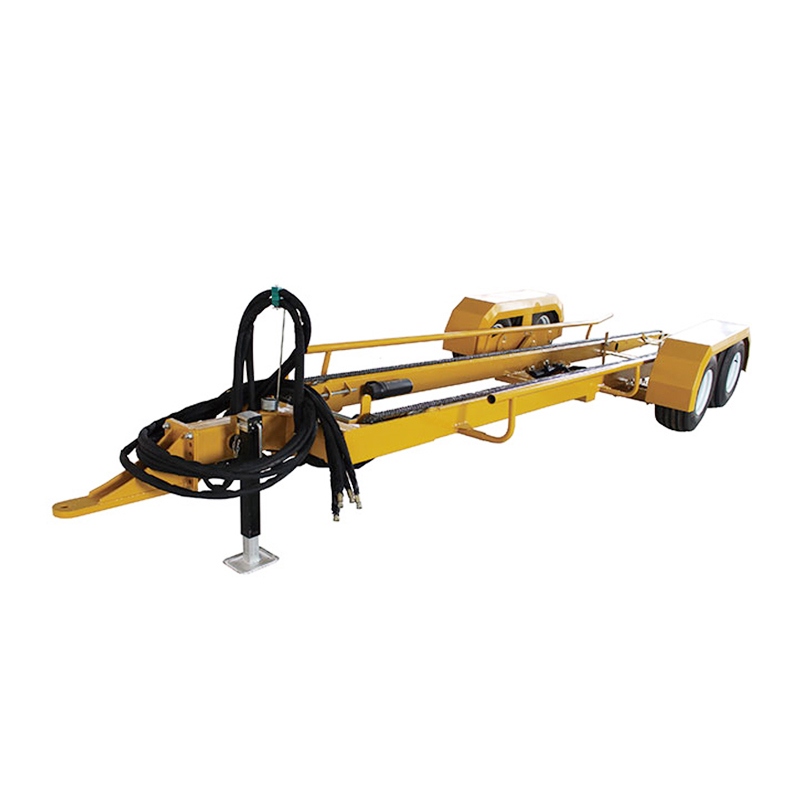
The Bin Runner is a very versatile trailer, capable of picking up, transporting smoothly and unloading bins fast and efficiently. 4, 5 or 6 bin models available. To pick up bins in the orchard the Bin Runner is lowered and aligned so that the frame slides under the bin. Chains move the bin forwards while the Bin Runner is reversing. Unloading is even easier. Bin Runner is lowered and then driven forward while the chains are moving backwards, gently unloading.

The new strong floor chains have a rounded top and do not damage or chafe the wood or plastic bins, HDPE nylon wear strips are under the chain.

Transporting of bins is very gentle (even on rough roads) because of the smooth ride given by the rocking tandem axles (4 ton rated). These rocker wheel pivots now have self lubricating HDPE bushes. High flotation tyres 25×10.5×12″ 8 ply, hot dip galvinising rims, heavy duty bolt-on mudguards, stub axles. The crank axle & rocker assembly is now double the strength of previous.

Bin Runner Bin capacity Hydraulic requirements Tyre size Rocker pivot size Total length / width Total weight
BR-5 Five x 650kg

total 2.6 tonne

2 pairs of remotes; 2,300 PSI 30 l/pm 25×10.5×128 ply or 215R75 x148 ply 75mm with HDPE bushes 6.43m / 2m 1.0 tonne approx
BR-6 Six x 650kg

total 3.25 tonne

2 pairs of remotes; 2,300 PSI 30 l/pm 25×10.5×128 ply or 215R75 x148 ply 75mm with HDPE bushes 7.62m / 2m 1.1 tonne approx
BR-7 Seven x 650kg

total 3.9 tonne

2 pairs of remotes; 2,300 PSI 30 l/pm 25×10.5×128 ply or 215R75 x148 ply 75mm with HDPE bushes 8.83m / 2m 1.3 tonne approx


- OUR PRODUCTS

RELATED PRODUCTS

HC06-C
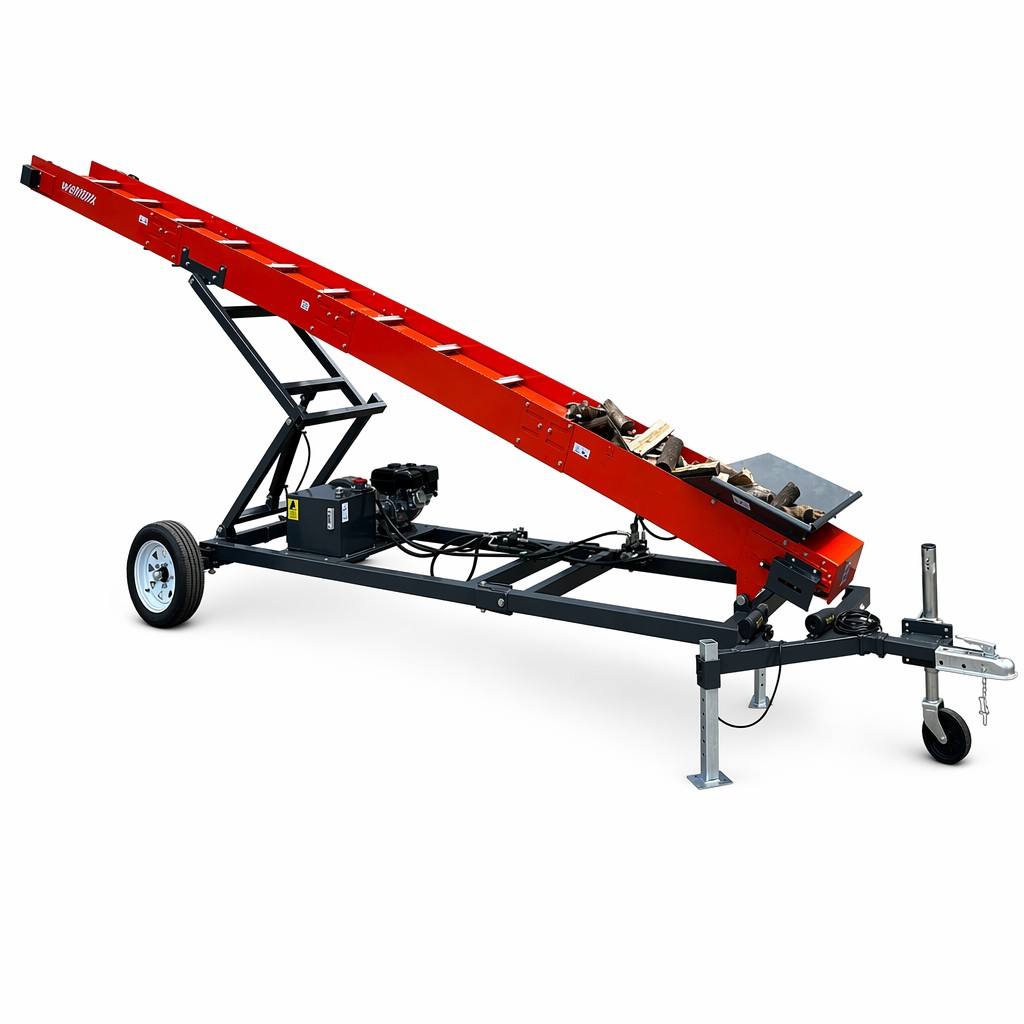
This firewood conveyor offers efficient, powerful and safe performance, making it an essential tool for conveying and lifting firewood in diverse settings. This wood conveyor equipped with a 7HP gasoline-powered hydraulic driven system operates with high efficiency and powerful performance. The belt speed is variable by changing the engine speed. With an adjustable reach up to 124 inches, this conveyor's speed, efficiency, reliability, and safety are unmatched in the conveying industry.
Firewood Cleaner-AutoDrum
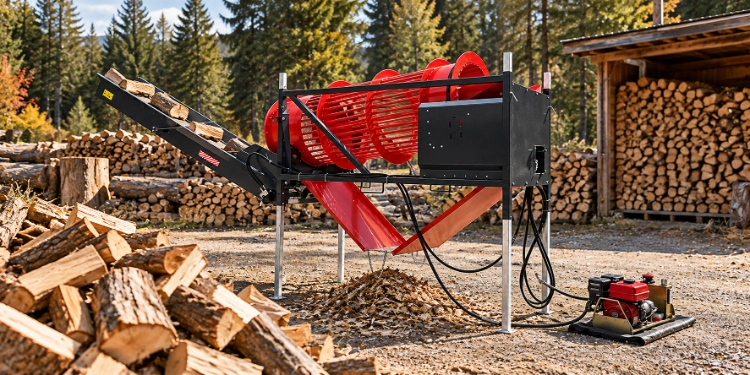
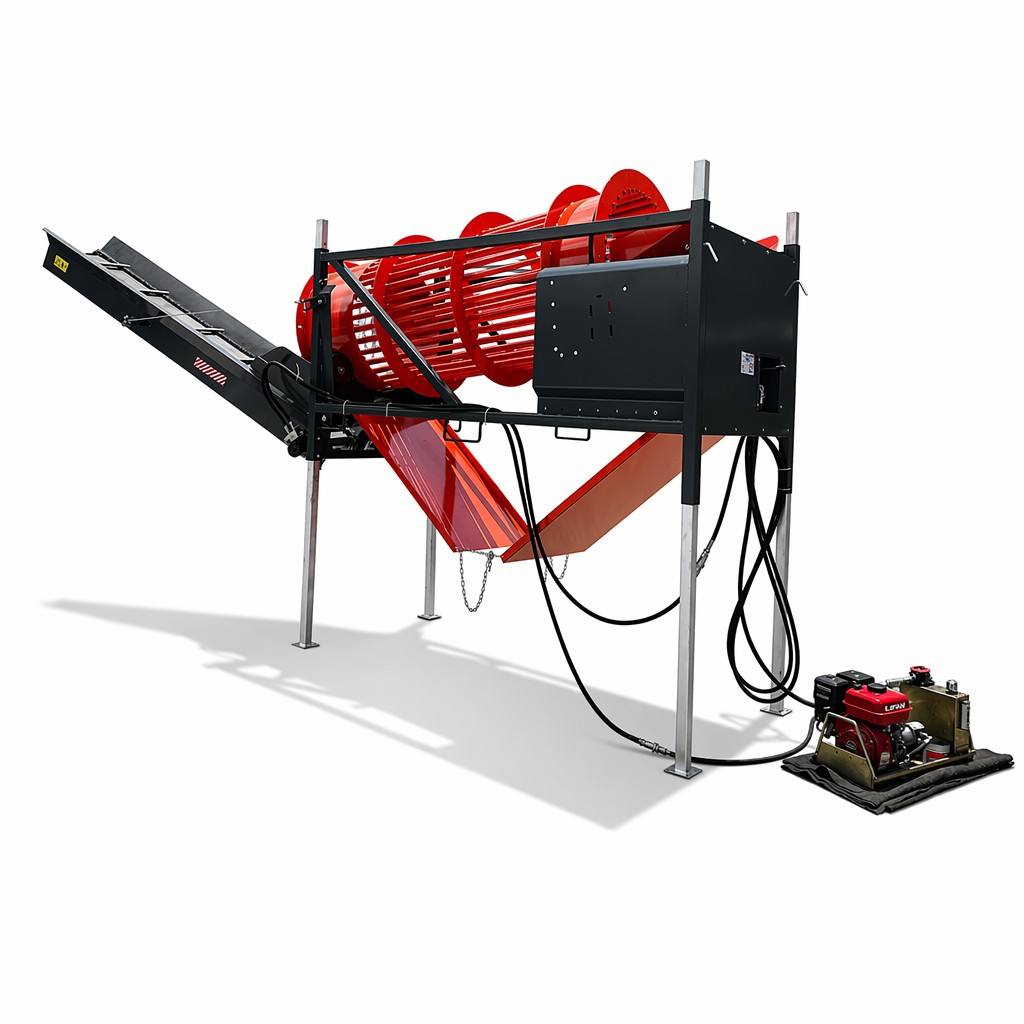
RIMA drum cleaner, the firewood rotates in the cleaning drum like in a washing machine, which removes wood debris easily and very efficiently. Cleaner is best suited for screening less than 50 cm long firewood. It is also perfectly suited for the joint use of several firewood processors. The aotoclean can be powered with an 7HP engine power unit, electric motor or tractor hydraulics.

RECENT
BLOG ARTICLES

Tired of Slow Firewood Production? How Commercial Processors Turn Large Logs Into Sellable Firewood

09
September
A big pile of logs can look like plenty of firewood until you start working through it. Larger rounds take longer to position. Knots and twisted grain can stop a clean split, and uneven pieces often end up going through the machine again. If you process firewood for a farm, rural home, small woodlot, or family-run firewood yard, the goal is fairly simple. You want to turn those logs into pieces that are easy to dry, stack, store, bag, or sell. A bigger machine alone does not make that happen. The whole job needs to keep moving from one log to the next. Why Does Firewood Production Slow Down with Larger Logs? Splitting force matters when you work with thick or dense wood, but it is only one part of the job. A machine may have plenty of force and still feel slow if every cycle involves too much repositioning and cleanup. Large Logs Need More Work between Splits Large rounds are heavy and awkward. They do not always sit where you want them, especially when the trunk is crooked or the cut face is uneven. Dense hardwood, wet timber, knots, and crotch sections can make each split less predictable as well. This is why it helps to look beyond the force rating when choosing equipment. Feeding, positioning, splitting, clearing the finished pieces, and getting the next log ready all affect how much wood you finish in a day. If tough wood is common on your property, this log splitter guide for tough hardwoods covers several points worth checking before you choose a setup. Uneven Pieces Create More Work Later A log breaking apart does not always mean the job is finished. If one section comes out too thick, you may have to pick it out and split it again. Do that across a large pile and the extra handling starts to add up. More even firewood is easier to work with after splitting. It stacks better, fits into bags or bundles more neatly, and can be separated by size without spending half the afternoon sorting the pile. You also get a more predictable result when you prepare wood for different stoves or heating setups. How Do Commercial Processors Keep Logs Moving? A commercial-style firewood setup is not only for a large production yard. The same working idea can make sense on a farm or larger rural property where you process wood regularly. The main difference is rhythm. Instead of treating every log as a separate job, the machine is set up to keep material moving through the same sequence. Automatic Splitting Keeps the Cycle Moving With a basic splitter, quite a bit of time can disappear between strokes. You reposition the wood, move the last pieces away, wait for the machine to reset, and then start again. The RX500 X Log Splitter uses a fully automatic splitting cycle. That makes it better suited to repeated firewood work where you have a pile of rounds waiting rather than one or two logs to deal with. The difference becomes more noticeable over a full day. You are still loading and managing the wood, but the splitting stage is not constantly stopping and starting around separate manual steps. The X-Blade Changes What Comes Out A single wedge can open a round, but large sections may still need another pass before they are small enough for the stove or woodpile. The RX500 X uses a horizontal X-blade to divide the log in a more controlled pattern. The machine can handle logs around 19.7 inches in diameter and offers up to 18 tons of splitting force. Finished firewood size can be adjusted from roughly 0.6 × 0.6 inch up to 5.9 × 5.9 inches. That range gives you room to make small kindling, normal stove wood, or larger pieces. You are not stuck producing one size from every log. How Does the RX500 X Turn Large Logs Into Sellable Firewood? There is a practical difference between split wood and firewood that is ready to use or sell. The second one needs a workable size, a fairly regular shape, and a clear path from the splitter to drying and storage. That is where the RX500 X starts to make more sense than simply choosing a machine with a large force number. Control the Finished Size before the Wood Leaves the Splitter If you heat your own property, you probably already know what size works best in your stove. Smaller pieces are handy for starting a fire. Medium pieces suit everyday burning, while larger pieces can be useful in bigger stoves or outdoor heating systems. The adjustable splitting range lets you work around those needs. If you also sell some of your firewood locally, you can prepare different sizes without changing to another machine. That saves you from creating a large mixed pile first and sorting everything afterward. Keep the Feed Area Clear and the Output Moving Even a good splitter can feel slow when the area around it becomes crowded. Finished pieces should have somewhere to go, and the next log needs a clear route into the machine. Keep loose pieces away from the feed area and do not let split wood collect around the outlet. It sounds simple, but this has a big effect on how comfortable the machine is to use over several hours. This guide on preventing feed jams on a wood processor also covers useful ways to keep material moving without constant stopping. Make the Finished Wood Easier to Handle Once the firewood comes out in a fairly consistent size, everything after the splitter becomes simpler. You can carry it more easily, build cleaner stacks, and separate kindling from larger stove wood as you go. If you are preparing bags or bundles, there is less need to pick through the pile looking for pieces that fit. This is one reason the finished split matters just as much as raw machine power. What Makes Finished Firewood Easier to Dry, Store, and Sell? Firewood still needs time and airflow after splitting. A machine cannot replace proper seasoning, but the way the wood is prepared can make the next stage much easier. Consistent Sizes Make Stacking and Drying Easier A pile filled with very different sizes can be awkward to stack. Large blocks sit next to thin pieces, gaps vary, and the wood does not always dry at a similar rate. Pieces that are closer in size are easier to arrange with good airflow around them. You can also build rows that stay more stable instead of constantly shifting as you add more wood. For your own property, this simply makes the woodpile easier to manage. If you sell some of the finished wood, a more regular load also looks better when it reaches the customer. Different Firewood Sizes Suit Different Uses There is no single perfect firewood size. Small split pieces work well as kindling. Medium pieces are useful for many household stoves and fireplaces. Larger firewood may suit bigger heating systems or customers who prefer a longer burn. The adjustable output of the RX500 X gives you room to work with those differences instead of making every batch the same. That can be particularly useful when the logs on your property vary in diameter throughout the season. How Should You Build a Practical Firewood Processing Setup? You do not need to buy every piece of forestry equipment at once. A useful setup starts with the wood you actually have and the amount you expect to process. Start with Your Logs and Finished Firewood Size Look at the logs before looking at the machine brochure. Check the normal diameter, wood species, condition, and length of the material you handle. Then decide what finished firewood size you actually want. Your working area matters too. You need enough room to bring logs in, run the splitter safely, and move finished wood out without crossing the same path all day. The RX500 X is a good fit when larger logs and repeated splitting are common enough to justify an automatic cycle and adjustable X-blade setup. Add Material Handling Only When You Need It A small woodlot may work perfectly well with the splitter, a clear feed area, and a nearby drying stack. If the amount of firewood grows later, a conveyor can help move finished pieces away from the machine. An infeed table can make it easier to keep rounds ready, while a cleaner or screener can remove loose bark and small debris before storage or packing. The wider RIMA products range includes firewood processors, log splitters, conveyors, sawmills, and other forestry equipment, so you can build around the main machine instead of replacing everything when your needs change. Why RIMA Fits This Type of Setup RIMA focuses on farm and forestry equipment, including machines for splitting, sawmilling, conveying, and timber handling. That makes the RX500 X part of a wider wood-processing range rather than a stand-alone product with nowhere to go next. For a farm, rural property, or family-run firewood operation, that can be useful. You might start with one machine and add supporting equipment later when the amount of wood increases. You can look through RIMA case examples for different equipment setups or browse the RIMA blog for more practical information on firewood processing, log splitters, sawmills, and maintenance. If you are not sure whether the RX500 X fits your log size or working area, RIMA also provides service support, and you can contact RIMA with your average log diameter, wood type, working conditions, and preferred finished firewood size. Conclusion Slow firewood production is rarely caused by one thing. Large rounds take longer to position, uneven pieces may need another pass, and a crowded working area can slow down a good machine. A more controlled setup helps keep those small delays from taking over the day. The RX500 X Log Splitter combines an automatic splitting cycle, up to 18 tons of splitting force, a horizontal X-blade, and adjustable firewood sizing. Those features make sense when you regularly need to turn larger logs into wood that is ready to dry, stack, store, or sell. For a farm, woodlot, rural home, or small firewood yard, that is the useful measure of a machine. It is not only whether the log splits. It is how easily you can move from one large round to the next and end up with firewood you can actually use. FAQ Can the RX500 X Handle Large Logs? Yes. The RX500 X can handle logs around 19.7 inches in diameter and provides up to 18 tons of splitting force. Wood species, knots, moisture, and log shape can still affect how each round splits. What Size Firewood Can the RX500 X Produce? The finished split can be adjusted from roughly 0.6 × 0.6 inch up to 5.9 × 5.9 inches. This gives you options for kindling, everyday stove wood, and larger firewood. Why Does an X-Blade Help with Firewood Production? An X-blade divides a round in a more controlled pattern than a simple single wedge. That can give you more evenly sized pieces and reduce the number of oversized sections that need another pass. Is Splitting Force the Main Factor in Firewood Output? No. Splitting force matters when you work with large or dense timber, but the overall pace also depends on feeding, positioning, cycle time, clearing finished pieces, and the condition of the wood. What Equipment Can Be Used with a Firewood Splitter? A firewood setup can include an infeed table, conveyor, cleaner, screener, or other log-handling equipment. What you need depends on how much wood you process, the space available, and what you plan to do with the finished firewood.  

From Raw Logs to Valuable Lumber: How Small-Scale Timber Processing Becomes More Accessible

02
September
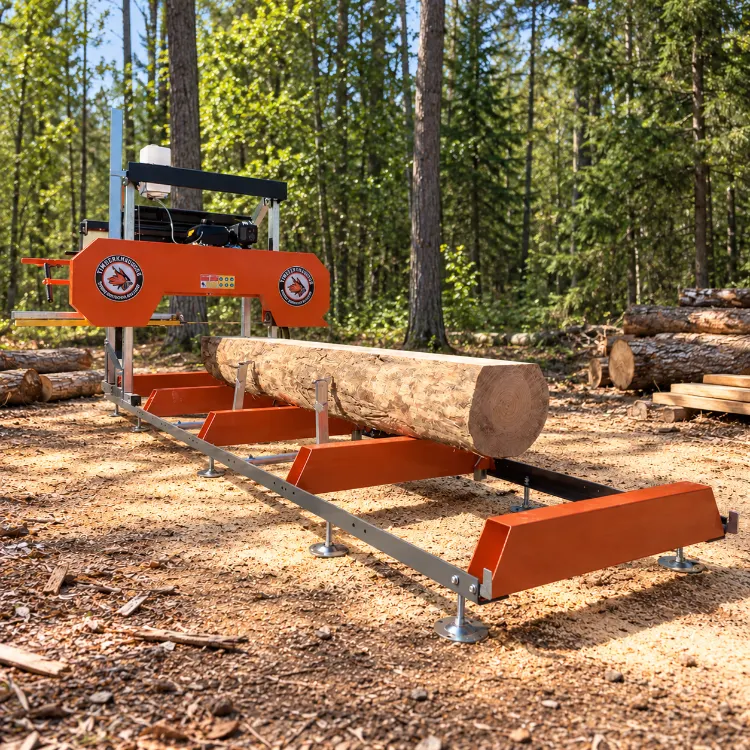
Good logs left on your property can be just as useful as lumber you purchase from a yard. A straight trunk from a downed tree can become fence boards, shelf material, a workbench top, rough framing material or even a wide slab of wood for a table. The material is already on your property. The real job is turning those logs into usable lumber without sending them away for milling. That is where small portable sawmills have made a real difference. You can bring the cutting equipment closer to the timber, work with one log at a time, and mill boards according to the project in front of you. For a homeowner, farm owner, woodland manager, or keen woodworker, that makes timber processing much easier to fit around normal property work. Why Small-Scale Timber Processing Has Been Hard to Do at Home A log looks manageable while it is still lying on the ground. Once you need to lift it, load it, secure it, and take it somewhere else, the job changes quickly. Moving the Mill Instead of Moving Every Log Whole logs are heavy and awkward. Even when you own a trailer, loading several trunks and taking them to a fixed mill can involve more handling than the project really deserves. A portable sawmill changes the way you handle the job. Instead of moving whole logs first, you can set up the mill near where the timber is already lying — in the yard, at the edge of the woodland, at the end of a farm lane or near your workshop. Once the timber is cut into boards, it becomes far easier to stack and move. Before buying a mill, it still pays to check the size of the trees you normally deal with. Log diameter, cutting width, and track length matter more than an impressive specification that you may never use. This portable sawmill buying guide gives a useful checklist for those first decisions. Getting More Board from the Same Log Wood loss matters just as much for a home user as it does anywhere else. If you only have two or three attractive hardwood logs, you do not want a large part of them ending up as sawdust. A narrow band blade removes less wood during each pass than a typical chainsaw milling cut. That leaves more of the log available for boards and slabs. The cut surface is also smoother, so you may have less planing or sanding to do later. The RS18E Portable Sawmill uses this narrow-kerf cutting setup. It can take logs up to 18 inches in diameter and provides a maximum cutting width of 16 inches, a useful range for many trees found around farms, private woodland, and larger residential properties. What Makes Timber Processing More Accessible Today Portability should mean more than putting wheels on a large machine. For home use, a mill also needs to be practical to assemble, store, and bring out again when the next batch of logs is ready. A Compact Setup for Home Workshops and Woodlots The RS18E Portable Sawmill uses a modular frame with a detachable sawhead. One or two people can assemble or take down the setup, so you do not need to dedicate a permanent building to milling. Its standard track is about 141 inches long and 23.8 inches wide, with a cutting length of up to 109 inches. That is enough for many everyday jobs, including fence boards, shelves, bench stock, short beams, garden structures, and furniture timber. Storage is another practical point. A compact machine is much easier to put away in a garage, workshop, or shed when the job is done. If you need to cut longer boards later, you can add an optional 78-inch track extension instead of buying another mill. You can also browse the wider RIMA products range if your woodlot setup includes other forestry or timber-handling jobs. Power Choices That Match Where You Work A workshop and a woodland clearing do not need the same power setup. The RS18E can be configured with electric power for a fixed work area or gasoline power when you need to work away from a convenient electrical supply. If you mainly mill near your workshop, electric power keeps the setup simple. If your logs are spread around a farm or woodland property, gasoline power gives you more freedom over where you set up. That choice is more useful than simply buying the biggest machine available. A portable sawmill works best when its size and power source match the jobs you actually do. How the RS18E Turns Raw Logs into Usable Lumber Once the mill is set up, good boards still start with careful log placement. Cutting accuracy comes from a stable log, a correctly adjusted blade, and a sensible cutting plan. Secure the Log Before the First Cut Check the trunk before loading it. Old fence wire, nails, screws, stones, or other hidden objects can damage a blade quickly. Then position the log on the track and secure it before making the first cut. The RS18E has a 1,200-pound winch to help with positioning and a maximum lifting height of about 18.8 inches. Its minimum cutting thickness is around 0.78 inch, so you have useful control over the size of boards you produce. For a home project, that flexibility matters. You may want thick stock for an outdoor bench, thinner boards for shelving, or wide pieces that keep the natural edge of the tree. There is little reason to cut every log to one standard size when the timber is for your own use. Keep the Blade Working Cleanly The RS18E uses a 120-inch by 1.25-inch by 0.035-inch blade running on 15.7-inch blade wheels. It also has blade protection, a tensioning system, and automatic lubrication. Those features make day-to-day operation easier, but the blade still needs regular care. A dull blade may start to wander, run hotter, and leave a rougher board. Sawdust buildup, incorrect tension, and worn parts can also affect the cut. If the mill will be used regularly, these portable sawmill maintenance tips are worth adding to your regular maintenance routine. A few basic checks before milling are easier than correcting uneven boards afterward. Where the RS18E Makes the Biggest Difference The most useful portable sawmill is not necessarily the one that cuts the fastest. It is the one that lets you make use of timber that would otherwise be inconvenient to process. Yard Trees, Farm Timber, and Storm-Fallen Logs A sound section of a fallen tree can still contain plenty of useful wood. Straight pieces may become boards for a shed, a gate, raised garden beds, a workbench, shelving, or outdoor furniture. Attractive hardwood may be worth keeping wider for a tabletop or live-edge project. With an 18-inch log capacity, the RS18E Portable Sawmill suits many of these smaller property jobs. Its net machine weight is roughly 388 pounds, so you still need to plan transport and setup properly, but it is still a manageable setup for a home workshop or small woodlot rather than a machine that needs a dedicated milling site. For more examples of how forestry equipment is used in different settings, the RIMA case section gives a broader look at real applications. Turn Logs into Material You Can Actually Store Another benefit appears after the cutting is finished. A pile of whole trunks takes up space and remains awkward to move. Rough boards are easier to sort, stack, sticker for drying, and save for future projects. You can also cut each log according to what it is best suited for. A straight softwood trunk may suit general boards. A hardwood crotch or figured section may be better kept as a wider slab. Smaller sound logs can become shelves, trim stock, or garden lumber. You are no longer looking at a pile of logs you still need to deal with. You have usable material waiting for the next job. Why RIMA Is Worth Considering for a Home Milling Setup RIMA focuses on farm and forestry machinery, with sawmills forming part of a wider equipment range that also covers wood processing and timber handling. The company has its own product development team, carries out quality checks before shipment, and continues to refine its equipment for practical day-to-day use. For someone buying a sawmill for home or property use, long-term ownership matters. The RS18E uses common bearings, blades, belts, and replaceable parts. That is useful because normal wear should not turn a simple repair into a search for an unusual component. More background on the manufacturer is available through RIMA About Us, while RIMA service covers support after purchase. The RS18E also gives you room to change the setup later. Track extensions, leveling legs, loading ramps, and related options can be selected around your ground conditions and the type of timber you normally cut. If you are unsure which configuration makes sense, RIMA contact is the most direct place to discuss the logs, working area, and power source you have available. Conclusion Turning a raw log into useful lumber does not have to start with hauling the tree to a large fixed mill. A compact bandsaw setup lets you work closer to the timber, choose the board sizes you actually need, and get more usable material from trees already on your property. The RS18E Portable Sawmill makes sense for home projects, small woodlots, farms, and regular woodworking where an 18-inch log capacity is enough. Its narrow-kerf blade, modular frame, flexible power options, simple maintenance, and extendable track keep the setup practical without making it larger than necessary. If you are still collecting ideas for your own setup, the RIMA blog has more material on sawmills, forestry equipment, maintenance, and wood processing. FAQ Can You Use the RS18E Portable Sawmill at Home? Yes. It suits garages, workshops, farms, and small woodland properties as long as you have a firm, level working area and enough clear space to load and handle logs safely. Can You Cut Longer Logs with the RS18E Portable Sawmill? Yes. You can add an optional 78-inch track extension when you need to cut longer boards or beams, so a longer project does not automatically mean buying another sawmill. Is Electric or Gasoline Power Better for a Portable Sawmill? Electric power works well in a fixed workshop with suitable electrical service. Gasoline power is more practical in a yard, farm, or woodland area where electrical access is limited.  

Tired of Engine Maintenance? Why a PTO-Driven Commercial Wood Chipper Wins for Tractor Owners

26
August
A severe spring storm rolls through the valley, leaving heavy branches scattered across your pasture. You drag a small, gas-powered shredder out of the barn, pull the starter cord ten times, and smell flooded fuel. For anyone maintaining a rural property with a compact utility tractor, this frustrating scenario is entirely optional. Working with a trusted industry expert like RIMA, known globally for engineering high-performance forestry attachments, provides a much smarter way to manage heavy brush. Hooking a commercial wood chipper directly to your existing tractor fundamentally changes the cleanup game, letting you tap into reliable diesel power and skip small engine repairs altogether. The Hidden Burdens of Standalone Engine Chippers Owning equipment with its own dedicated motor sounds great at the dealership, but real field work reveals a different story. Small engines demand constant attention, even when sitting idle in a dry shed. Persistent Carburetor Clogs Modern ethanol-blended gas acts like a sponge for moisture. When a standalone chipper sits unused for three months, that fuel breaks down into a sticky sludge. This quickly ruins the tiny jets inside the carburetor. Instead of clearing brush on a Saturday morning, you end up tearing down an engine and spraying harsh chemical cleaners just to get it running. Redundant Gasoline Storage Logistics If you operate a 40 horsepower diesel tractor, keeping fresh, highly flammable gasoline just for a single seasonal tool creates an annoying logistical chore. You constantly rotate fuel cans, remember to add chemical stabilizers, and dedicate safe garage space to a fuel type you rarely use. High Annual Maintenance Costs Every combustion engine needs routine care. You have to change the oil, gap new spark plugs, swap out paper air filters, and check fuel lines every single season. Paying a local mechanic to perform these basic upkeep tasks on a machine you only use four weekends a year drains your wallet fast. Maximizing the Real Value of Your Existing Tractor Your utility tractor functions as a massive, mobile power plant. Leaving that expensive diesel engine turned off while you fight with a finicky gas motor is highly inefficient. Direct Engine Power Transfer Hooking up an attachment to the rear power take-off (PTO) shaft of your tractor taps into its raw power, because as you know, the PTO is powered by the rear wheels. Therefore it has a direct link to the tractor’s engines’ torque. Most standard 540 RPM PTO’s can handle very heavy and sudden loads, far better than a small air-cooled engine which will most likely stall on a hardwood knot in solid wood such as hardwoods. Superior Long-Term Cost Efficiency When you purchase a PTO-driven implement, you stop paying for fragile exhaust pipes, cheap plastic gas tanks, and redundant batteries. Your budget goes directly toward thicker steel plates, heavy-duty bearings, and a far stronger cutting frame, giving you industrial cutting power for less money. Streamlined Mechanical Architecture Removing the engine from the implement takes away the most common point of failure. Fewer moving components directly translate to fewer breakdowns out in a muddy field. This straightforward design guarantees excellent reliability year after year. Discovering the Heavy-Duty Performance of the WC68 When you step up to professional-grade tools, you need machinery that actually handles thick wood without complaining. The WC68 easily processes branches and limbs up to 6 inches (150 mm) in diameter. Massive Direct Drive Flywheel The secret to continuous cutting is a heavy rotating mass. This unit uses a 24-inch diameter flywheel that is a solid 3/4 inches thick. Spinning at a constant 540 RPM, it stores enough kinetic energy to power straight through dense oak and wet pine without dropping your tractor’s RPMs. Four Reversible Steel Blades Hitting dirty wood instantly dulls sharp edges, which slows down the job. This unit features four reversible hardened steel blades. When one side loses its bite, you simply unbolt the blades, flip them around to the fresh sharp edge, and get back to work immediately. Accessible Clamshell Housing Design Routine clean-outs should never take hours of wrestling with rusted bolts. The 5/16 inch (8 mm) thick steel housing uses a smart clamshell opening. This design gives you instant, wide-open access to the internal chamber, making blade rotations incredibly fast and simple. Technical Specification Operating Parameter Max Chipping Capacity 150 mm / 6 inches Required Tractor Power 20-50 HP at the PTO Flywheel Dimensions 24-inch diameter x 3/4-inch thick Hydraulic Oil Requirement 19 L (5 gallons) ISO-32 or ISO-46 In-Feed Roller Type 8.25-inch (21 cm) Chisel tooth Enhancing Job Safety with a Hydraulic Commercial Wood Chipper Manually shoving jagged branches into a basic gravity chute is physically draining and dangerous. A well-built commercial wood chipper takes the physical struggle completely out of the equation. Self-Contained Hydraulic Power You never have to mess with messy tractor remote hoses. The implement runs a self-contained hydraulic system powered by a reliable belt-driven pump. It operates perfectly on just 19 liters of standard hydraulic oil, keeping the setup totally independent and clean. Precise Variable Speed Control The operator stays in total command at all times. With forward, neutral, and reverse gears, you adjust the feed rate anywhere from 0 to 75 feet per minute. If a strangely shaped branch gets wedged, you just hit reverse to back it out safely and effortlessly. Aggressive Chisel Tooth Roller You just guide the wood into the generous 6-inch tall by 8-inch wide opening. The 8.25-inch chisel tooth roller, backed by adjustable spring tension, bites firmly into the wood and pulls the heavy brush away from your hands automatically. Transforming Wood Debris into Usable Farm Resources A powerful commercial wood chipper does more than clean up the yard. It turns annoying waste into highly valuable materials for your property, saving you money on commercial gardening supplies. High-Quality Organic Mulch Production Store-bought bagged mulch gets expensive quickly. Chipping your own storm debris creates uniform organic ground cover. Spreading this material around fruit trees naturally retains soil moisture during hot summer dry spells and suppresses aggressive weeds. Fast Property Line Clearance Thanks to the Quick-Hitch compatible design, attaching the machine takes just minutes. You drive your tractor right along the fence line, chipping the invasive brush exactly where it falls. This completely eliminates the back-breaking chore of dragging heavy limbs across uneven ground to a central burn pile. Flexible Swivel Chute Placement Handling material twice wastes time. The 360-degree swivel discharge chute lets you shoot fresh wood chips straight into the back of a moving utility trailer, or spread them neatly over a garden bed without ever picking up a shovel. Partner with an Expert Manufacturer for a Reliable Commercial Wood Chipper Buying serious agricultural attachments means you need a factory partner that actually builds durable gear for real field conditions. Standardized 6S Manufacturing Quality The production floor operates under a strict 6S management system—Sort, Shine, Standardize, Sustain, Safety, and Organize. Every unit undergoes rigorous quality testing after assembly, meaning you never receive a defective or poorly welded machine. Proven Global Application Cases Professionals across North America and Europe rely on these heavy-duty implements daily for demanding forestry work. You can review real field setups, equipment combinations, and success stories by visiting the application cases page to see the machinery in action. Dedicated Customer Support and Service Upgrading your daily workflow requires good advice. Whether you need technical details on PTO shaft sizing, OEM modifications, or routine maintenance parts, the expert team provides full support. Check out the comprehensive service network offerings, or navigate directly to RIMA’s contact channel to configure the perfect commercial wood chipper for your tractor today. FAQ Q: What size tractor do I need to run a PTO commercial wood chipper? A: You generally need a compact utility tractor equipped with a Category 1 three-point hitch that produces between 20 and 50 horsepower at the PTO shaft to run a 6-inch capacity machine efficiently. Q: How does the self-feeding mechanism actually work? A:  The machine utilizes a self-contained hydraulic system that powers a heavy 8.25-inch chisel tooth roller. This roller actively grabs the branches and pulls them into the cutting chamber at variable speeds up to 75 feet per minute, drastically reducing physical labor. Q: Is it difficult to change the cutting blades out in the field? A: Not at all. The heavy-duty steel housing features an easy-to-open clamshell design. This gives you instant access to the flywheel, allowing you to quickly swap or rotate the four reversible steel blades with basic hand tools.  

A Bigger Commercial Log Splitter Isn’t Always Faster: What Actually Drives Output?

19
August
A bigger commercial log splitter is not automatically faster. Splitting force tells you whether a machine can push through difficult timber, but daily output depends on the full cycle: loading, positioning, splitting, clearing, and starting again. RIMA’s LS37PRO-T makes the point well. Its /15 and /24-EU configurations both deliver 37 tons of force, yet their hydraulic flow and cycle times differ. Tonnage should be the start of the buying decision, not the end. Why Doesn’t More Splitting Force Always Mean More Output? Once a splitter has enough force for your usual timber, extra tonnage may not remove the delays that slow production. Separate “can it split the log?” from “how quickly can the next finished piece be produced?” Splitting Force Versus Cycle Speed Force deals with resistance; cycle time deals with repetition. A faster stroke matters only if the operator can keep the machine fed. A five-second ram offers little benefit if the next round takes twenty seconds to reach the table. Hydraulic Flow and Working Rhythm The LS37PRO-T shows why two machines with the same tonnage can work at different speeds. Specification LS37PRO-T /15 LS37PRO-T /24-EU Splitting Force 37 ton 37 ton Splitting Length 610 mm 610 mm Hydraulic Pump Capacity 97.2 L/min 111.6 L/min Cycle Time 8 sec 5.5 sec Hydraulic Log Lifter Max. 200 kg Max. 200 kg Box Wedge Hydraulic, 4-way Hydraulic, 4-way Track System Standard Standard The force is identical, but the pace is not. A commercial log splitter should be judged as a hydraulic and handling system, not by tonnage alone. Finished Firewood Versus Ram Strokes Strokes per hour can mislead. If each round needs turning and another pass, the operator handles the same timber several times. Finished firewood at your target size is the better measure. Where Does Output Actually Get Lost? Many delays happen before the ram moves or after it returns. That is where handling features matter. Ground-to-Table Handling The LS37PRO-T includes a hydraulic log lifter rated up to 200 kg. It can reduce repeated manual lifting and steady the feed. If regular rounds exceed 200 kg, the lifter should not replace a suitable loader or handling method. Repositioning and Re-Splitting Its hydraulic four-way box wedge has a 160 mm hydraulic wedge height. The benefit is greatest when that pattern is close to the firewood size you sell. Smaller pieces may still need another pass, so wedge choice must follow the finished product. That distinction matters in commercial work. Four pieces from one stroke do not automatically mean four finished pieces ready for the pile. Moving the Machine to the Timber The track system is standard. Moving the splitter closer to changing log piles can cut handling distance. Ground firmness, slope, access, and safe working space still need checking. Working cases can help you compare forestry layouts and think about where the splitter would sit in your own workflow. How Does the LS37PRO-T Address the Main Bottlenecks? The reason to consider this model is not the 37-ton figure alone. Its useful features sit around the splitting stroke. Crawler Track Mobility A tracked base suits farms, woodlots, and yards where the machine follows the timber. Shorter travel between the pile and splitting table can make a practical difference when material locations change through the day. If the splitter stays on one prepared pad and every round arrives by loader, however, mobility may not deserve much weight in the purchase. Hydraulic Log Lifting The 200 kg lifter matters most when heavy rounds are common and no dedicated loader sits beside the splitter. A second worker can then stage logs or clear split wood instead of helping with every lift. This is also where crew size changes the buying decision. A feature that saves one repeated handling job can be more useful to a small crew than additional splitting force that rarely gets used. Box Wedge and Control Layout The four-way box wedge can reduce turning and repeat strokes when the split pattern matches your product. The exact integrated-control functions should be confirmed on the final specification. Ask which functions are hydraulic, where the controls sit, and what the operating sequence is. For repetitive splitting, control placement matters, but the quotation should state exactly what is included rather than leaving “integrated control” open to interpretation. What Should You Check Before Buying? A specification sheet is useful only when it matches your timber, crew, and yard. Typical Log Size and Weight Record the diameter, length, and approximate weight of the logs you process most often. The LS37PRO-T accepts up to 610 mm splitting length; regular material beyond that needs another cutting plan or machine. Do not size a machine around one unusually difficult log if ninety percent of your daily material is much smaller. Daily Volume and Crew Setup Decide who loads, operates, and clears the wood. A faster cycle helps more when logs are staged and another person clears the table. In a one-person setup, fetching timber may remain the bottleneck. A useful buying test is simple: time a batch of your typical logs from first lift to finished firewood. Include loading, second passes, repositioning, and clearing rather than recording ram time alone. Hydraulic and Maintenance Checks Before ordering, confirm pump capacity, cycle time, hydraulic tank, oil cooler, cylinder, lifter rating, wedge, track system, and controls on the quotation. Routine checks should cover hoses, fittings, oil condition, cooler cleanliness, wedge condition, and track wear. Follow the maintenance schedule for the final configuration rather than assuming every version uses the same service routine. When Does a Bigger Splitter Make Sense, and When Doesn’t It? More capacity helps when it removes a real limit. It adds little when the rest of the workflow stays slow. Repeated Large or Difficult Timber If large, dense, or knotty rounds make up much of your workload, more splitting reserve can reduce stalled attempts and repeated positioning. Here, extra force serves a real need. If difficult logs are only occasional, look carefully at cycle speed and handling before paying for more force. High-Volume Commercial Work For steady production, compare force, cycle time, lifting, wedge choice, cooling, and material flow. If your crew can keep the table supplied, the /24-EU configuration’s 111.6 L/min pump and 5.5-second cycle may fit a faster rhythm than the /15 configuration. That comparison is more useful than asking which model has the bigger tonnage figure, because both are rated at 37 tons. Jobs That Need a Different Setup This model may be a poor fit if regular logs exceed 610 mm, many rounds exceed the 200 kg lifter rating without other handling equipment, or your firewood size demands repeated re-splitting. A fixed-site operation should also question the value of tracked mobility. Those are not small details. They decide whether the machine removes work or simply moves the bottleneck somewhere else. Why Choose RIMA for a Commercial Log Splitter? Once the workload is clear, match the machine to it rather than buying on tonnage alone. Forestry Equipment and Configuration Support RIMA manufactures farm and forestry machinery, including log splitters, firewood processors, sawmills, wood chippers, and timber-handling equipment. It also supports OEM and ODM work. Finished machines undergo quality testing before shipment, and custom designs can be checked against buyer drawings. That matters when you are buying for a defined production flow rather than choosing an off-the-shelf machine only by headline specifications. Service Before and After the Purchase Use the company’s service support to confirm the specification, maintenance requirements, documentation, and any customization before release. Small configuration details can change how well the machine fits an existing yard. For B2B purchasing, the final quotation should clearly match the pump, wedge, lifter, track system, control arrangement, and other agreed equipment. A Clear Purchase Decision Choose the LS37PRO-T when 37 tons is enough for your timber and its lifter, four-way box wedge, and tracks remove repeated handling. Choose between the /15 and /24-EU configurations by the work rate you need, since both share the same force rating. If your timber falls outside the machine’s length or lifting limits, do not size up blindly. Send your normal log dimensions, daily target, crew size, site conditions, and finished firewood size through the contact team and confirm the final configuration. The right commercial log splitter is the one that removes the slowest repeated step in your workflow, not simply the one with the biggest number on the specification sheet. FAQ Q: How Can You Estimate Real Output Before Buying? A: Time a batch of logs that represents your normal work. Measure from loading through final split size, including second passes and clearing. Compare that full-cycle time rather than turning ram cycle time directly into hourly output. Q: What Should You Confirm Before Shipment? A: Match the machine to the agreed specification: power configuration, hydraulic pump capacity, cycle time, lifter rating, wedge, track system, oil cooler, cylinder, controls, and supplied documentation. Have any control function that matters to your process identified clearly before shipment. Q: Is a Tracked Commercial Log Splitter Always Better for Forestry Work? A: No. Tracks are useful when the machine must move between piles or work away from a fixed pad. If timber already comes to one prepared station, tracked mobility may not improve output enough to make it a key buying factor.  
Products
Contacts
WhatsApp
Email