




2nd September 2026
From Raw Logs to Valuable Lumber: How Small-Scale Timber Processing Becomes More Accessible
Good logs left on your property can be just as useful as lumber you purchase from a yard. A straight trunk from a downed tree can become fence boards, shelf material, a workbench top, rough framing material or even a wide slab of wood for a table. The material is already on your property. The real job is turning those logs into usable lumber without sending them away for milling.
That is where small portable sawmills have made a real difference. You can bring the cutting equipment closer to the timber, work with one log at a time, and mill boards according to the project in front of you. For a homeowner, farm owner, woodland manager, or keen woodworker, that makes timber processing much easier to fit around normal property work.
Why Small-Scale Timber Processing Has Been Hard to Do at Home
A log looks manageable while it is still lying on the ground. Once you need to lift it, load it, secure it, and take it somewhere else, the job changes quickly.
Moving the Mill Instead of Moving Every Log
Whole logs are heavy and awkward. Even when you own a trailer, loading several trunks and taking them to a fixed mill can involve more handling than the project really deserves.
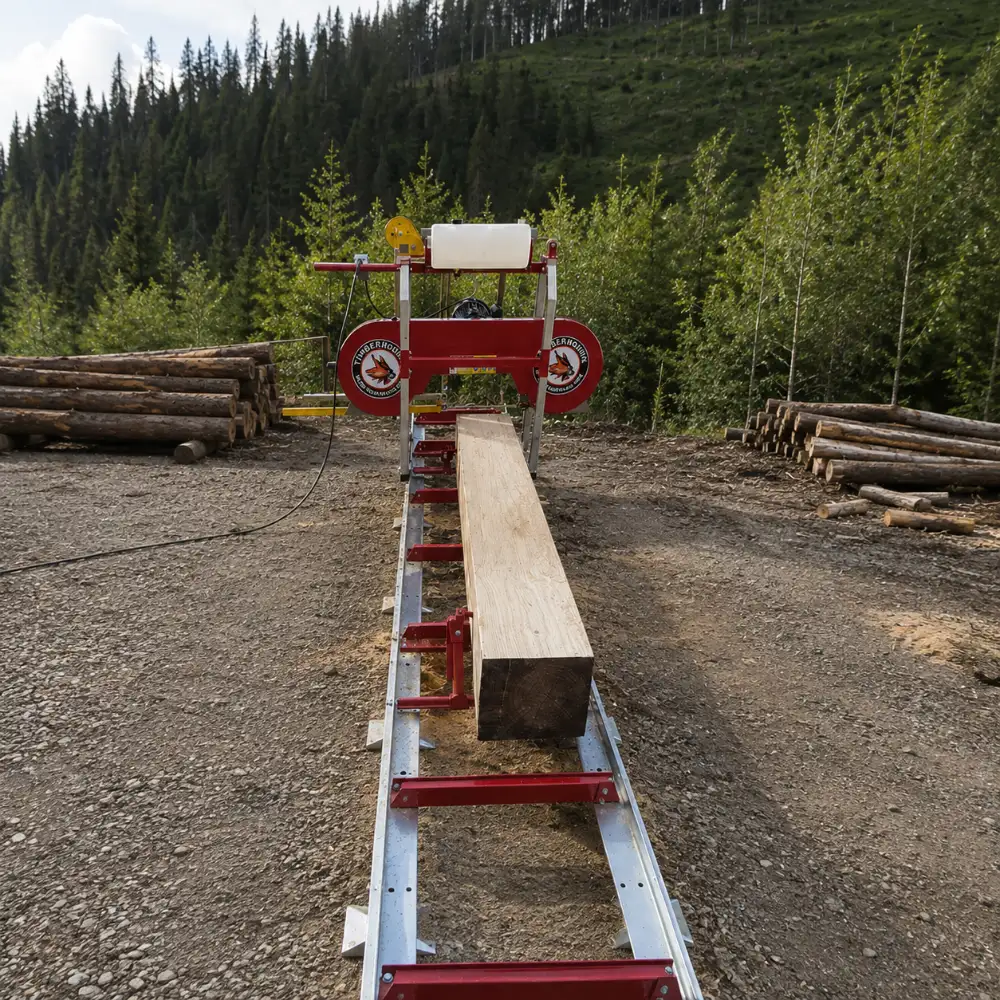
A portable sawmill changes the way you handle the job. Instead of moving whole logs first, you can set up the mill near where the timber is already lying — in the yard, at the edge of the woodland, at the end of a farm lane or near your workshop. Once the timber is cut into boards, it becomes far easier to stack and move.
Before buying a mill, it still pays to check the size of the trees you normally deal with. Log diameter, cutting width, and track length matter more than an impressive specification that you may never use. This portable sawmill buying guide gives a useful checklist for those first decisions.
Getting More Board from the Same Log
Wood loss matters just as much for a home user as it does anywhere else. If you only have two or three attractive hardwood logs, you do not want a large part of them ending up as sawdust.
A narrow band blade removes less wood during each pass than a typical chainsaw milling cut. That leaves more of the log available for boards and slabs. The cut surface is also smoother, so you may have less planing or sanding to do later.
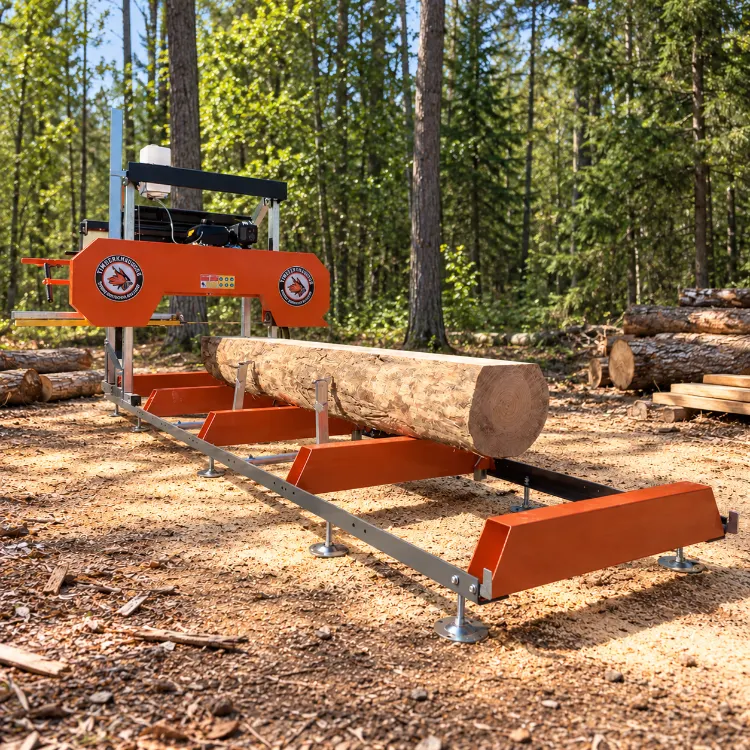
The RS18E Portable Sawmill uses this narrow-kerf cutting setup. It can take logs up to 18 inches in diameter and provides a maximum cutting width of 16 inches, a useful range for many trees found around farms, private woodland, and larger residential properties.
What Makes Timber Processing More Accessible Today
Portability should mean more than putting wheels on a large machine. For home use, a mill also needs to be practical to assemble, store, and bring out again when the next batch of logs is ready.
A Compact Setup for Home Workshops and Woodlots
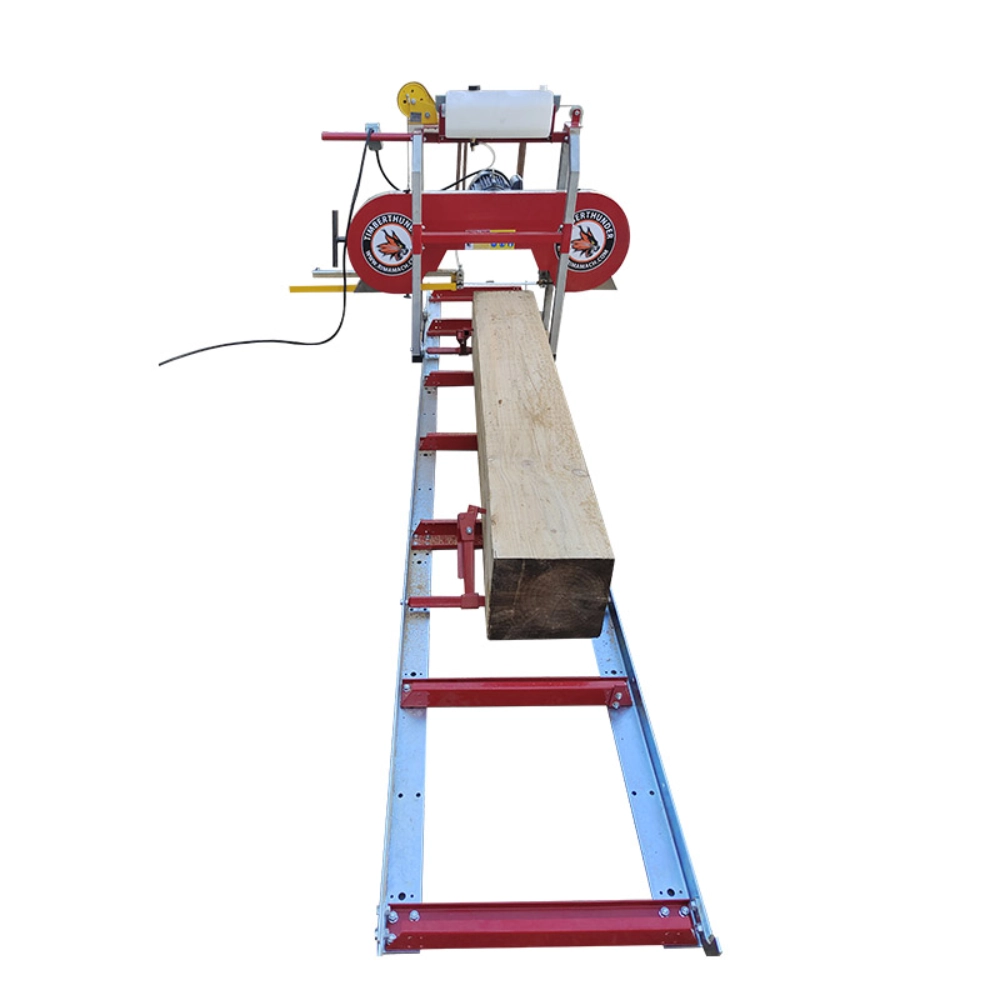
The RS18E Portable Sawmill uses a modular frame with a detachable sawhead. One or two people can assemble or take down the setup, so you do not need to dedicate a permanent building to milling.
Its standard track is about 141 inches long and 23.8 inches wide, with a cutting length of up to 109 inches. That is enough for many everyday jobs, including fence boards, shelves, bench stock, short beams, garden structures, and furniture timber.
Storage is another practical point. A compact machine is much easier to put away in a garage, workshop, or shed when the job is done. If you need to cut longer boards later, you can add an optional 78-inch track extension instead of buying another mill.
You can also browse the wider RIMA products range if your woodlot setup includes other forestry or timber-handling jobs.
Power Choices That Match Where You Work
A workshop and a woodland clearing do not need the same power setup.
The RS18E can be configured with electric power for a fixed work area or gasoline power when you need to work away from a convenient electrical supply. If you mainly mill near your workshop, electric power keeps the setup simple. If your logs are spread around a farm or woodland property, gasoline power gives you more freedom over where you set up.
That choice is more useful than simply buying the biggest machine available. A portable sawmill works best when its size and power source match the jobs you actually do.
How the RS18E Turns Raw Logs into Usable Lumber
Once the mill is set up, good boards still start with careful log placement. Cutting accuracy comes from a stable log, a correctly adjusted blade, and a sensible cutting plan.
Secure the Log Before the First Cut
Check the trunk before loading it. Old fence wire, nails, screws, stones, or other hidden objects can damage a blade quickly. Then position the log on the track and secure it before making the first cut.
The RS18E has a 1,200-pound winch to help with positioning and a maximum lifting height of about 18.8 inches. Its minimum cutting thickness is around 0.78 inch, so you have useful control over the size of boards you produce.
For a home project, that flexibility matters. You may want thick stock for an outdoor bench, thinner boards for shelving, or wide pieces that keep the natural edge of the tree. There is little reason to cut every log to one standard size when the timber is for your own use.
Keep the Blade Working Cleanly
The RS18E uses a 120-inch by 1.25-inch by 0.035-inch blade running on 15.7-inch blade wheels. It also has blade protection, a tensioning system, and automatic lubrication.
Those features make day-to-day operation easier, but the blade still needs regular care. A dull blade may start to wander, run hotter, and leave a rougher board. Sawdust buildup, incorrect tension, and worn parts can also affect the cut.
If the mill will be used regularly, these portable sawmill maintenance tips are worth adding to your regular maintenance routine. A few basic checks before milling are easier than correcting uneven boards afterward.
Where the RS18E Makes the Biggest Difference
The most useful portable sawmill is not necessarily the one that cuts the fastest. It is the one that lets you make use of timber that would otherwise be inconvenient to process.
Yard Trees, Farm Timber, and Storm-Fallen Logs
A sound section of a fallen tree can still contain plenty of useful wood. Straight pieces may become boards for a shed, a gate, raised garden beds, a workbench, shelving, or outdoor furniture. Attractive hardwood may be worth keeping wider for a tabletop or live-edge project.
With an 18-inch log capacity, the RS18E Portable Sawmill suits many of these smaller property jobs. Its net machine weight is roughly 388 pounds, so you still need to plan transport and setup properly, but it is still a manageable setup for a home workshop or small woodlot rather than a machine that needs a dedicated milling site.
For more examples of how forestry equipment is used in different settings, the RIMA case section gives a broader look at real applications.
Turn Logs into Material You Can Actually Store
Another benefit appears after the cutting is finished. A pile of whole trunks takes up space and remains awkward to move. Rough boards are easier to sort, stack, sticker for drying, and save for future projects.
You can also cut each log according to what it is best suited for. A straight softwood trunk may suit general boards. A hardwood crotch or figured section may be better kept as a wider slab. Smaller sound logs can become shelves, trim stock, or garden lumber.
You are no longer looking at a pile of logs you still need to deal with. You have usable material waiting for the next job.
Why RIMA Is Worth Considering for a Home Milling Setup
RIMA focuses on farm and forestry machinery, with sawmills forming part of a wider equipment range that also covers wood processing and timber handling. The company has its own product development team, carries out quality checks before shipment, and continues to refine its equipment for practical day-to-day use.
For someone buying a sawmill for home or property use, long-term ownership matters. The RS18E uses common bearings, blades, belts, and replaceable parts. That is useful because normal wear should not turn a simple repair into a search for an unusual component.
More background on the manufacturer is available through RIMA About Us, while RIMA service covers support after purchase.
The RS18E also gives you room to change the setup later. Track extensions, leveling legs, loading ramps, and related options can be selected around your ground conditions and the type of timber you normally cut. If you are unsure which configuration makes sense, RIMA contact is the most direct place to discuss the logs, working area, and power source you have available.
Conclusion
Turning a raw log into useful lumber does not have to start with hauling the tree to a large fixed mill. A compact bandsaw setup lets you work closer to the timber, choose the board sizes you actually need, and get more usable material from trees already on your property.
The RS18E Portable Sawmill makes sense for home projects, small woodlots, farms, and regular woodworking where an 18-inch log capacity is enough. Its narrow-kerf blade, modular frame, flexible power options, simple maintenance, and extendable track keep the setup practical without making it larger than necessary.
If you are still collecting ideas for your own setup, the RIMA blog has more material on sawmills, forestry equipment, maintenance, and wood processing.
FAQ
Can You Use the RS18E Portable Sawmill at Home?
Yes. It suits garages, workshops, farms, and small woodland properties as long as you have a firm, level working area and enough clear space to load and handle logs safely.
Can You Cut Longer Logs with the RS18E Portable Sawmill?
Yes. You can add an optional 78-inch track extension when you need to cut longer boards or beams, so a longer project does not automatically mean buying another sawmill.
Is Electric or Gasoline Power Better for a Portable Sawmill?
Electric power works well in a fixed workshop with suitable electrical service. Gasoline power is more practical in a yard, farm, or woodland area where electrical access is limited.




LEAVE A REPLY